


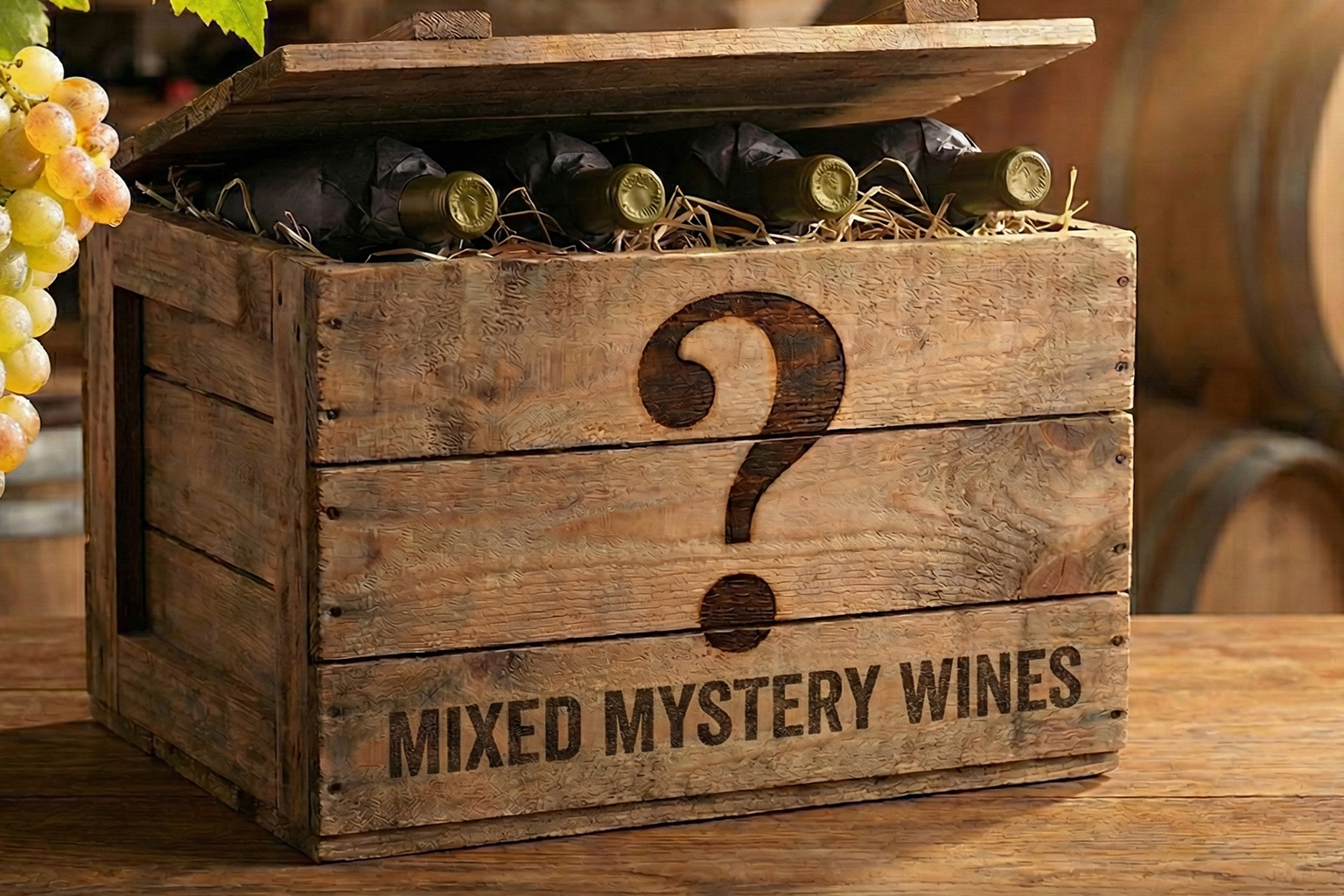
A mixed case should feel considered when the first bottle is opened, not like six or 12 isolated purchases that happened to share a carton. The pleasure lies in contrast: a crisp white before dinner, a supple red for the table, perhaps a serious bottle worth saving. Knowing how to choose mixed cases starts with deciding what you want the case to do for you.
For some buyers, that means taking the uncertainty out of weeknight drinking. For others, it means building a useful home cellar, choosing bottles that suit a dinner party, or giving a gift with genuine range and provenance. The right mix is rarely the one with the most famous names. It is the one with a clear purpose, a sensible drinking window, and enough variety to make every bottle feel like the right choice.
Start With the Occasion, Not the Label
Before considering country, grape, or critic score, consider the moments the wines will serve. A case for relaxed dinners needs immediate pleasure and flexibility. A case for a holiday gathering benefits from sparkling wine, refreshing whites, and reds with enough character to stand up to a rich roast. A case intended for the cellar should include wines with structure, pedigree, and a reason to improve over time.
This is where many mixed cases become unfocused. A collector may be drawn to a highly rated young Barolo, while a host needs a red ready for Saturday evening. Both can belong in the same purchase, but only if the proportions reflect reality. If you open wine twice a week, a case with one special-occasion bottle, several versatile everyday selections, and a few bottles to mature is often more satisfying than a full case of wines that demand years of patience.
Think, too, about the people who will drink the wines. A group of experienced Burgundy lovers may welcome a nuanced Pinot Noir comparison. A broader guest list will usually appreciate familiar, generous styles alongside one or two more distinctive discoveries. Mixed cases are an opportunity to be adventurous without committing to a full six or 12 bottles of a single wine.
How to Choose Mixed Cases by Style
The most practical way to create balance is to build around drinking styles rather than simply collecting different countries. A varied case should offer contrast in freshness, body, tannin, sweetness, and occasion.
For a 12-bottle case designed for general enjoyment, a useful starting point is three whites, one sparkling wine, six reds, and two bottles chosen for a specific purpose. Those final two may be a rosé for warm-weather lunches, a mature Bordeaux for a dinner, a dessert wine, or a cellar-worthy Italian red. For a six-bottle case, keep the selection tighter: one sparkling wine, two whites, and three reds can cover a surprising number of meals and moods.
Within the whites, pair one bright, mineral-driven bottle with one more textured style. A Sauvignon Blanc, dry Riesling, or Chablis can bring lift to seafood, salads, and spicy dishes. Chardonnay from Burgundy, California, or Margaret River may offer a richer, more savory counterpoint for roast chicken, lobster, or creamy sauces. The goal is not to force every major grape into the case. It is to avoid six bottles that all answer the same occasion.
The same principle applies to reds. Consider a lighter, fragrant red such as Pinot Noir or Barbera; a medium-bodied, food-friendly bottle such as Rioja or Chianti Classico; and a deeper, more structured wine such as Cabernet Sauvignon, Saint-Émilion, Brunello di Montalcino, or Barolo. This progression gives you options from pizza night to a formal dinner without making the case feel random.
Let Food Habits Shape the Selection
The most successful mixed cases reflect what is actually cooked and ordered at home. A buyer who regularly enjoys sashimi, grilled fish, Cantonese dishes, and fresh vegetables should not fill every slot with powerful reds, however impressive their scores may be. Likewise, a household built around steak, lamb, pasta, and roast meats will want more than a single light red.
For Asian cuisine, freshness and aromatic detail can be especially useful. Dry Riesling, Pinot Gris, Champagne, Beaujolais, and elegant Pinot Noir often have the poise to complement dishes with herbs, spice, soy, or gentle sweetness. Wines with very high alcohol, aggressive oak, or severe tannin can work beautifully with certain preparations, but they are not automatic companions for every table.
When choosing bottles for a dinner party, do not chase perfect one-dish pairings at the expense of your guests’ preferences. A polished Champagne as an aperitif and a supple red with the main course will usually create more pleasure than a highly technical pairing that only works for part of the menu. Keep one bottle in reserve. It is both practical and hospitable.
Use Region and Producer as Your Discovery Framework
A mixed case is one of the best ways to learn the character of classic wine regions. Instead of buying unrelated bottles, create a theme that makes comparison meaningful. You might explore the difference between Left Bank and Right Bank Bordeaux, compare traditional and modern expressions of Barolo, or place a village Burgundy alongside a premier cru from the same vintage.
Producer matters as much as appellation. A respected estate often provides a dependable house style across several wines, from an approachable regional bottling to a more ambitious single-vineyard release. Including two wines from the same producer can be more educational than adding another unfamiliar label. It reveals how site, classification, and vintage shape the finished wine.
There is a trade-off. A region-focused case may be less versatile for casual entertaining than a broad international selection. Choose the themed route when discovery is the point, perhaps for a tasting with friends or to refine your own palate. Choose broader coverage when convenience matters more than comparison.
Read Scores and Vintages in Context
Professional scores are valuable signals, particularly when selecting prestigious regions or wines intended for cellaring. A strong review from a trusted critic can point to precision, concentration, balance, and aging potential. But a 96-point young Cabernet is not automatically the better bottle for tomorrow’s pasta dinner than a 91-point ready-to-drink Côtes du Rhône.
Use scores to narrow the field, then assess the wine’s style, vintage, and drinking window. In Bordeaux, vintage conditions can influence ripeness, tannin, and the pace of development. In Burgundy, the producer’s touch and vineyard site can be decisive. In Champagne, the choice between non-vintage and vintage expressions changes the purpose of the bottle as much as the score does.
A well-chosen case includes wines for different horizons. Some should be ready on arrival, with expressive fruit and softened structure. Others should reward patience. If you are beginning a cellar, buy two bottles of a wine you truly want to follow rather than spreading every dollar across single bottles. Opening one earlier and saving the second is one of the clearest ways to understand development.
Set a Budget That Allows for One Memorable Bottle
Mixed cases work best when the budget has a center of gravity. Rather than assigning exactly the same amount to every bottle, allocate most of the spend to dependable wines you will open often, then reserve a portion for one or two bottles that elevate the case.
For example, a case could include several polished, accessible wines in the everyday premium range, a few more distinctive regional selections, and one benchmark bottle from a celebrated estate or appellation. That special bottle might be a classified-growth Bordeaux, a mature Rioja Gran Reserva, a top Barolo, or a prestige Champagne. Its role is not merely status. It gives the case an occasion and makes the selection feel personal.
Be candid about storage before investing heavily in age-worthy wines. Fine wine needs stable, cool conditions. If you do not have a suitable wine refrigerator or professional storage, favor bottles that will drink well over the next one to three years. Provenance, condition, and proper storage become even more consequential as prices and bottle age rise.
Ask for a Case With a Point of View
A good wine merchant can help turn preferences into a coherent selection. Share a realistic budget, the number of bottles you need, favorite regions or grapes, foods you serve, and whether you want immediate drinking or cellar potential. Mention bottles you have enjoyed and, just as usefully, styles you avoid. “Not too oaky,” “something elegant for lamb,” or “one serious red to keep” are meaningful instructions.
At Crystal Wines, a mixed case can be approached with the same precision as a single fine-wine purchase: by producer reputation, vintage character, critic perspective, bottle format, and the occasion ahead. The best recommendations should still leave room for your own taste. Expertise is most useful when it makes your next choice easier, not when it makes wine feel like a test.
Choose a case that creates anticipation each time you reach for it. One bottle should suit an easy meal, another should invite a conversation, and at least one should make you want to set the table properly.


