


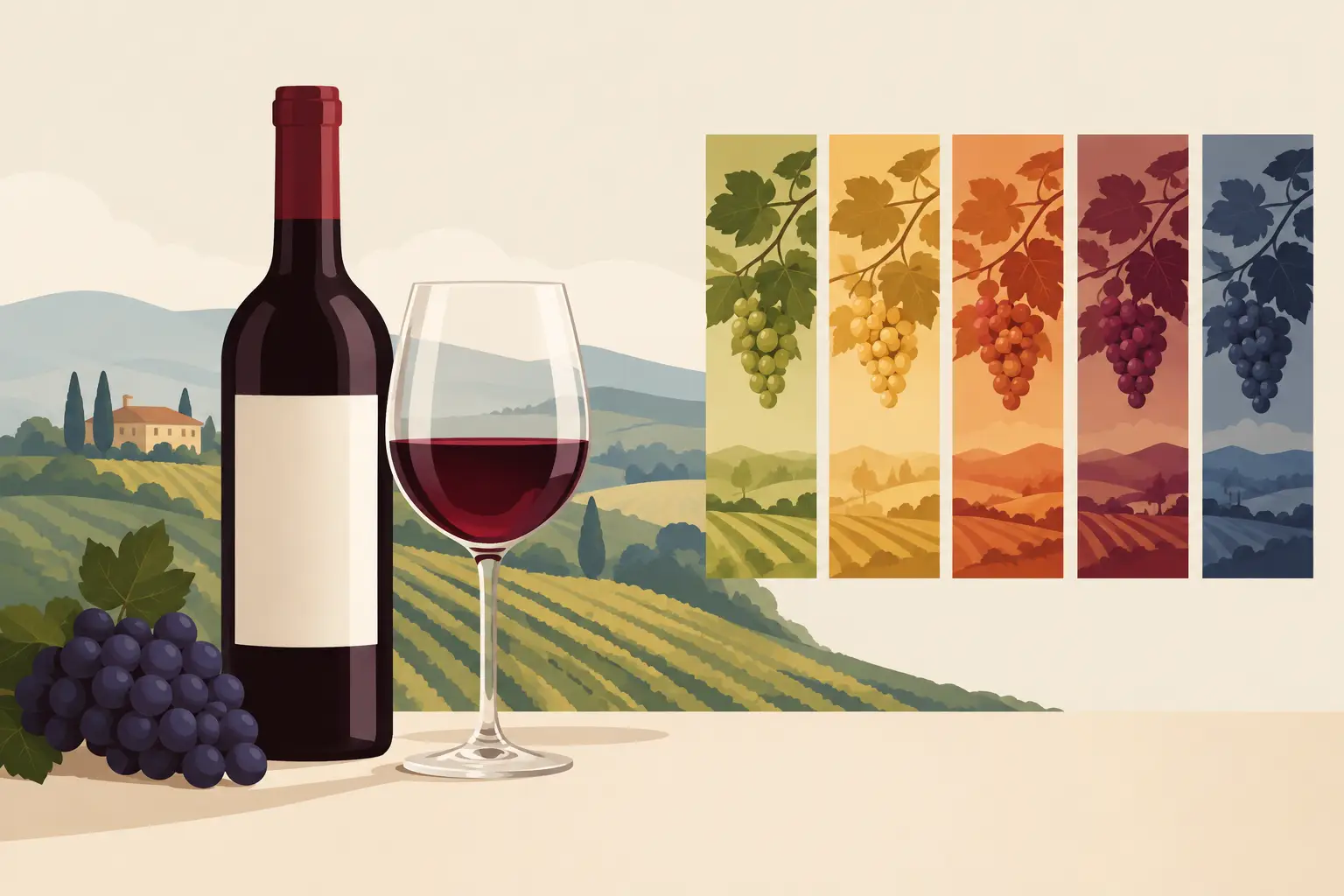
A 2010 Barolo, a 2016 Bordeaux, and a non-vintage Champagne may sit side by side on a wine list, yet the date on each label carries a very different weight. Does vintage matter in wine? Absolutely – but not in the simplistic sense that an older year is automatically better, or that a highly praised harvest guarantees pleasure in every bottle. Vintage is one of the most useful clues to a wine’s personality, maturity, and potential value. It is also one clue among several.
For collectors, the right vintage can define a cellar purchase. For a host choosing wine for dinner this weekend, producer, storage, and style may matter just as much. Knowing when the year counts allows you to buy with confidence rather than chase a famous number on the label.
What a Wine Vintage Actually Tells You
A vintage is the year in which the grapes were harvested. That year’s weather – winter rain, spring frost, summer heat, sunshine, wind, and rainfall near harvest – shapes the fruit that reaches the winery. In regions where conditions vary greatly from one year to the next, the effect can be profound.
Cooler seasons often produce wines with brighter acidity, firmer structure, lower alcohol, and more aromatic restraint. Warmer, drier seasons can bring riper fruit, broader texture, softer tannins, and earlier accessibility. Neither profile is inherently superior. A seasoned Burgundy lover may prize the tension and perfume of a cooler year, while another drinker may prefer the generous dark fruit and immediate charm of a warmer harvest.
The winemaker’s decisions matter, too. Meticulous vineyard work, careful sorting, and intelligent élevage can turn a challenging season into a compelling wine. Conversely, even a celebrated year cannot compensate for uninspired farming or poor winemaking. Vintage describes the conditions. It does not replace producer knowledge.
Does Vintage Matter in Wine From Every Region?
Vintage matters most where growing seasons are inconsistent and where wines are built to reflect place. Bordeaux, Burgundy, Barolo, Brunello di Montalcino, the northern Rhône, and many Champagne villages are classic examples. A rainy September, heatwave, hailstorm, or long, dry autumn can materially change the character and longevity of the finished wine.
In Bordeaux, a great left-bank vintage may combine ripe Cabernet Sauvignon with freshness and precise tannins, giving classified-growth wines decades of evolution. In cooler or wetter years, Merlot-led appellations and skillful estates may perform especially well. The useful question is not simply, “Was this a good Bordeaux vintage?” It is, “Which appellations and producers excelled in this Bordeaux vintage?”
Burgundy demands even greater precision. Its patchwork of vineyards, often separated by only a road or stone wall, means frost, rain, and ripening can affect neighboring sites differently. A broadly difficult year may still yield sensational bottles from a leading domaine with old vines, rigorous selection, and an exceptional parcel.
By contrast, many warm-climate regions deliver relatively dependable quality year after year. In parts of Napa Valley, Australia, Chile, and southern Italy, vintage variation can still be meaningful, but it may be less decisive for an everyday bottle. Here, the producer and wine style often deserve more attention than a single point difference in a vintage chart.
Great Vintages Are Not Always the Best Bottles to Drink Now
The phrase “great vintage” usually refers to a harvest with ideal conditions for concentration, balance, and aging potential. These wines can be magnificent, but their power may come with a trade-off: they can need time.
A structured young 2016 or 2019 Bordeaux from a serious château may be impressive but tightly coiled, with tannin and oak still at the forefront. A well-stored 2012 or 2014 from the same producer might offer a more graceful drinking experience today, with cedar, tobacco, cassis, and savory complexity already emerging.
This is especially relevant when buying a bottle for a particular occasion. If you are opening wine with roast lamb tonight, a less celebrated but mature vintage can be a wiser choice than an elite young release that needs another decade in the cellar. Vintage should help set expectations for readiness, not merely prestige.
Champagne provides another useful contrast. Non-vintage Champagne is blended across multiple years to maintain a house style. Vintage Champagne is made only when the producer believes one harvest is distinctive enough to stand on its own. The vintage designation can signal individuality and age-worthy structure, but a fine non-vintage cuvée may be the more versatile aperitif or celebratory pour.
Why Producer and Provenance Can Matter More
For collectible wine, provenance is often as important as vintage. A pristine bottle from a merely good year, stored professionally from release, can be more desirable than a famous vintage with uncertain history. Heat exposure, poor storage, damaged labels, low fill levels, and unreliable sourcing can diminish both drinking pleasure and long-term value.
This is why a trusted specialist merchant matters. Fine wine is not simply an agricultural product. It is a living object that continues to evolve after bottling. A bottle’s journey from estate to cellar affects what ultimately reaches the glass.
Producer reputation also gives context to a vintage. Top estates have the resources and discipline to respond to difficult conditions: they may green-harvest, conduct multiple passes through the vineyard, reject weaker fruit, or reduce production dramatically. In challenging years, these decisions can create a large quality gap between serious producers and their less exacting neighbors.
For buyers considering en primeur or long-term cellaring, a strong vintage from a benchmark producer has particular appeal. It can offer rarity, critical acclaim, and a long runway for development. Still, buying only landmark vintages can leave a cellar one-dimensional. More understated years often provide earlier drinking and, at times, better relative value.
How to Buy by Vintage Without Overthinking It
Start with the occasion. For a dinner party or gift to be opened soon, choose a wine at a mature or approachable stage. A classic 10- to 15-year-old Rioja Reserva, a polished Saint-Émilion from a balanced year, or a beautifully evolved Brunello can offer far more immediate pleasure than a newly released trophy bottle.
For a cellar, look at vintage alongside producer, appellation, critic assessments, price, bottle format, and your preferred drinking style. Larger formats generally age more slowly, making magnums particularly attractive for serious wines intended for long-term keeping. Scores can be valuable reference points, but tasting notes reveal whether the wine’s profile suits you: floral and fine-boned, sumptuous and opulent, mineral and reserved, or powerful and long-lived.
A practical cellar should include both celebrated years and overlooked ones. The celebrated vintages provide occasion bottles and potentially important long-term holdings. The underrated vintages supply character, maturity, and drinking opportunities while the grander wines rest. This approach is more rewarding than treating every purchase as a speculative asset.
A Few Vintage Questions Worth Asking
When considering a bottle, ask whether the region is highly vintage-sensitive, whether the producer performed well in that year, and whether you want to drink or cellar the wine. Then ask about provenance and storage. These questions are more useful than relying on a generalized ranking alone.
It also pays to distinguish style from quality. A cooler vintage may receive slightly lower aggregate scores yet deliver exactly the freshness, savory detail, and precision you enjoy with food. A warm, lavishly rated vintage may be spectacular, but less suited to your palate or menu. Fine wine becomes much more personal once you stop treating scores and vintage charts as verdicts.
The most satisfying bottle is not always from the most famous year. It is the bottle whose harvest, producer, condition, and stage of development meet the moment you have planned – whether that is a quiet dinner, a milestone gift, or the first opening from a patiently built cellar.


