


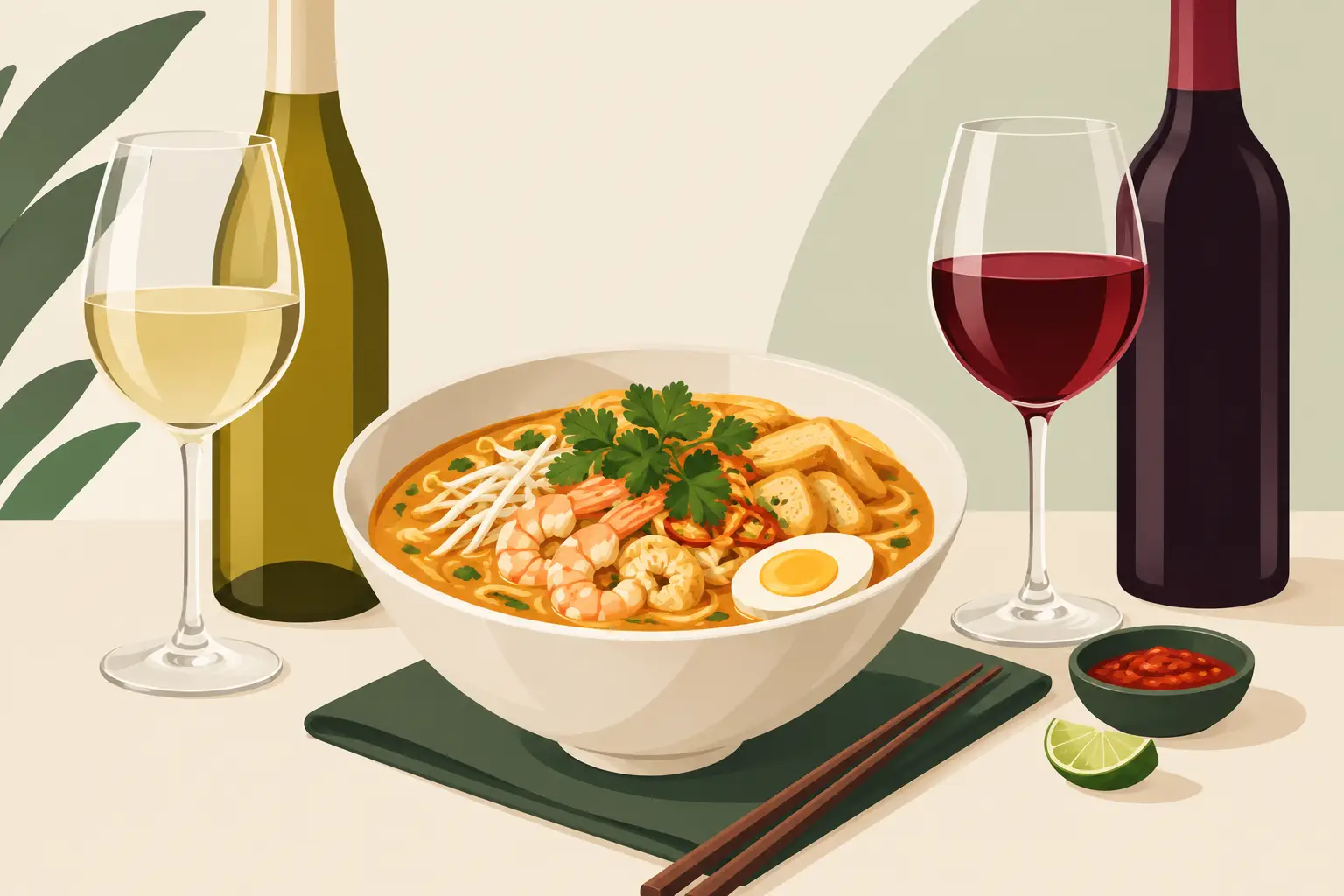
Laksa is not a dish that asks wine to sit quietly in the background. Its coconut richness, chili warmth, shrimp paste savor, fresh herbs, and springy noodles create a thrillingly layered challenge. For anyone asking which wine suits laksa, the answer is rarely a prestigious, heavily oaked bottle. The finest pairing is one that refreshes the palate, respects the spice, and still has enough character to meet the broth.
The useful starting point is not whether the wine is white or red, but its balance of acidity, alcohol, texture, and sweetness. A little residual sugar can be an asset rather than a compromise. It softens chili heat, while vivid acidity keeps coconut milk from becoming weighty. Fragrance matters too: wines with citrus, stone fruit, ginger, floral, or exotic fruit notes often find a natural connection with laksa’s aromatic profile.
Which Wine Suits Laksa? Start With the Laksa Style
There is no single laksa. Curry laksa, the rich coconut-based version familiar across Singapore and Malaysia, needs a different approach from the sharper, tamarind-led assam laksa of Penang. Seafood toppings, sambal intensity, and even the amount of fresh laksa leaf change the equation.
Curry laksa generally favors aromatic whites with bright acidity and modest alcohol. The broth is creamy, savory, and often spicy, so a high-alcohol Chardonnay or a muscular, tannic red can make the heat feel hotter and the finish feel heavy. The wine should bring lift, not another layer of richness.
Assam laksa is more tart, fish-forward, and herbal, with tamarind supplying a bracing sourness. Here, a zesty dry white or sparkling wine can be particularly successful. The wine needs enough freshness to stand alongside the sour broth, but it should not be so austere that it turns the tamarind bitter or metallic.
If your bowl is generously finished with chili paste, treat the heat as the deciding factor. The hotter the laksa, the more useful a touch of sweetness becomes. If it is mild and especially seafood-driven, a drier, mineral white becomes more compelling.
The Best Wine Styles for Curry Laksa
Off-dry Riesling is the benchmark
A finely made off-dry Riesling is often the most reliable answer to curry laksa. Look for a bottle with piercing acidity, citrus and peach fruit, and a gently sweet finish rather than overt richness. German Riesling, especially from the Mosel or Rheingau, is a classic choice, as are elegant examples from Austria, Alsace, Australia’s Clare or Eden Valleys, and cool-climate New World regions.
Riesling succeeds because it works in several directions at once. Its acidity slices through coconut milk; its fruit cools chili; and its floral, lime, ginger, and stone-fruit notes flatter the soup’s aromatic ingredients. A Kabinett-style wine is particularly apt for a spicy, full-bodied curry laksa. For a less fiery bowl, a dry Riesling with generous fruit can be excellent.
Avoid treating sweetness as a fixed rule. A noticeably sweet Riesling may overwhelm a delicate prawn laksa, while a bone-dry example can feel sharp beside a very hot sambal. The best bottle mirrors the intensity of the bowl.
Gewurztraminer brings perfume and spice
For laksa with pronounced lemongrass, turmeric, galangal, and chili, Gewurztraminer can be a glorious pairing. Its signature aromas of lychee, rose, ginger, and ripe tropical fruit make it one of wine’s most expressive companions for Southeast Asian flavors. An Alsace Gewurztraminer with freshness and a discreet touch of sweetness is usually the most polished expression of this match.
There is a trade-off. Gewurztraminer can be broad, aromatic, and relatively low in acidity, so it is not ideal for every recipe. Choose it for a fragrant curry laksa with a creamy broth and controlled spice, rather than a particularly sour or aggressively hot preparation. Serve it well chilled to keep its texture precise.
Chenin Blanc offers a more textured route
Chenin Blanc is a rewarding choice for hosts who want more structure at the table. A lightly off-dry Vouvray brings quince, orchard fruit, honeyed nuance, and energetic acidity, all of which can complement a coconut broth without disappearing into it. It is especially good with chicken or fish cake additions, where the dish has more savory depth than simple seafood sweetness.
Dry Chenin Blanc can also work, particularly when it is youthful and vibrant rather than heavily oaked. Its waxy texture has enough presence for laksa, but the wine must retain freshness. Rich, mature, or strongly wooded examples are better reserved for dishes with less chili.
Pinot Gris and Pinot Grigio depend on style
Aromatic Pinot Gris from Alsace, Oregon, or a cool New Zealand site can be a fine alternative to Riesling. It often has pear, melon, citrus peel, and spice notes, with a rounded texture that matches coconut milk. A small amount of residual sugar is welcome when the laksa has real heat.
By contrast, a lean, neutral Pinot Grigio is usually less convincing with curry laksa. It may refresh the palate, but it can lack the perfume and flavor concentration needed to engage with the broth. The exception is a very light, seafood-focused laksa where clean citrus notes are all that is required.
Do Bubbles Work With Laksa?
Yes, provided the sparkling wine is chosen with care. A traditional-method sparkling wine, including Champagne, has the acidity and fine mousse to cleanse the palate after every rich spoonful. Its bready complexity can also play beautifully against fried tofu puffs, egg, and savory seafood elements.
For a classic curry laksa, however, very dry Brut Nature can be too severe, especially if the chili level is high. A generous Brut Champagne or a refined sparkling wine with ripe fruit is more forgiving. Rosé Champagne can be a particularly festive option when the laksa includes prawns, crab, or a richer sambal, offering red-berry perfume without red wine tannin.
Sparkling wine shines brightest when laksa is part of a larger meal. Begin with chilled bubbles alongside fried snacks or seafood, then continue through a moderately spicy bowl. It creates an occasion without demanding that the food be toned down.
Can Red Wine Ever Suit Laksa?
Full-bodied red wine is seldom the answer. Tannin and chili have an unfortunate habit of magnifying one another, making the wine taste drying and the spice feel more aggressive. Cabernet Sauvignon, Barolo, young Bordeaux, and heavily oaked Shiraz are better matched to entirely different dinners.
A light, low-tannin red can work when the laksa is less creamy, more savory, and built around duck, chicken, mushrooms, or grilled meats rather than delicate seafood. Serve a lightly chilled Gamay from Beaujolais, Frappato from Sicily, or a fragrant cool-climate Pinot Noir. The goal is bright fruit, gentle tannin, and refreshing acidity.
This remains a deliberate alternative, not the default recommendation. If the bowl is hot, coconut-rich, and prawn-led, aromatic white wine will almost always provide the more harmonious experience.
Serving Details That Change the Pairing
Temperature matters more than many diners expect. Serve aromatic whites around 45 to 50°F, and sparkling wine around 42 to 46°F. A colder pour emphasizes freshness and reins in alcohol, both welcome qualities with spice. Do not freeze the aromas away, though: an overly cold Gewurztraminer or Riesling can lose the perfume that makes it so compelling.
Consider the condiments before opening the bottle. A squeeze of calamansi can make a dry white seem softer and more coherent, while an extra spoonful of sambal may suddenly call for a wine with a little more sweetness. If guests season their bowls individually, an off-dry Riesling is the most adaptable single bottle for the table.
For a more serious wine dinner, pour two contrasting styles: a taut, dry Riesling or Blanc de Blancs for a mild seafood laksa, alongside an off-dry Riesling or Alsace Pinot Gris for the richer, spicier version. The comparison makes clear how a few degrees of sweetness and texture can transform the pairing.
At Crystal Wines, a knowledgeable recommendation can be tailored to the specific laksa on your menu, whether you are serving a polished seafood version for a dinner party or a deeply spicy curry laksa on a relaxed evening. Bring the wine to the table chilled, taste it with the first spoonful, and let the bowl tell you whether the next pour should be drier, sweeter, or more effervescent.


