


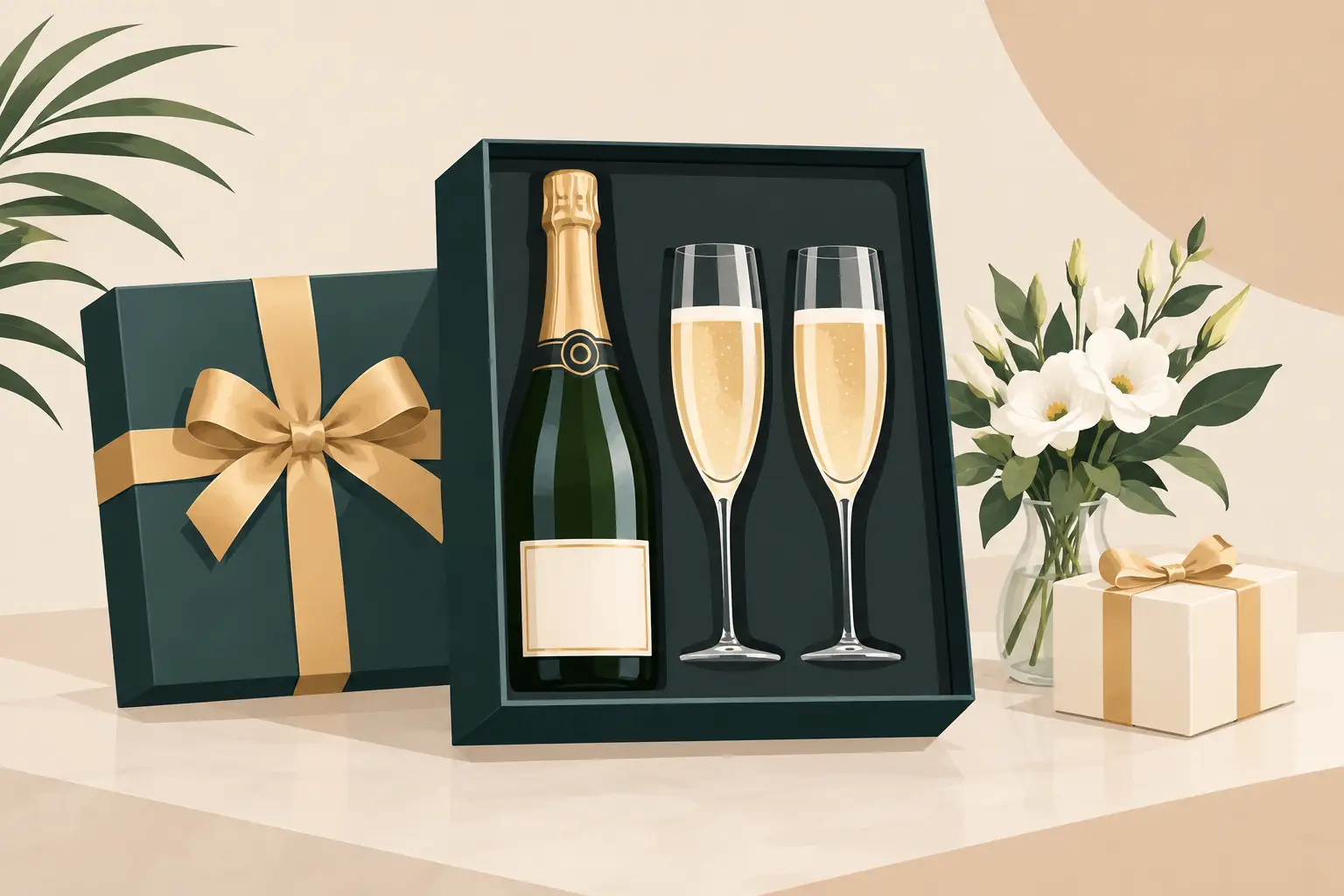
A Champagne gift set succeeds when it feels chosen, not merely purchased. The recipient may remember the pop of the cork and the first chilled glass, but they will also notice the details: whether the bottle suits the occasion, whether the style matches their palate, and whether the presentation has a sense of occasion. A well-considered Champagne gift set brings those elements together, whether you are marking a milestone promotion, thanking an important host, or arriving at a dinner with something more memorable than flowers.
For a category associated with celebration, Champagne is surprisingly nuanced. Producer, dosage, vintage, bottle format, and accompanying accessories all affect the experience. The right choice depends less on finding the most expensive bottle and more on understanding how, where, and with whom it will be enjoyed.
What Makes a Champagne Gift Set Feel Special
At its simplest, a gift set centers on a bottle of Champagne. Yet the bottle should carry the occasion on its own merits. A respected non-vintage cuvée from a historic house offers immediate recognition and dependable refinement. A grower Champagne can feel more personal and distinctive, especially for a recipient who enjoys learning about individual villages, vineyards, and vintages. A prestige cuvée makes a stronger statement for landmark moments, but it is not automatically the best choice for every drinker.
Presentation should support the wine rather than distract from it. A handsome gift box, two proper flutes, a Champagne stopper, or a thoughtfully selected gourmet accompaniment can transform a bottle into a complete gesture. For corporate gifting or formal celebrations, restraint often reads as more polished than excess. One exceptional bottle in elegant packaging can be more persuasive than a crowded hamper of unrelated items.
There is also a practical consideration: a gift set should be easy to enjoy. If the recipient is unlikely to open a large bottle soon, a standard 750ml format is more versatile than a magnum. If they regularly entertain, however, a magnum creates theater at the table and generally develops more slowly in the cellar, making it an appealing choice for both service and collecting.
Choose the Champagne Style Before the Extras
The most useful starting point is the recipient’s taste. Champagne is not a single flavor profile. Even within the familiar Brut category, the spectrum runs from taut, mineral-driven wines to generous, toasted, richly textured examples.
For the classic Champagne drinker
A Brut non-vintage Champagne is the safest and most versatile direction. These blends are the signature of many leading houses, made to express a consistent style across releases. Expect bright citrus, orchard fruit, white flowers, fine mousse, and, in more mature examples, brioche and hazelnut. This is the bottle to choose for a host, a client, or a recipient whose preferences are unknown but whose standards are high.
Brut Champagne is also remarkably food-friendly. It works before dinner with canapés, alongside fried chicken or tempura, and through seafood courses featuring oysters, sashimi, crab, or butter-poached lobster. A set built around Brut needs little embellishment because the wine is ready for nearly any celebration.
For the enthusiast who likes precision
Blanc de Blancs, made exclusively from Chardonnay, is often an excellent gift for someone who enjoys freshness, finesse, and clarity. The finest examples can show lemon zest, chalk, white peach, and an energetic saline line, with the structure to age beautifully. They are particularly compelling with raw seafood, lighter shellfish dishes, and delicately prepared fish.
This style is not always the best answer for a recipient who prefers broad, savory, Pinot-driven wines. It can feel more focused than opulent. But for the person who talks about Chablis, grand cru Burgundy, or the difference between Côte des Blancs villages, a Blanc de Blancs gift set signals real attention.
For richer palates and celebratory dinners
Pinot Noir-led Champagne, including many Blanc de Noirs bottlings, offers more breadth and vinous depth. Look for notes of red apple, wild strawberry, spice, smoke, and pastry, often with a richer mid-palate than Chardonnay-dominant cuvées. These wines are persuasive dinner companions, especially with roast poultry, glazed ham, pork, mushroom dishes, and even lightly spiced Asian cuisine.
Rosé Champagne brings another layer of appeal. Its color makes an immediate visual impression, but the best examples offer far more than novelty: red berries, blood orange, rose petal, and a supple, gastronomic texture. A rosé gift set feels celebratory and generous, particularly for anniversaries, birthdays, and intimate dinners.
Match the Bottle to the Moment
An occasion provides useful guidance on how ambitious a Champagne gift should be. For a casual thank-you or dinner invitation, a respected house Brut in a branded presentation box is elegant and appropriate. For a wedding, new home, major promotion, or retirement, consider a vintage Champagne, a prestige cuvée, or a magnum with the recipient’s entertaining habits in mind.
Vintage matters because it gives the bottle a specific story. Unlike non-vintage Champagne, which blends wines from multiple years to maintain a house style, vintage Champagne reflects one harvest. In favorable years, it can show extra concentration, definition, and aging potential. This makes it particularly fitting for a birth year, wedding year, or business milestone, provided the vintage is ready to drink or the recipient is happy to cellar it.
Do not assume older is always better. Champagne storage is exacting, and provenance matters. A younger release from a trusted producer and specialist merchant can offer more pleasure than an older bottle of uncertain history. For collectors, pristine condition, professional storage, producer reputation, and critic insight deserve at least as much attention as the date on the label.
Building a Champagne Gift Set With Purpose
Accessories should answer a real need. Two flutes make sense for a couple celebrating an engagement or anniversary. A high-quality stopper is useful for a recipient who may enjoy the bottle over two evenings, though Champagne is always at its most expressive soon after opening. A cooler sleeve is practical for outdoor gatherings, while a proper ice bucket suits a host who enjoys polished table service.
Food additions require more restraint. Champagne pairs naturally with fine savory snacks, but overly sweet chocolates can mute its freshness and make a dry Brut taste sharper. If adding something edible, consider salted almonds, premium potato chips, caviar, smoked salmon, or delicate shortbread. For sweeter styles such as Demi-Sec, richer desserts and fruit-based pastries become more natural partners.
For a more personal presentation, include a short handwritten note rather than an elaborate explanation of the wine. Mention why you chose it: a bottle for their next dinner party, a toast to a new chapter, or an invitation to save it for the right table. That small context gives the gift emotional weight without making it formal.
A Champagne Gift Set for Corporate Giving
Corporate gifting calls for good judgment. A recognized producer, clean presentation, and a bottle that can be enjoyed without specialist knowledge are usually the strongest combination. Unless you know the recipient well, Brut non-vintage Champagne is more reliable than a highly individual grower bottling or an unusually dry Extra Brut.
Price should be guided by the relationship and company policies, not by a need to impress through scale. A thoughtful, beautifully presented bottle from a respected house can feel appropriately generous. For senior clients or significant partnerships, a vintage release or prestige cuvée may be suitable, particularly when accompanied by a concise note of thanks.
It is also wise to consider timing and delivery. Champagne should arrive in a condition that reflects the care behind the gesture. In Singapore’s climate, professional handling and temperature-conscious delivery matter, particularly when the bottle is intended for an immediate occasion.
Serving Advice Worth Including
A great bottle can underperform if served too cold or in unsuitable glassware. Most non-vintage Brut Champagne shows best around 45 to 50°F, while richer vintage and prestige cuvées can benefit from a slightly warmer 50 to 54°F. At refrigerator temperature, aromas can seem muted; as the wine warms gently in the glass, its perfume and texture become more apparent.
Traditional narrow flutes preserve bubbles, but tulip-shaped Champagne glasses often reveal more aroma and complexity. For a serious wine lover, a set of two tulip glasses is a more considered addition than generic flutes. The goal is not ceremony for its own sake, but giving the wine enough space to show its character.
The finest gifts are not necessarily the rarest or most expensive. They are the ones that anticipate a real moment of pleasure. Choose a Champagne with sound provenance, a style that fits the recipient, and presentation that feels quietly assured – then let the bottle create the occasion it was chosen for.


