


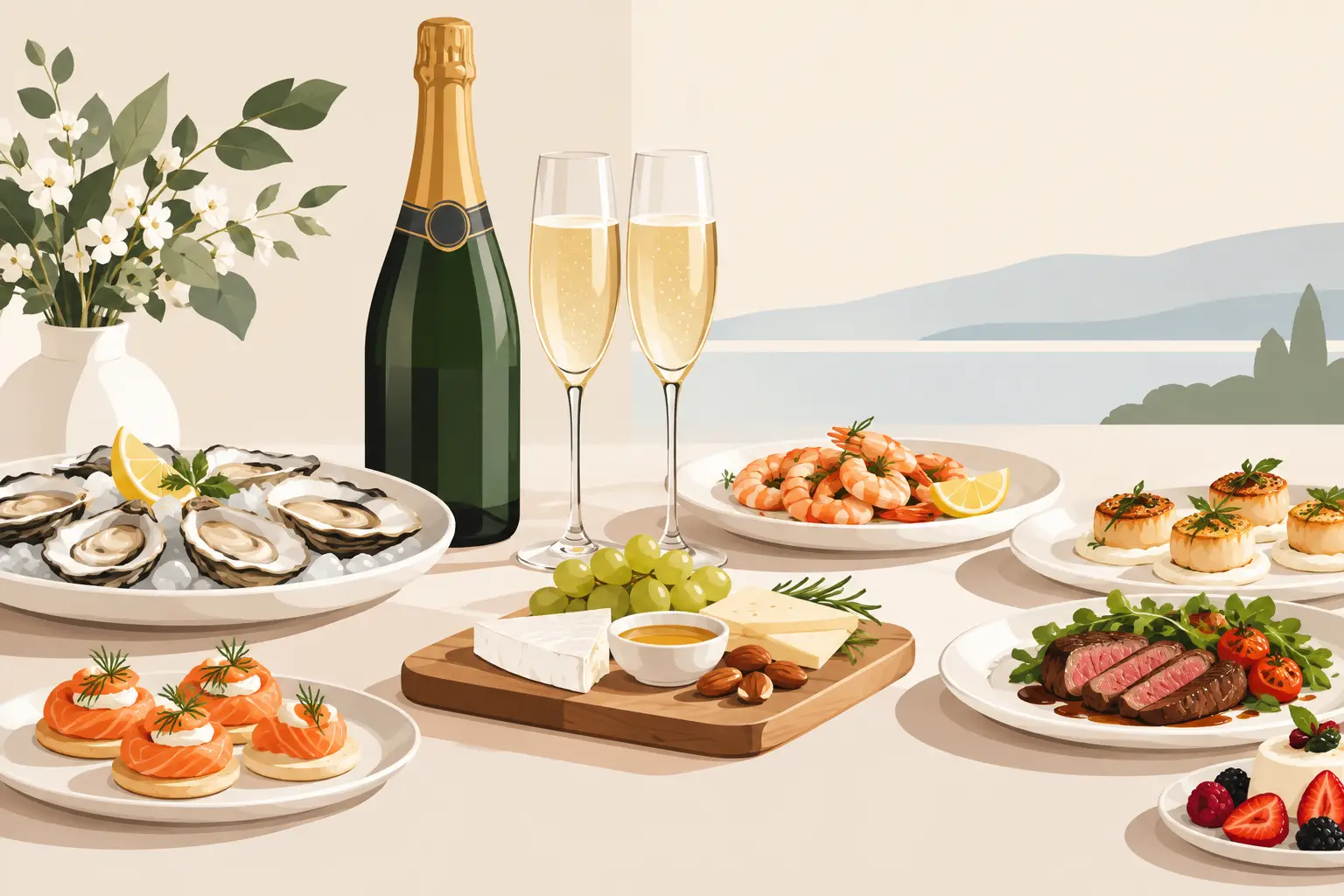
A great bottle of Champagne does more than mark an occasion. Its brisk acidity, fine mousse, and savory complexity can sharpen a first bite, refresh the palate between courses, and make familiar dishes feel newly composed. The best Champagne food pairings are not confined to oysters and caviar, although both remain classics for good reason. The real key is matching the wine’s structure and dosage to the dish’s richness, salt, spice, and texture.
Champagne is made in many expressions, from racy blanc de blancs to vinous vintage cuvées and quietly powerful rosés. Treating them as interchangeable leaves a great deal of pleasure on the table. Serve most non-vintage Champagne well chilled, around 46 to 50°F, then allow fuller vintage and prestige cuvées a few minutes in the glass to reveal their breadth.
Start With the Champagne Style
Before choosing the menu, consider what is in the bottle. Blanc de blancs, made exclusively from Chardonnay, is often lifted by citrus, white flowers, chalk, and a taut, saline finish. It excels with delicate seafood and dishes that need lift.
A classic brut blend, usually based on Chardonnay, Pinot Noir, and Meunier, offers greater versatility. Its orchard fruit, brioche, and subtle nutty notes can handle salty snacks, roast poultry, and creamy sauces. Vintage Champagne and prestige cuvées tend to be more layered and gastronomic, with the concentration for lobster, truffle, or a beautifully roasted bird.
Rosé Champagne brings red-berry perfume and broader texture, particularly when Pinot Noir plays a leading role. It is an exceptional choice for duck, tuna, salmon, and lightly spiced Asian dishes. Extra brut and brut nature bottlings, with very low dosage, feel especially incisive with raw seafood and fried food, while a richer brut or demi-sec can be more forgiving with spice or dessert.
Best Champagne Food Pairings for an Aperitif
Oysters, sashimi, and chilled shellfish
Oysters with a squeeze of lemon are a benchmark pairing because Champagne echoes their salinity while its acidity cuts through the oyster’s creamy brine. Choose a taut blanc de blancs or extra brut bottling, especially one with a chalky, mineral profile. The same principle works with scallop crudo, sea urchin, and cleanly sliced white fish sashimi.
Avoid drowning the dish in sharp ponzu or heavily sweet sauces. A restrained dressing of citrus, soy, and a touch of fresh ginger can work, but the Champagne should still have room to show its own finesse. For a celebratory raw bar, open a younger, energetic non-vintage cuvée first and save mature vintages for richer courses.
Caviar and potato chips
This is one of the most reliable pairings in wine. The salt and richness of caviar meet Champagne’s bubbles and acidity, while a crisp potato chip adds texture without competing with its flavor. A refined brut with several years on lees brings enough brioche character to complement the potato and crème fraîche, yet stays fresh enough to reset the palate.
For a more formal presentation, serve caviar on warm blini with a light hand on the sour cream. For a relaxed gathering, good-quality chips, chilled caviar, and a proper Champagne stopper nearby are all that is needed. Prestige is welcome here, but not mandatory: balance matters more than price.
Tempura, fried chicken, and other crisp bites
Champagne is one of the finest answers to fried food. Carbonation sweeps away oil, acid brightens the crust, and the wine’s autolytic notes can mirror the toasted flavor of batter. Tempura prawns, calamari, fried chicken, and even potato croquettes all find a natural partner in a dry brut.
With fried chicken, favor a fuller Pinot Noir-led Champagne or a rosé Champagne if the seasoning leans savory and peppery. If the chicken is glazed with honey or served with a sweet-hot sauce, a standard brut with a touch more dosage will feel more harmonious than an austere brut nature.
Champagne at the Table: Match Texture Before Flavor
Lobster, crab, and buttery seafood
Lobster is where Champagne’s range becomes especially clear. Simply grilled lobster with lemon butter suits a mature blanc de blancs or an elegant vintage Champagne, whose hazelnut, pastry, and citrus notes can meet the sweetness of the meat without overwhelming it. Butter-poached lobster, rich crab pasta, and scallops with cauliflower purée call for more body, not necessarily more sweetness.
A grander bottle with bottle age can be breathtaking here. The bubbles may have softened, but the wine often gains a creamy texture and savory depth that mirrors a luxurious sauce. Keep the seasoning precise: too much garlic or chili can blunt the wine’s detail.
Roast chicken and truffle
Roast chicken remains one of the best Champagne pairings for a dinner party because it is generous without being heavy. A mature brut, vintage Champagne, or Pinot Noir-dominant blend works beautifully with crisp skin, pan juices, and a mushroom or truffle garnish. The wine’s acidity brings brightness to the roast, while its biscuit and toasted-almond notes connect naturally with browned butter and roasted flavors.
If truffle is the focus, choose a developed Champagne rather than the youngest, most citrus-driven bottle in the cellar. A few years of age can bring notes of dried mushroom, toast, and spice that feel remarkably at home beside the dish. This is also a compelling course for a special magnum, which tends to evolve slowly and presents handsomely at the table.
Duck, tuna, and salmon with rosé Champagne
Rosé Champagne has enough fruit and Pinot Noir character to bridge seafood and meat. Seared tuna with sesame, roast duck with cherries, or salmon with a lightly smoked or miso-glazed finish all benefit from its red-fruit lift and firm acidity. Look for a dry rosé with substance rather than a simple, candy-like style.
Duck is particularly revealing. A delicate duck breast with a cherry or plum sauce needs a rosé that has fruit but remains dry; a bold, heavily oaked red would often dominate the dish. For duck confit or a richer preparation, a structured vintage rosé can carry the weight with confidence.
Pairing Champagne With Asian Flavors
Champagne belongs naturally on a Singapore table, where a meal may move from seafood to spice, roasted meats, and aromatic herbs. The guiding principle is to avoid excessive sweetness and heat, which can make a very dry Champagne seem severe. Instead, use Champagne’s freshness to cool the palate and its bubbles to lighten richer textures.
Steamed dim sum, har gow, and lightly fried spring rolls are excellent with non-vintage brut. The wine’s acidity brings clarity to prawn, pork, and sesame oil, while its mousse suits delicate wrappers and crisp pastry. Char siu, roast pork, and Peking duck work with a fuller brut or rosé, particularly when the sauces are not too sweet.
For chili crab, the pairing depends on the sauce. A fiercely hot, sugary rendition can overwhelm nearly any fine wine, but a more savory, tomato-led preparation can be delicious with a fruit-forward brut rosé. Keep a chilled bottle of water on the table, and do not serve the Champagne too cold, or its fruit will disappear beneath the spice.
Cheese, but choose carefully
Champagne is more versatile with cheese than many people expect, but blue cheese and very pungent washed-rind styles can make a dry bottle taste metallic or thin. Better choices include triple-cream cheeses, aged Comté, Gruyère, or a nutty alpine cheese. Their salty, buttery character finds an easy counterpart in a mature brut.
For a cheese course, avoid presenting too many competing flavors. One creamy cheese and one aged, firm cheese allow the Champagne to remain the center of attention. A blanc de blancs is especially elegant with fresh goat cheese, while a richer vintage blend can flatter Comté or Parmesan.
Dessert Is the Exception
Dry Champagne with a sweet dessert is a common misstep. The dessert makes the wine seem sharper and less fruity, even if the bottle is excellent. If the final course includes fruit tart, madeleines, or lightly sweet almond cake, a demi-sec Champagne is the more considered choice. Its extra dosage is not cloying when balanced by bright acidity.
For a brut Champagne, shift toward desserts that are barely sweet, such as fresh berries with whipped cream, a simple shortbread, or poached pear. Alternatively, let the Champagne finish the meal on its own, perhaps with a few salted almonds. A fine bottle deserves that quiet moment.
The most memorable pairings are often built around one thoughtful match rather than a complicated menu. Choose the Champagne first when the bottle is special, then let its style guide the dish. For hosts weighing a current-release brut against a mature vintage or rosé, Crystal Wines can help identify a bottle with the freshness, depth, and provenance the occasion deserves.


