


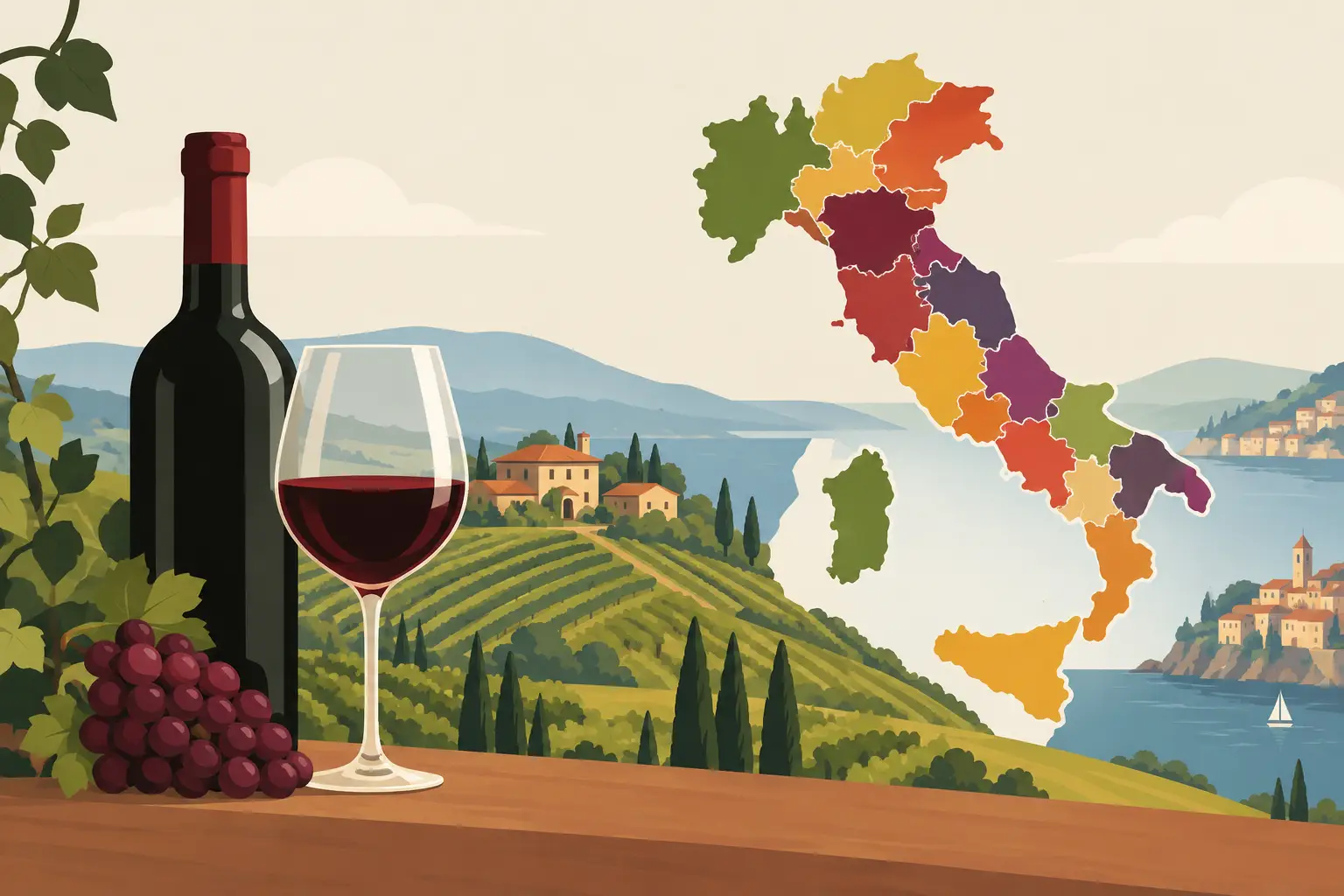
A bottle labeled Barolo, Brunello di Montalcino, or Etna Rosso tells a much more precise story than “Italian red.” That precision is what makes Italy such a rewarding country to buy from and, at times, such a demanding one. This Italian wine regions guide is designed to make the labels useful: which places produce immediate pleasure, which deserve a place in the cellar, and which bottles suit a dinner table in the first place.
Italy has hundreds of native grape varieties, a latticework of DOC and DOCG rules, and vineyards that can change character dramatically from one hillside to the next. The productive approach is not to memorize every appellation. Start with the regional signatures, then narrow your choices by producer, vintage, vineyard, and intended occasion.
Italian Wine Regions Guide: Start With Style
The north generally offers freshness, structure, and aromatic definition. Piedmont’s Nebbiolo can be pale in color yet profound in tannin and perfume; Veneto can move from crisp Soave to rich Amarone; Alto Adige often combines alpine brightness with precise fruit. Central Italy is the natural home of Sangiovese, with savory cherry fruit, herbal lift, and food-friendly acidity. Further south, warmer conditions bring generosity, spice, sun-ripened fruit, and increasingly compelling wines shaped by elevation or coastal influence.
That is a useful starting point, not a rule. A traditionally made Barolo from a cool vintage may feel more restrained than a modern Brunello, while a high-elevation Etna Rosso can be unexpectedly light on its feet. Producer philosophy and vintage matter as much as the regional name.
Piedmont: Nebbiolo’s Grandest Expressions
Piedmont is essential territory for collectors and serious drinkers. Barolo and Barbaresco are both made from Nebbiolo, a grape capable of rose petal, tar, red cherry, orange peel, and truffle notes, framed by high acidity and firm tannin. Barolo is commonly the broader, more structured expression, particularly from Serralunga d’Alba and Monforte d’Alba. Barbaresco is often more immediately graceful, though leading examples can age for decades.
For a cellar, look beyond the appellation alone. A Barolo from a respected estate and a specific commune or vineyard offers more definition than a generic bottling, but it also calls for patience. Langhe Nebbiolo is the sensible route when you want the grape’s perfume without the long wait or collector-level price.
Piedmont also excels with Barbera, which brings juicy dark fruit and bright acidity, and Dolcetto, a softer, everyday red with a pleasantly bitter edge. These are excellent choices for charcuterie, mushroom pasta, roasted poultry, and weeknight Italian cooking.
Tuscany: Sangiovese, Place, and Patience
Tuscany’s finest wines show why Sangiovese deserves to be treated as a world-class variety. Chianti Classico is typically lively and savory, with sour cherry, dried herbs, earth, and a refreshing finish. It is one of the most reliable reds for the table, particularly with tomato-based dishes, grilled meat, and aged pecorino.
Brunello di Montalcino is a more structured proposition. Made from Sangiovese in Montalcino, it can show darker cherry fruit, leather, tobacco, balsamic complexity, and a long, refined finish. Strong producers and well-balanced vintages reward a decade or more in the cellar, though mature Brunello is also an exceptional choice for a landmark dinner.
Bolgheri and the Tuscan coast offer a different vocabulary. Cabernet Sauvignon, Merlot, Cabernet Franc, and Syrah often take center stage, producing polished, powerful wines that appeal to Bordeaux drinkers while retaining Mediterranean warmth. The trade-off is stylistic: choose Brunello or Chianti Classico for Sangiovese’s transparency and savory tension; choose Bolgheri when you want darker fruit, broader texture, and international grape varieties.
Veneto and Friuli: More Than Amarone and Prosecco
Veneto contains two very different classics. Soave, especially from hillside sites and quality-minded producers, can be a superb white: dry, mineral, almond-scented, and quietly complex. It is an elegant match for shellfish, steamed fish, and lightly spiced Asian dishes.
Amarone della Valpolicella sits at the other end of the spectrum. Its grapes are dried before fermentation, concentrating flavor and alcohol into a rich red with dried cherry, cocoa, spice, and a velvety, warming palate. Amarone is compelling with braised beef, game, or hard cheeses, but its intensity can overwhelm a delicate meal. Valpolicella Ripasso offers a more moderate alternative with similar dark-fruit appeal.
Neighboring Friuli-Venezia Giulia deserves attention from white-wine collectors. Pinot Grigio can be serious here, but so can Friulano, Ribolla Gialla, and Sauvignon Blanc. Expect texture, stony freshness, and more personality than the simple, neutral Pinot Grigio category suggests.
Sicily and Etna: Italy’s Most Exciting Contrast
Sicily is no longer merely a source of generous-value reds. Nero d’Avola can be plush, spicy, and satisfying, especially with grilled lamb or eggplant dishes, while Grillo offers citrus, herbs, and saline lift for seafood.
Etna is Sicily’s most distinctive fine-wine region. Vineyards on Mount Etna can sit at substantial elevation in volcanic soils, tempering the island’s heat. Etna Rosso, led by Nerello Mascalese, often has red-fruit perfume, ash-like minerality, taut acidity, and fine tannin. Its profile can appeal to lovers of Pinot Noir, Nebbiolo, or elegant Northern Rhône reds, though it remains unmistakably its own. The best bottles possess remarkable poise and can develop beautifully in bottle.
Campania, Puglia, and the Southern Value Case
Campania offers some of Italy’s most characterful whites. Fiano di Avellino can be layered, waxy, and nutty with age; Greco di Tufo is often firmer and more mineral. Both make persuasive choices for a seafood-focused meal and deserve consideration beyond their modest reputation in many markets.
Puglia delivers warmer, more immediately expressive reds. Primitivo is generous and fruit-forward, while Negroamaro often adds earth, dark berries, and a savory edge. These can be satisfying party wines, particularly with barbecue, but check alcohol levels if freshness is a priority. In a warm climate, balance is a producer’s real achievement.
How to Buy Italian Wine With Confidence
First, buy for the moment. For a dinner this weekend, choose Chianti Classico, Barbera, Soave, Etna Bianco, or a well-made Nero d’Avola. For a celebratory steak or slow-cooked centerpiece, consider Brunello, Barolo with some bottle age, Amarone, or a leading Bolgheri red.
Second, let producer and vintage guide your step up in price. Italian appellations are meaningful, but a great estate’s entry cuvée is often more rewarding than an anonymous bottle from a grander name. Vintage becomes increasingly relevant with cellar-worthy wines: warmer years may offer earlier generosity, while cooler years can favor aromatic detail and longevity.
Finally, serve the wine to show its best side. Most Italian reds are more expressive at a lightly cool room temperature than in a warm dining room. Give young Barolo, Brunello, and Amarone air in a decanter, while mature bottles should be opened carefully and assessed gradually. A small adjustment in temperature or time can reveal the sensational perfume and savory detail that made the bottle worth choosing.
Italy rewards curiosity because no single region has the final word. Build a cellar with a few reference bottles from Piedmont and Tuscany, then leave room for an Etna red, a serious Soave, or a mineral Campanian white. The most memorable discoveries often begin just beyond the label you already know.


