


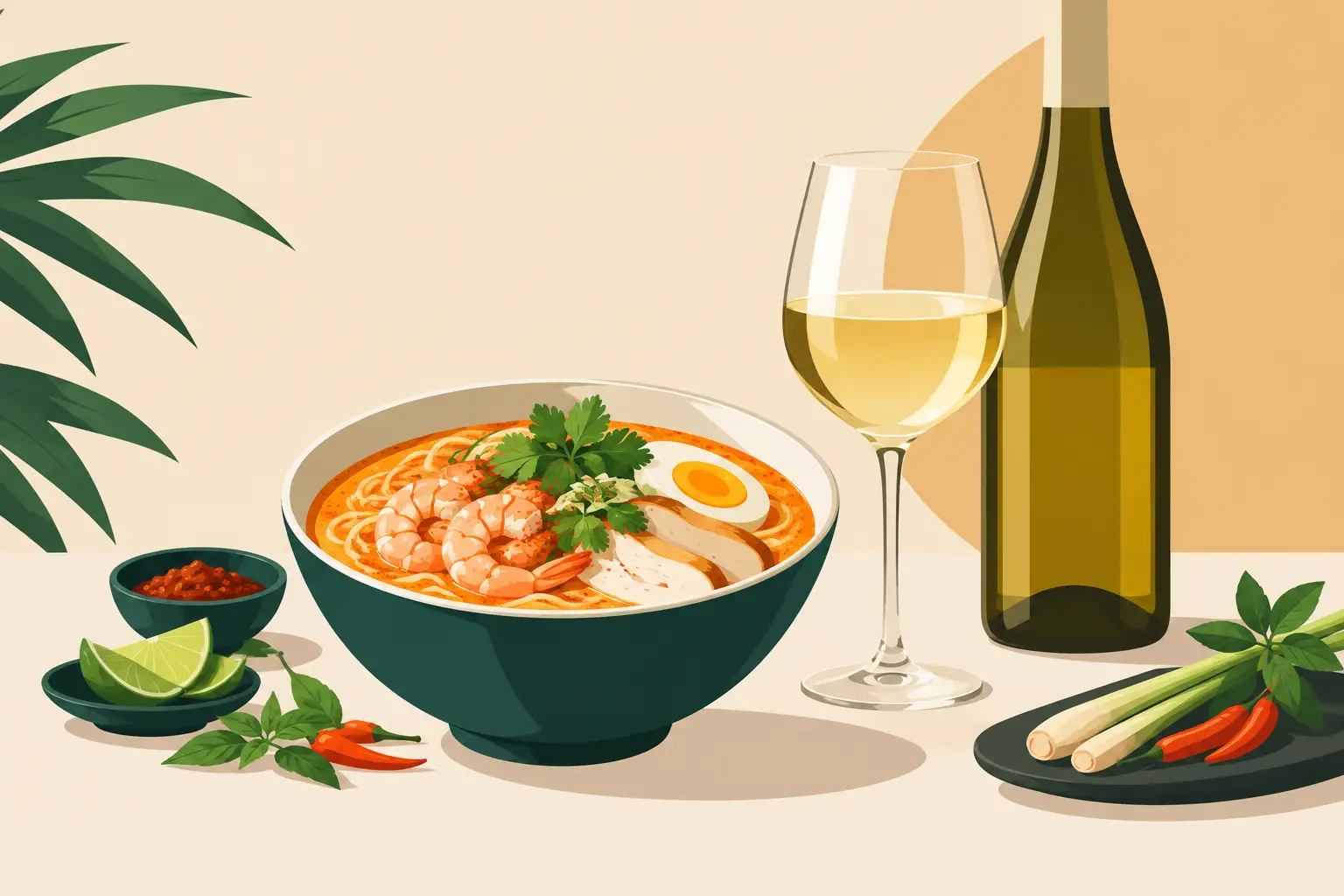
A bowl of laksa asks more of wine than most dishes. Chili oil warms the palate, coconut milk brings richness, dried shrimp adds savory depth, and fresh herbs keep every spoonful alive. To pair laksa wine well, choose a bottle that refreshes rather than competes – one with bright acidity, modest alcohol, and enough aromatic character to meet the dish on its own expressive terms.
The instinct to reach for a full-bodied Chardonnay or a powerful red is understandable, particularly when the laksa contains prawns, chicken, or richly spiced broth. Yet those wines often amplify chili heat and make the broth seem heavier. Laksa is a dish of contrasts: creamy but lively, spicy but fragrant, rich but sharpened by lime and herbs. The most successful pairings respect that tension.
Why Laksa Is a Demanding Wine Match
There is no single laksa. Singapore-style curry laksa is generally the richest expression, with coconut milk, curry spices, noodles, seafood, tofu puffs, and sambal. Asam laksa, associated with Penang, leans tart and fish-forward, built on tamarind, mackerel, pineapple, and pungent herbs. Even within a single kitchen, the balance of coconut, chili, acidity, and protein can change dramatically.
Wine must therefore respond to the bowl in front of it, not simply the word “laksa” on the menu. Chili is the key consideration. High-alcohol wines can intensify the burn, while aggressive tannins may turn metallic or bitter alongside seafood and spice. A little residual sugar, on the other hand, can soften heat beautifully. High acidity brings lift to coconut broth, and floral or citrus-led aromatics echo ginger flower, torch ginger, lemongrass, laksa leaf, and lime.
The ideal bottle is rarely sweet in a dessert-wine sense. Think of balance instead: a wine with tension, freshness, and a discreet cushion of fruit. Serve it well chilled, but not ice-cold, so its perfume remains intact.
The Best Wines to Pair With Laksa
Off-Dry Riesling Is the Most Reliable Choice
For curry laksa, off-dry Riesling is the benchmark. Its lime, green apple, white peach, and jasmine notes feel at home with the dish’s citrus and herbal accents, while its acidity slices through coconut milk. A modest touch of sweetness tames chili without making the pairing cloying.
Look to Germany’s Mosel for delicacy, electric acidity, and lower alcohol, especially when the sambal is generous. An off-dry Kabinett or feinherb style can be particularly graceful with seafood laksa. For a fuller, more sun-kissed bowl, Riesling from Alsace or Australia can work well, provided it remains fresh rather than broad and high in alcohol.
Dry Riesling is also possible when the laksa is mildly spiced or notably tangy. The drier the wine, however, the more important it becomes to keep the chili in check. If the broth leaves a serious burn on its own, an off-dry bottling is the safer and more pleasurable call.
Gewurztraminer Brings Fragrance and Softness
Gewurztraminer is a compelling choice for laksa because it speaks the dish’s aromatic language. Rose petal, lychee, ginger, spice, and ripe tropical fruit can complement coconut, galangal, and lemongrass with impressive ease. Its texture is often broader than Riesling’s, making it especially persuasive with a luxurious curry laksa or one enriched with roast chicken.
There is a trade-off. Gewurztraminer can be low in acidity and relatively high in alcohol, two qualities that may make a very fiery laksa feel hotter. Choose a fresh, balanced example, ideally with a hint of sweetness, and chill it thoroughly. Alsace remains the natural starting point, though cooler-climate expressions elsewhere can offer an appealingly restrained profile.
Sparkling Wine Adds Lift to Rich Curry Laksa
A dry sparkling wine can be unexpectedly excellent with a creamy laksa. Fine bubbles refresh the palate between mouthfuls, while citrus and brioche notes play well against prawns, fish cake, and fried tofu. The pairing is most successful with a moderately spicy bowl, rather than one dominated by raw chili heat.
Traditional-method sparkling wines with a softer fruit profile are preferable to austere, razor-dry examples. A Blanc de Blancs can be elegant with seafood-forward laksa, while a fuller sparkling blend may suit chicken or richer coconut broth. For casual lunches and larger gatherings, a quality sparkling wine offers festive energy without demanding too much attention from the food.
If choosing Champagne, favor a generous, fruit-driven non-vintage cuvee over an intensely mineral, extra-brut style. The aim is refreshment and harmony, not a contest between precision and spice.
Pinot Gris and Chenin Blanc Offer Textural Alternatives
Pinot Gris, especially in an Alsace-inspired or slightly off-dry style, is an excellent alternative for those who want more body than Riesling. Pear, melon, citrus peel, and gentle spice can match the dish’s creamy texture while maintaining enough freshness to avoid palate fatigue. It is particularly good with laksa containing chicken, tofu puffs, or a generous spoonful of coconut cream.
Chenin Blanc is more dependent on the individual bottle. A lightly off-dry Vouvray can be superb, bringing quince, apple, honeyed notes, and focused acidity to the table. Dry Chenin works best when lime, tamarind, or other acidic elements are prominent, as with a sharper seafood laksa. Avoid overly oaked or heavily oxidative examples, which can obscure the delicate herbal side of the dish.
Pair Laksa Wine to the Style of Broth
For classic curry laksa, prioritize wines with a little sweetness and high acidity. Off-dry Riesling leads the field, followed by fragrant Gewurztraminer and gently fruity sparkling wine. The richer and creamier the broth, the more useful a wine’s acidity becomes.
For asam laksa, move toward drier, zippier wines. The tamarind and fish broth call for a wine with real cut: dry Riesling, Sauvignon Blanc with restrained tropical character, or Chenin Blanc can all work. Here, the challenge is less about calming coconut richness and more about matching the dish’s assertive sour-salty profile.
For a lighter, clear-broth seafood laksa, consider a crisp aromatic white with minimal oak. Dry Riesling, Pinot Blanc, or a restrained Grüner Veltliner can highlight prawns, clams, and fresh herbs. Grüner’s peppery edge can be appealing, although it is best reserved for versions of laksa where chili is present but not overwhelming.
Wines to Approach With Caution
Oak-heavy white wines are the most common misstep. Vanilla, butter, and toast can flatten laksa’s vibrant aromatics, while a high alcohol level magnifies the spice. A lightly oaked Chardonnay may work with a mild, creamy chicken laksa, but it is not the place to begin.
Tannic reds are still more difficult. Cabernet Sauvignon, Barolo, and young Bordeaux are built for protein-rich dishes with less chili and more structure. Their tannins can clash with seafood, and their alcohol can make spicy broth feel punishing. If red wine is non-negotiable, choose a lightly chilled, low-tannin red such as Beaujolais or a delicate Pinot Noir, and keep the laksa’s chili level restrained. This is a personal-preference pairing rather than the classic answer.
Serve the Wine With Intent
Temperature matters. Aromatic whites should be served around 45 to 50°F, cold enough to sharpen their freshness but not so cold that their perfume disappears. Sparkling wine can be a little colder, around 43 to 47°F. Once the bottle is open, keep it chilled throughout the meal: a warm glass will feel broader and more alcoholic beside chili.
For a dinner party, set out lime wedges, sliced chilies, and sambal separately where possible. Guests who add more heat will appreciate a sweeter or lower-alcohol pour, while those who favor a gentler bowl may enjoy a drier expression. This small detail makes one thoughtful wine selection work across different palates.
Laksa does not require an expensive bottle, but it rewards a considered one. A beautifully balanced Riesling, a fragrant Alsace white, or a lively sparkling wine can turn a comforting noodle bowl into a genuinely memorable table occasion. Visit Crystal Wines for guidance on selecting a bottle suited to the exact laksa style and spice level you plan to serve.


