


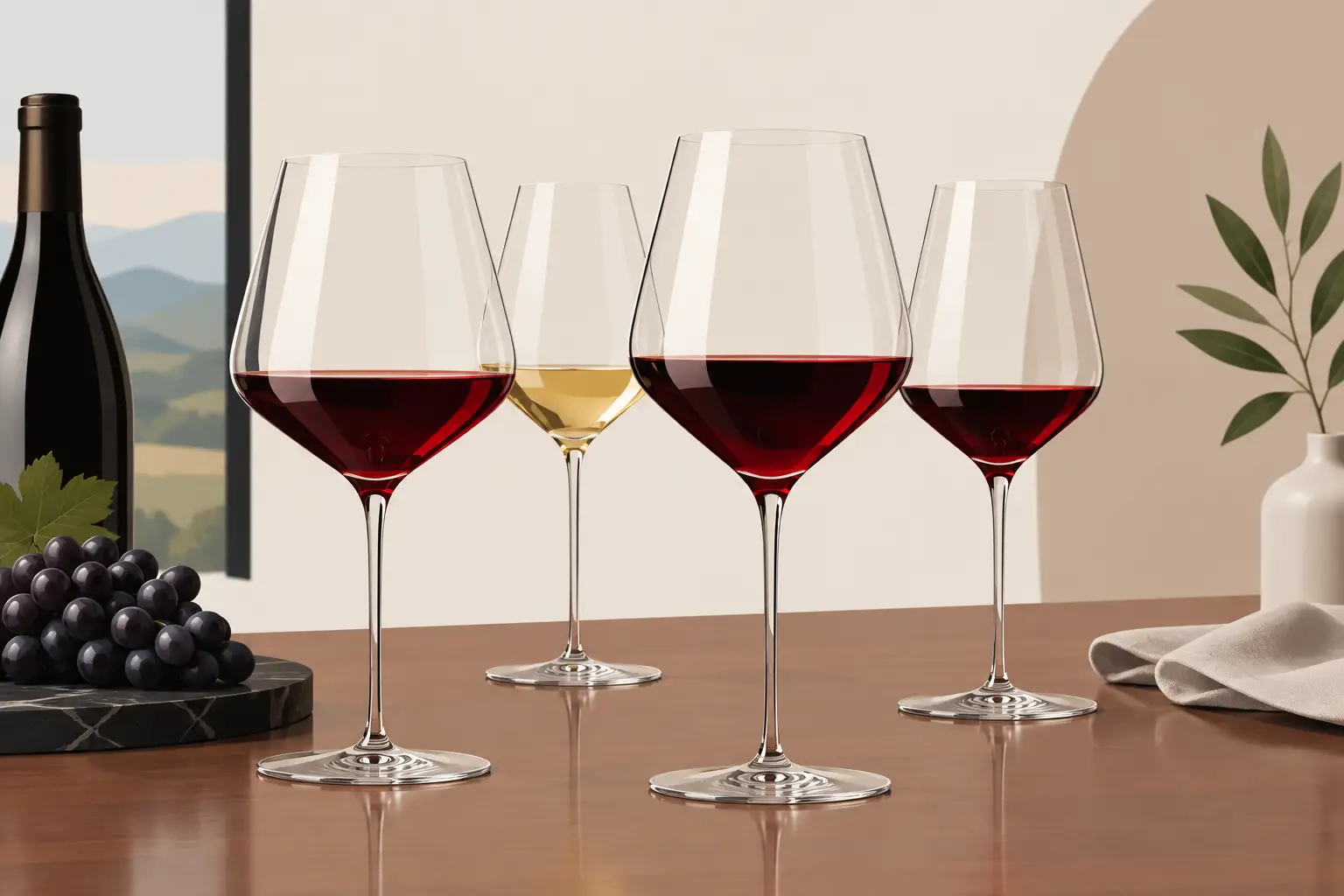
A great bottle can be impeccably stored, served at the right temperature, and still feel strangely muted in a heavy, thick-rimmed glass. Zalto wine glasses are designed to remove that last barrier between the wine and the drinker, bringing aromatic detail, texture, and length into sharper focus. For collectors opening a mature Bordeaux, hosts pouring Champagne at dinner, or enthusiasts comparing Burgundy vintages, the difference can be immediately persuasive.
What Makes Zalto Wine Glasses Different?
Zalto glasses are mouth-blown from lead-free crystal and prized for their exceptional thinness, lightness, and precise bowl shapes. Pick one up and it can feel almost implausibly delicate. That sensation is not merely aesthetic. A fine rim delivers wine to the palate with minimal interruption, while the glass’s broad, carefully proportioned bowl gives aromas room to gather and evolve.
The Denk’Art collection is particularly associated with Zalto’s signature angular profile. Its lines are based on the tilt angles traditionally used by Roman glassmakers, but its appeal is thoroughly modern: each shape is engineered around how a particular style of wine opens in the glass. This is not a claim that a glass can transform an ordinary bottle into a grand cru. It cannot. Rather, a well-chosen Zalto can make a wine’s structure more legible – the perfume more lifted, the tannins more refined, the fruit and mineral notes more clearly separated.
That distinction matters most with nuanced wines. A young, fruit-forward red may be enjoyable from almost any decent stemware. A mature Barolo with truffle, dried rose, tar, and fading red fruit demands more attention. So does a white Burgundy whose texture and smoky reduction are part of the experience, not background details.
Choosing the Right Zalto Wine Glasses
The best Zalto glass is not necessarily the one labeled for the bottle you intend to open. Grape variety, ripeness, age, and winemaking style all affect the decision. Still, the core shapes offer a useful and reliable starting point.
Universal: the most versatile first purchase
The Zalto Universal is often the most practical place to begin. Its medium-sized bowl handles a remarkably broad range: aromatic whites, rosé, sparkling wine, lighter reds, elegant Cabernet blends, and many everyday pours. It is an excellent choice for households that value fine stemware but do not want a separate cabinet section for every varietal.
For a dinner table serving both Champagne and a refined Pinot Noir, the Universal can be a more intelligent solution than multiple specialty glasses. It will not show a powerful, warm-climate Syrah or a monumental Napa Cabernet at quite the same scale as a larger bowl, but versatility is its virtue.
Burgundy: for perfume, texture, and expressive Pinot Noir
The Burgundy glass has the generous bowl many wine lovers expect for Pinot Noir, Nebbiolo, and expressive Chardonnay. Its broad surface encourages aromatic release, making it especially compelling for wines with layered floral, earthy, or savory notes.
Consider it for village-to-grand-cru Burgundy, Oregon Pinot Noir, Barolo, Barbaresco, and mature reds whose bouquet is as valuable as their fruit. It can also flatter serious white Burgundy, particularly richer examples from Meursault, Puligny-Montrachet, or grand-cru sites where concentration and mineral tension coexist.
The trade-off is simple: the bowl is large and the stem is fine. It is less convenient for a crowded buffet or a casual gathering where glasses may be moved frequently. For a considered dinner or a tasting where the bottle merits attention, that delicacy becomes part of the occasion.
Bordeaux: for structure and cellar-worthy reds
The Bordeaux glass is built for wines with backbone. Its taller, more elongated bowl gives Cabernet Sauvignon, Cabernet Franc, Merlot blends, and structured Syrah room to show fruit, graphite, cedar, tobacco, and tannin in proportion.
This is the natural companion for classified-growth Bordeaux, Saint-Émilion, Pomerol, California Cabernet, Tuscan Cabernet blends, and many powerful Australian reds. With younger wines, a generous pour and a little time in the bowl can soften the impression of oak and bring the fruit forward. With mature bottles, it preserves a sense of verticality rather than amplifying the softer, more evolved notes too quickly.
It is not only a “big red” glass. A beautifully made Brunello di Montalcino or Brunello Riserva can also perform brilliantly here, particularly when the wine is still firm and savory rather than fully evolved.
Champagne: for more than bubbles
A flute is elegant, but it prioritizes bead and visual drama over aroma. The Zalto Champagne glass offers a more expansive alternative for vintage Champagne, prestige cuvées, and serious grower bottlings. Its shape preserves freshness while providing enough surface area for brioche, citrus oil, chalk, orchard fruit, and subtle oxidative complexity to emerge.
For a youthful non-vintage Champagne at a reception, a flute remains perfectly appropriate. For an older Blanc de Blancs, a richly textured rosé Champagne, or a prestige bottling poured alongside food, the Zalto shape can reveal why Champagne belongs at the table as much as in the toast.
Do Zalto Glasses Really Change How Wine Tastes?
They can change how wine is perceived, which is not quite the same thing as changing the wine itself. Shape directs aroma toward the nose, influences where the liquid first lands on the palate, and affects the speed at which a pour aerates. Thin crystal also reduces the physical presence of the glass, so attention stays on the wine.
The effect tends to be most apparent in comparative tasting. Pour the same wine into a standard all-purpose glass and a Zalto Burgundy or Bordeaux glass, then smell each after a few minutes. In the better-suited stem, you may notice more defined fruit, greater floral lift, or a clearer distinction between ripe sweetness and oak. On the palate, the finish may seem more continuous and the tannins less blunt.
Yet expectations should remain sensible. Stemware will not correct a corked bottle, disguise excessive alcohol, or give a simple wine the complexity it does not possess. Its value lies in giving a strong bottle a more faithful presentation.
Caring for Fine Crystal Without Losing the Pleasure
Zalto’s fragility is real, but it should not discourage regular use. A glass that remains boxed away for fear of breakage never earns its place at the table. Handle each stem by the bowl or base when washing, avoid crowding it among heavy cookware, and allow ample space between glasses in the dishwasher if using one.
Many owners prefer hand-washing with warm water and a small amount of mild, unscented detergent. Rinse thoroughly and polish with a clean, lint-free cloth while the glass is still slightly warm. Avoid twisting the bowl and stem in opposite directions, which places unnecessary stress on the joint.
For entertaining, set Zalto glasses after the main serving dishes and decorations are in place. This small habit reduces accidental knocks and lets the table retain its sense of occasion without becoming precious.
Are Zalto Glasses Worth the Investment?
For regular fine-wine drinkers, the answer is often yes. Their cost is easier to justify when considered alongside the bottles they elevate. If a cellar includes mature Bordeaux, collectible Burgundy, top Barolo, grower Champagne, or age-worthy Chardonnay, drinking those wines from generic glassware can leave some of their character unexplored.
For newer enthusiasts or households that entertain frequently, begin with four to six Universal glasses. Add Burgundy or Bordeaux stems when your buying habits make the case clear. This staged approach is often more satisfying than purchasing a full suite before knowing which wines appear most often on your table.
The finest stemware should invite use, not anxiety. Choose a shape that suits the bottles you genuinely open, pour with confidence, and let the wine take its proper place at the center of the evening.


