


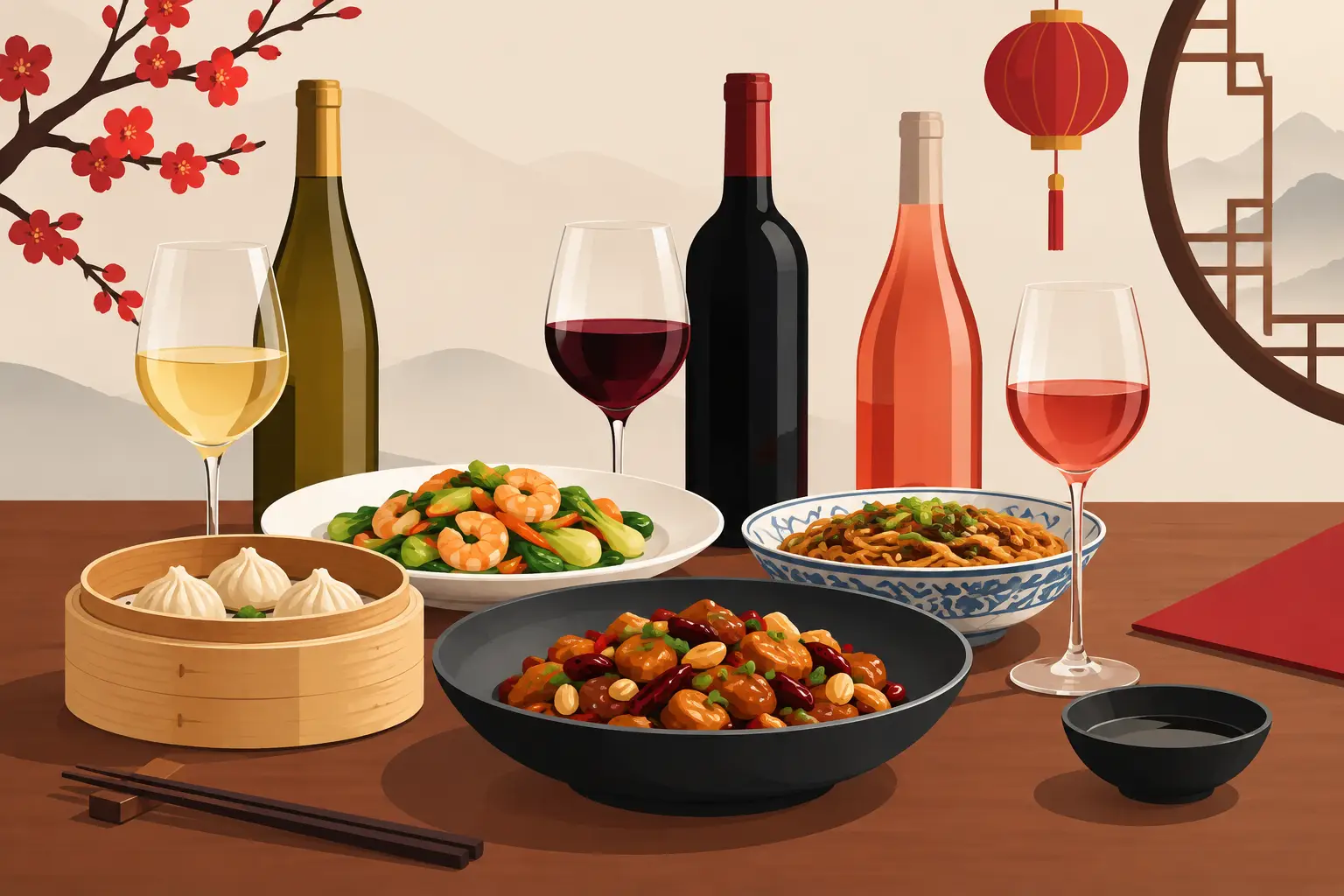
A Cantonese banquet can move from pristine steamed seafood to crackling roast meats, while a Sichuan meal may layer chile heat, fragrant peppercorn, and deep savory spice in a single course. That range is why the best wines for Chinese cuisine are not one fixed category. The successful bottle is usually one with freshness, modest alcohol, and enough fruit to meet sweetness, spice, and richly textured sauces without becoming heavy.
For Singapore tables in particular, where dim sum lunches, seafood dinners, reunion feasts, and restaurant-style takeout are all part of the occasion, the most rewarding approach is to match the wine to the dish’s dominant flavor. Think about heat, richness, sweetness, smoke, and umami before deciding whether to open Champagne, aromatic white wine, elegant Pinot Noir, or a more structured red.
The rule behind the best wines for Chinese cuisine
Chinese cuisine is often discussed as though it were a single style, but Cantonese, Sichuan, Hunan, Shanghainese, Teochew, and Northern dishes ask very different things of wine. A delicate steamed garoupa with ginger and scallion wants a different companion than twice-cooked pork or cumin-scented lamb skewers.
Acidity is the most useful starting point. It refreshes the palate after oil, skin, or fried textures, and it gives wine enough lift for soy-based sauces. A small amount of residual sugar can be equally valuable with chile, because dry, high-alcohol wine can make heat feel hotter and more angular. Tannin deserves a little caution: it can turn bitter against spice, black vinegar, and salty fermented ingredients.
This does not mean red wine is off the table. It means choosing reds for perfume, brightness, and supple structure rather than sheer concentration. A refined Burgundy Pinot Noir may be far more persuasive with roast duck than a muscular, oak-driven Cabernet. Conversely, an aged Bordeaux with softened tannins can be excellent with a celebratory soy-braised beef dish, especially when the meal is less spicy and more savory.
Start with Champagne and sparkling wine
Champagne is one of the rare wines that feels equally at home before a banquet and throughout it. Its fine mousse, bracing acidity, and subtle autolytic complexity cut through fried spring rolls, crispy prawn fritters, roast pork, and scallion pancakes. Blanc de Blancs is especially graceful with shellfish, steamed dumplings, and lightly seasoned fish, while a richer, Pinot-led Champagne has the breadth for char siu or roast duck.
For dim sum, sparkling wine is often the safest choice when several baskets arrive at once. The wine’s freshness works with shrimp har gow and siu mai, while its texture is flattering to baked barbecue pork buns and deep-fried taro. Extra Brut styles suit diners who prefer a taut, dry finish; Brut Champagne is more forgiving when sweet-savory glazes are involved.
Do not reserve a prestige cuvee only for the opening toast. A mature vintage Champagne can be spectacular with premium ingredients such as abalone, crab, or roast goose. The trade-off is that very old, delicate bottles may be overwhelmed by assertive chile and garlic. Save them for dishes where the ingredient quality and the wine’s savory, nutty detail can be appreciated.
Aromatic whites for spice, seafood, and sweetness
Riesling is among the most dependable answers to Sichuan and Hunan cooking. Its lime-like acidity, stone-fruit character, and occasional touch of sweetness temper chile heat while remaining lively beside salty sauces. A dry Riesling works beautifully with steamed fish, prawns, and dishes flavored by ginger or preserved vegetables. For mapo tofu, spicy chicken, or fiery hot pot, a Kabinett or off-dry Riesling is often the more harmonious choice.
Gewurztraminer offers a more opulent aromatic profile, with lychee, rose, ginger, and exotic spice. It is particularly rewarding with sweet-and-spicy dishes, five-spice preparations, and fragrant curry-style sauces. Choose a balanced example rather than one with excessive alcohol or sweetness, as the wine still needs tension at the table.
Other fragrant whites deserve attention. A dry Chenin Blanc with vivid acidity can handle pork dumplings, roast meats, and lightly spicy dishes. Grüner Veltliner, with its citrus, white pepper, and herbal edge, is compelling with stir-fried greens, tofu, and clean seafood preparations. For a richer Cantonese seafood meal, white Burgundy or premium Chardonnay can work beautifully if oak is restrained and the wine retains mineral freshness. Think lobster noodles, stir-fried scallops, or steamed crab with a gentle butter-and-ginger sauce rather than a hot chile dish.
Reds that respect the dish
Pinot Noir is the natural red for Peking duck, Cantonese roast duck, char siu, and crispy pork. Its red-cherry fruit, floral perfume, and silky tannins echo the sweet-savory lacquer of the meat without drying the palate. Village Burgundy offers exceptional value for an elegant dinner, while a more complex Premier Cru can rise to a celebratory roast duck course. Serve it slightly cool, around 57 to 61°F, to emphasize freshness.
Beaujolais, particularly Cru Beaujolais from Morgon, Fleurie, or Moulin-a-Vent, is another excellent option. Gamay’s juicy berry fruit and soft structure make it flexible with pork, duck, mushrooms, and barbecue. It is a particularly smart choice for a casual shared meal because it rarely dominates the food.
For braised dishes, aged Barolo, Brunello di Montalcino, or classically styled Bordeaux can be magnificent, provided spice remains restrained. These wines need a dish with depth and protein: soy-braised short ribs, tea-smoked duck, slow-cooked beef brisket, or mushrooms with dark sauces. Time in bottle is helpful. It softens tannin and brings leather, tobacco, dried rose, and savory notes that meet the dish’s umami with greater poise.
Young Cabernet Sauvignon, powerful Shiraz, and heavily extracted red blends are more difficult pairings. Their tannins can clash with chile and amplify bitterness in fermented black bean or soy sauces. They may still suit cumin lamb, grilled beef, or richly charred barbecue, but keep the sauce level moderate and pour them with a substantial main course, not delicate dumplings or seafood.
Match wine to classic Chinese dishes
For steamed whole fish with ginger and scallion, choose Champagne, dry Riesling, Grüner Veltliner, or a mineral-driven Chardonnay. The central aim is to preserve the fish’s sweetness and clean texture.
With char siu, roast pork, and Cantonese roast meats, Pinot Noir and Cru Beaujolais are immediate choices. If the glaze is noticeably sweet, a lightly chilled, fruit-forward red is more convincing than a high-tannin bottle. Sparkling rosé is also a polished, celebratory alternative.
Peking duck calls for Pinot Noir first, especially one with bright red fruit and refined oak. Mature Champagne can be a thrilling second route, its saline freshness lifting the duck skin while its brioche notes complement the pancake and hoisin elements.
For Sichuan dishes, reach for off-dry Riesling before almost anything else. The slight sweetness is not a compromise. It is a deliberate counterpoint to chile oil and numbing peppercorn, while the wine’s acidity prevents the pairing from feeling cloying. Chilled Gewurztraminer or aromatic Chenin Blanc can also be persuasive.
Hot pot depends on the broth. A clear seafood broth welcomes sparkling wine or dry aromatic whites. A richly spiced mala broth favors off-dry Riesling, served cold. If the table is centered on lamb or beef and the broth is only moderately spicy, a chilled Gamay can bridge the gap.
For dumplings, let the filling decide. Shrimp and chive dumplings favor Blanc de Blancs or dry Riesling; pork and cabbage dumplings suit Grüner Veltliner, Chenin Blanc, or Beaujolais; truffle or mushroom dumplings can take a supple Pinot Noir.
Service matters as much as the bottle
Chinese meals are communal and fast-moving, so versatility has real value. One bottle per course is luxurious, but not always necessary. A well-chosen Champagne followed by Riesling and Pinot Noir can cover an expansive banquet with confidence. Keep whites and sparkling wines properly chilled, and serve lighter reds cool rather than warm.
Avoid opening the most tannic, rarest bottle simply because the occasion is grand. A great pairing should make both the food and wine more expressive. At Crystal Wines, an informed selection can range from a bright, accessible Riesling for a weeknight stir-fry to mature Burgundy or Champagne for a significant family dinner.
The best final decision is the one that follows the dish in front of you. If the meal is spicy, choose freshness and a little sweetness. If it is roast-driven and savory, pour fragrant reds with gentle tannins. And if the table offers a little of everything, let Champagne begin the conversation.


