


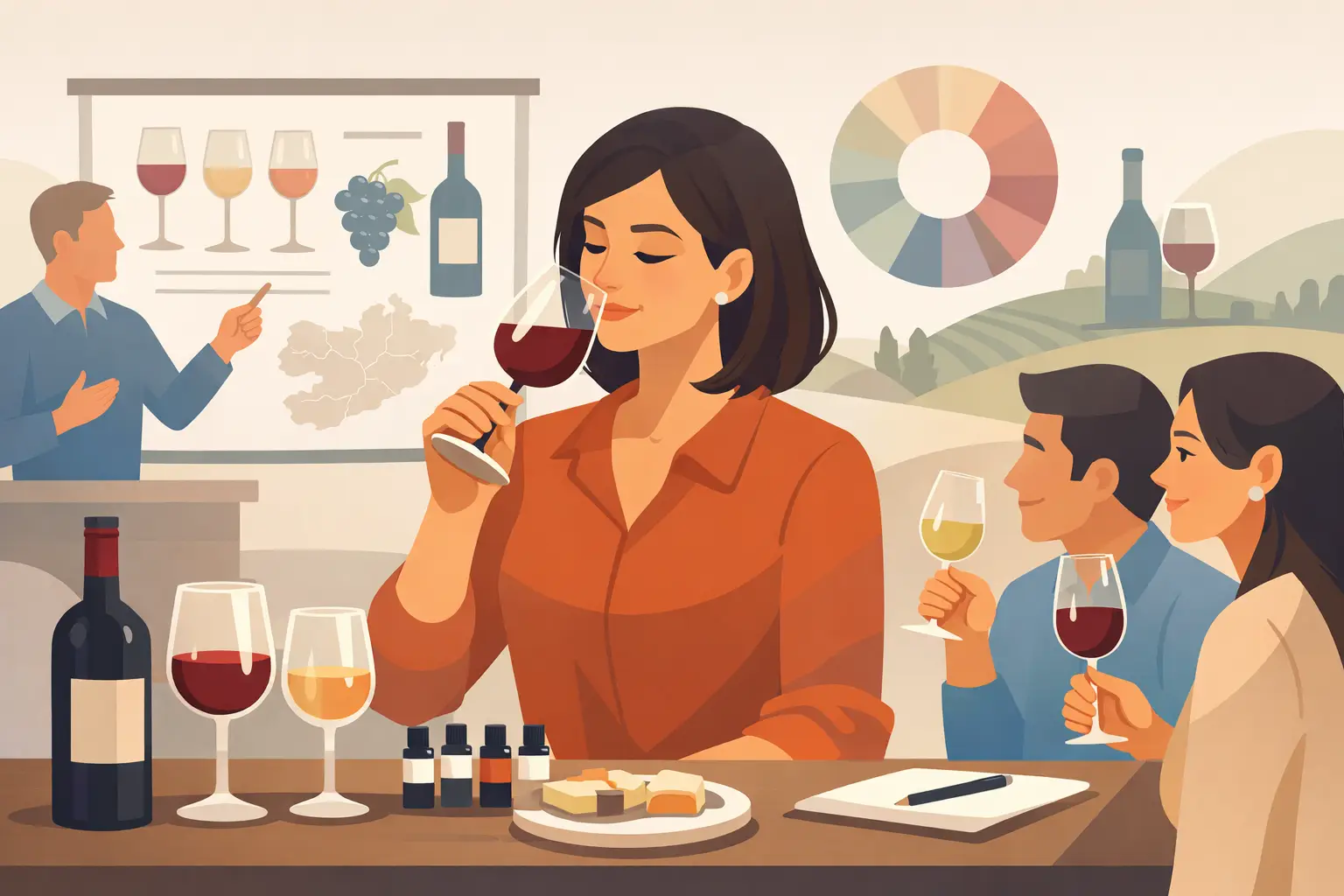
A great bottle can be more than a label, a critic score, or an impressive name on a dinner table. Wine tasting courses give that bottle context: why a 2019 Barolo feels so different from a generous Napa Cabernet, why Champagne’s tension makes it so compelling at the table, and why a Burgundy’s perfume can linger long after the final sip. For anyone building a cellar, hosting clients, or simply buying more thoughtfully, that context is valuable.
The most rewarding courses do not turn wine into an exam. They train you to notice what is already in the glass, articulate what you enjoy, and make purchases with greater assurance. That can mean choosing a polished everyday white for a casual lunch, recognizing the structure required for long-term cellaring, or knowing when a prestigious vintage deserves patience rather than an immediate opening.
What Wine Tasting Courses Actually Teach
At their best, wine tasting courses build a practical framework rather than a collection of memorized facts. You learn to assess appearance, aroma, flavor, texture, balance, length, and aging potential in a considered order. The point is not to find the one “correct” tasting note. It is to distinguish a wine with freshness and precision from one that is broad and mature, or a wine with fine, ripe tannins from one that needs time.
That structure matters because wine language can otherwise feel unnecessarily exclusive. A course gives you useful reference points. Black cherry, cedar, violets, crushed stone, brioche, citrus peel, and savory spice are not signals that someone has a superior palate. They are shared descriptions that make a conversation about wine clearer, whether you are speaking to a sommelier, a merchant, or a fellow collector.
Grape Variety Is Only the Starting Point
Learning Chardonnay or Cabernet Sauvignon is useful, but it is only the first layer. Place, producer, vintage, and winemaking choices leave equally distinctive marks. Chardonnay from Chablis may show brisk acidity and chalky restraint, while a richer example from California may offer ripe stone fruit and generous oak. Neither is inherently better. The right choice depends on the meal, the occasion, and your own preference.
This is where regional tasting is especially illuminating. Comparing Bordeaux’s Left Bank with Saint-Émilion, for example, reveals how Cabernet Sauvignon and Merlot shape structure differently. A focused tasting of Barolo and Brunello di Montalcino can show how Nebbiolo’s rose, tar, and firm tannin contrast with Sangiovese’s cherry fruit, acidity, and earthy complexity. These comparisons make bottles on a shelf far easier to understand.
Vintage Becomes More Than a Number
For fine wine buyers, vintage is often central to value and drinking decisions. A well-designed class explains why weather conditions matter without treating every vintage chart as absolute law. Warm years may bring generosity and early appeal; cooler years can deliver fragrance, tension, and firmer architecture. Yet a great producer can outperform a challenging season, while an ordinary producer may not fully capture a celebrated one.
This is also why tasting courses are useful for collectors. They teach you to look beyond headline scores and ask sharper questions: Is the wine built for another decade? Does it have freshness beneath its concentration? Is the estate style aligned with how I drink? Those questions are far more useful than buying solely because a bottle is scarce or fashionable.
Choosing the Right Wine Tasting Course
The right course depends on what you want wine to do in your life. A newcomer who wants confidence ordering at restaurants has different needs from a buyer considering en primeur allocations. There is no advantage in beginning with highly technical certification material if your immediate goal is to select a dependable bottle for seafood, steak, or a gift.
A foundation course should cover the main grapes, classic regions, tasting technique, sweetness, acidity, tannin, alcohol, and food pairing. It should also include enough wines to make differences tangible. Reading that Riesling can range from dry to sweet is useful. Tasting several styles side by side makes the lesson stick.
For established enthusiasts, regional deep dives are often more rewarding. A focused Burgundy session can clarify the relationship between village, premier cru, and grand cru, as well as the importance of producer and vintage. A Champagne masterclass can move beyond “celebration wine” to explore dosage, vintage versus non-vintage bottlings, grower estates, and the role of time on lees. These are the details that make a well-stocked cellar more personal and more intelligent.
Look for a Teaching Style That Uses Real Bottles
The wines selected for a course shape the value of the experience. A lesson built around generic examples may explain broad theory, but serious learning happens when wines have a clear identity. A class that contrasts a classic Bordeaux blend with a Super Tuscan, or a mature Rioja with young Brunello, lets you connect style to origin and age.
It also helps when the educator is comfortable discussing price and buying decisions. Fine wine should be enjoyed, but it is not inexpensive. A good instructor will explain why provenance, storage, bottle format, producer reputation, and critic consensus can affect a wine’s price, without suggesting that the most expensive wine is always the most satisfying.
For Singapore drinkers, an in-person course has an additional advantage: it is a social setting in which to ask questions freely and taste wines at proper service temperature. Crystal Wines’ educational tastings can be particularly useful for participants who want to turn a guided experience into confident choices for entertaining, gifting, or cellaring.
How to Taste With More Purpose
You do not need a theatrical swirl or an encyclopedic nose to taste well. Start by giving the wine attention. Look at its color and depth, then smell before and after a gentle swirl. Take a measured sip, let it travel across the palate, and notice not only fruit but also freshness, texture, structure, and finish.
The finish is especially revealing. A simple wine may disappear quickly after swallowing. A more complex example often evolves, moving from fruit to spice, mineral notes, flowers, or savory detail. Length alone does not guarantee quality, but a persistent, balanced finish is frequently a sign that the wine has depth.
Keep your first notes straightforward. Rather than forcing descriptors, record whether you found the wine light or full-bodied, crisp or soft, youthful or developed, and easy to drink now or worth revisiting later. Over time, your own notes become more useful than someone else’s tasting vocabulary because they reveal the styles you return to.
From the Classroom to the Table
Wine knowledge earns its place when it improves a real occasion. A course can make food pairing less rigid and more enjoyable. High-acid whites such as Albariño, dry Riesling, or Chablis bring lift to shellfish and lighter Asian dishes. A refined Pinot Noir can complement duck, mushroom dishes, or salmon more gracefully than a powerful Cabernet. For richer red meat, a structured Bordeaux, Barolo, or Brunello may be exactly right, especially when the dish has enough fat to soften tannin.
Temperature and glassware matter, although they need not become a source of anxiety. White wines served too cold can seem muted; full-bodied reds served too warm can feel alcoholic and heavy. A little preparation goes a long way. Chill a white in advance, give a young serious red time in a decanter, and choose glasses with enough room for aroma to gather.
Courses also sharpen your instincts as a host. Instead of offering one bottle and hoping it suits everyone, you can create contrast: a lively aperitif, a versatile white, and a red matched to the main course. That approach feels generous, and it gives guests something memorable to discuss.
The Best Return Is Better Judgment
The lasting value of wine education is not the ability to recite every grand cru vineyard or identify a grape blind on demand. It is better judgment: knowing what makes a bottle compelling to you, understanding when a wine represents fair value, and recognizing when an unfamiliar producer deserves a closer look.
Bring that judgment to your next tasting. Choose one region, compare two or three wines with a clear question in mind, and take a few honest notes. A palate develops bottle by bottle, preferably with good food and good company.


