


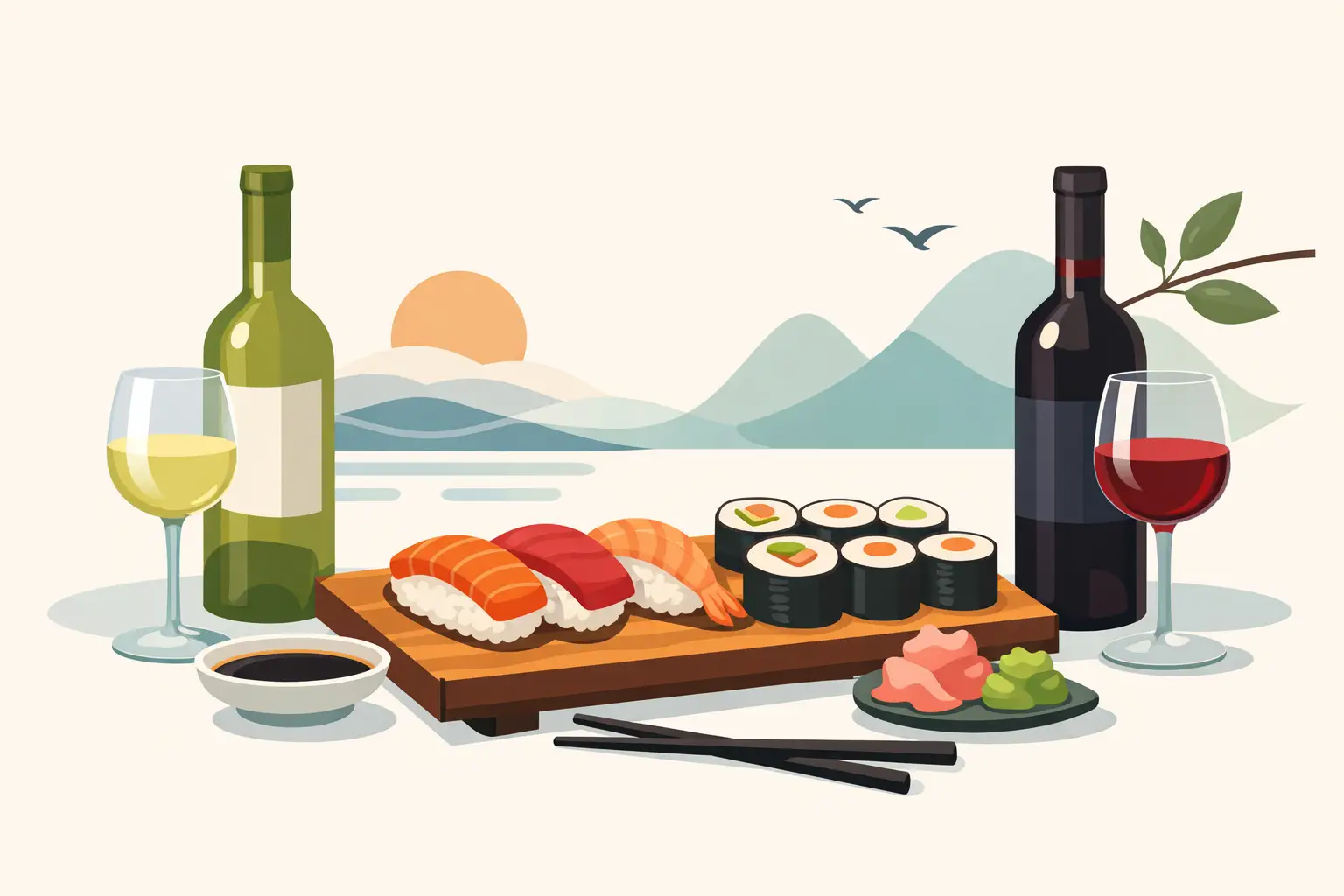
A pristine slice of toro does not need a powerful red wine. It needs lift: a wine with freshness enough to cut through its silkiness, yet restraint enough to let the fish remain the main event. To pair wine with sushi well, think less about matching a bottle to Japanese cuisine as a whole and more about the texture, fat, seasoning, and heat in each piece.
That approach makes sushi one of the most rewarding foods on a wine list. From mineral Chablis with hirame to grower Champagne alongside fried tempura, the right bottle can make a familiar omakase or takeout spread feel unusually considered. The best choice is rarely the most expensive wine in the cellar. It is the bottle whose acidity, body, and aromatic profile meet the sushi in front of you.
How to Pair Wine With Sushi by Style
Sushi is often described as delicate, but that only tells part of the story. Lean white fish is subtle and saline; salmon and tuna bring more oil and umami; eel sauce is sweet; spicy mayo adds richness and heat. A single platter can move from featherweight sashimi to fried, sauced rolls in a few bites. If one wine must cover the whole table, prioritize high acidity, moderate alcohol, and little or no new-oak influence.
Champagne is the most dependable all-round choice. Its fine mousse refreshes the palate after fatty fish, while its citrus, chalk, and lightly toasty notes complement both raw seafood and crisp tempura. A Blanc de Blancs, built principally from Chardonnay, is especially elegant with scallop, shrimp, fluke, and other lean seafood. A fuller, Pinot Noir-led Champagne has more breadth for salmon, tuna, or a roll with avocado.
Dry Riesling is another outstanding answer. The grape’s lime-like acidity, stone-fruit perfume, and often modest alcohol make it exceptionally flexible with soy, ginger, and wasabi. Choose a trocken Riesling from Germany, a dry Austrian example, or a focused expression from Alsace when the meal leans toward sashimi and nigiri. For notably spicy rolls, a lightly off-dry Riesling can be even better: a small touch of residual sugar softens chili heat rather than amplifying it.
For still white wine with a more mineral profile, look to Chablis or a restrained Chardonnay. The best examples offer lemon, green apple, oyster shell, and a discreet savory quality that feels natural beside raw fish. Avoid heavily oaked, high-alcohol Chardonnay with delicate nigiri. Vanilla, butter, and sweet toast can overwhelm the clean flavor of rice and seafood. A richer white Burgundy can work beautifully with lobster, uni, or grilled fish, but it is a more specific match than Chablis.
Grüner Veltliner deserves a place at the sushi table as well. Its citrus, white pepper, and herbal snap are compelling with cucumber, shiso, asparagus, and vegetable-forward rolls. The peppery character can also stand up to wasabi, provided the wine remains dry and brisk.
Match the Wine to the Fish and Seasoning
With sashimi, precision matters most. Since there is no rice to soften or sweeten the bite, choose wines that are pure and taut. Chablis, Blanc de Blancs Champagne, dry Riesling, and saline Albariño all flatter sea bream, fluke, snapper, scallop, and squid. Their acidity mirrors the citrus squeeze often served alongside seafood without masking fine texture.
Salmon calls for a little more generosity. Its natural oil and fuller flavor welcome a rounder Champagne, dry rosé with freshness, or a refined Pinot Noir served lightly chilled. Look for Pinot Noir with red-cherry fruit, subtle earth, and measured oak rather than dense extraction. A delicate red Burgundy can be breathtaking with salmon nigiri, particularly if the fish is lightly torched, but it should be served around 55 to 58 degrees Fahrenheit, not at room temperature.
Tuna depends on the cut. Lean akami is graceful with mineral whites and elegant Pinot Noir. Chutoro and otoro are richer, so Champagne becomes especially persuasive: bubbles lift the fat while acidity keeps each bite vivid. A mature, softly structured Pinot Noir may also work, though soy sauce is the deciding factor. Too much soy can make red wine taste bitter, metallic, or drying.
Unagi, with its sweet-savory glaze, is one of the few sushi selections that can comfortably welcome a softer red. Pinot Noir remains the classic choice, but a cru Beaujolais with bright fruit and low tannin is also a fine alternative. If you prefer white, choose an expressive Riesling with a whisper of sweetness. The wine should echo the glaze’s sweet edge without becoming cloying.
For spicy tuna, spicy salmon, or rolls dressed with chili oil and mayonnaise, avoid big, warm reds. Alcohol intensifies capsaicin, making the food seem hotter and the wine more alcoholic. A chilled off-dry Riesling, sparkling rosé, or fruit-forward Champagne is far more flattering. The same principle applies to rolls with creamy sauces: bubbles and acidity bring welcome relief.
Can You Drink Red Wine With Sushi?
Yes, with care. The old rule that sushi demands white wine is too narrow, especially when the meal includes salmon, tuna, seared fish, mushrooms, truffle, or eel. The challenge is tannin. Raw fish, seaweed, and soy sauce can make firm tannins feel coarse, while bold oak can obscure the subtleties of seasoned rice and fresh seafood.
Choose light-bodied reds with low tannin and bright acidity. Pinot Noir is the obvious benchmark, from Burgundy, Oregon, Sonoma Coast, or cooler parts of New Zealand. Gamay is another intelligent choice, particularly for richer rolls or grilled elements. Serve either red slightly chilled, and pour it after the most delicate white-fish courses if the meal is progressing in stages.
Cabernet Sauvignon, powerful Barolo, and young Bordeaux are generally difficult partners for classic sushi. Their structure is magnificent beside steak, lamb, or aged cheese, but it can dominate sashimi and turn soy sauce into a bitter note. There are exceptions, of course: a sushi meal centered on wagyu, grilled eel, or robata dishes can accommodate more serious red wine. The menu, not convention, should decide.
Practical Details That Change the Pairing
Soy sauce, wasabi, pickled ginger, and temperature are not small details. They can alter a pairing more dramatically than the difference between two neighboring appellations. Dip sparingly when you want to appreciate a finely tuned bottle. A soy-heavy bite favors sharper acidity and lower tannin; a generous amount of wasabi favors aromatic whites with some fruit intensity.
Serve sparkling wine and crisp whites cool, but not ice-cold, around 45 to 50 degrees Fahrenheit. Excessive chilling suppresses aroma and makes wine feel hard. For premium Champagne or textured white Burgundy, let the bottle warm gradually in the glass. Those additional degrees reveal more of the wine’s perfume and savory complexity, particularly beside toro, uni, or grilled seafood.
If you are ordering for a group, start with Champagne or a dry sparkling wine as guests arrive, then move to Riesling or Chablis once nigiri and sashimi are served. Add a lightly chilled Pinot Noir only if the menu includes salmon, tuna, eel, or grilled dishes. This progression is more satisfying than placing several unrelated bottles on the table at once, and it gives each wine a clear moment to shine.
A thoughtful sushi pairing should feel effortless rather than performative. Begin with the fish you are most looking forward to, notice whether the meal is clean and raw or rich and sauced, then choose a wine with enough freshness to invite the next bite. That is usually where the memorable bottle is found.


