


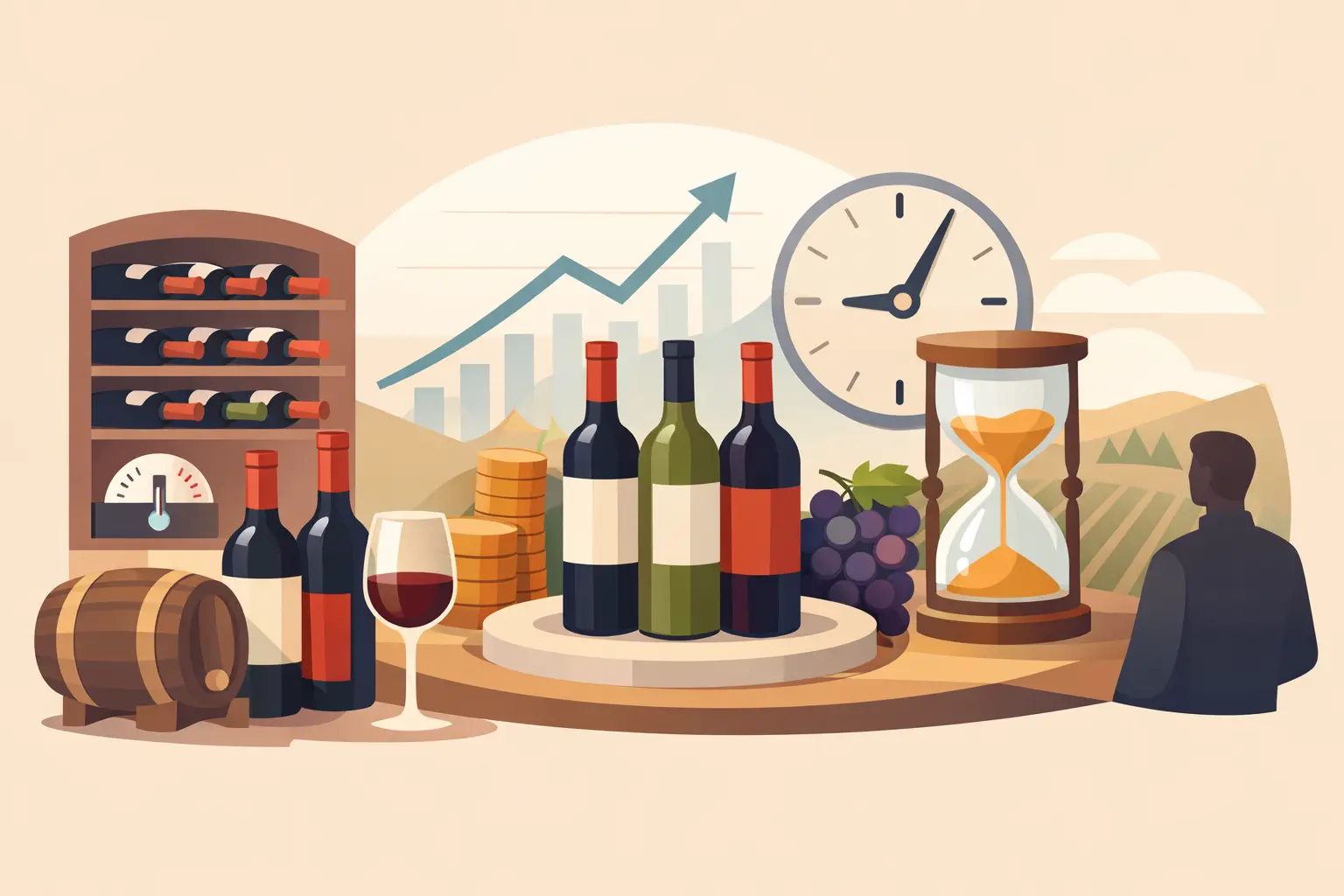
A great bottle rarely announces its perfect drinking moment from the shelf. Wine cellaring is the patient work of giving the right wines enough time for firm tannins to soften, youthful fruit to gain complexity, and a fine estate’s character to emerge in full. Done thoughtfully, it turns a purchase into an occasion worth anticipating.
For collectors, the appeal is clear: a mature Bordeaux with cedar, graphite, and tobacco in place of primary blackcurrant, or a Barolo whose rose, tar, and truffle notes have become beautifully integrated. Yet a cellar need not begin with trophy bottles. A well-chosen selection of age-worthy wines across different regions, price points, and drinking windows can make every dinner, gift, and celebration more rewarding.
Wine Cellaring Begins With the Right Wines
The first rule is simple: not every good wine improves with age. Most wines are made to be enjoyed within a few years of release, when their fruit is vivid and their freshness at its peak. Cellaring a wine without the structure to evolve can leave it faded rather than refined.
The strongest candidates usually have a balance of acidity, tannin, concentration, alcohol, and, in some styles, residual sugar. These elements act as preservatives while allowing aromas and texture to develop gradually. The producer matters just as much. Wines from serious, established estates are generally made with the precision and depth needed to reward patience.
Classified-growth Bordeaux is an obvious reference point, particularly in vintages with ripe but well-managed tannins. Cabernet-led wines from Pauillac, Saint-Julien, Saint-Estèphe, and Pessac-Léognan can develop for decades. The finest Saint-Émilion and Pomerol bottlings may evolve into plush, scented, deeply savory wines, although their ideal window varies considerably by vintage and château.
Burgundy calls for more nuance. A village wine from a strong producer may be captivating after five to eight years, while a premier cru or grand cru from a classic vintage can demand far longer. With Pinot Noir, the goal is not simply softness. It is the extraordinary transition from red and black fruit toward forest floor, dried flowers, spice, and a sensational perfume that cannot be replicated in youth.
Italy offers equally compelling cellar prospects. Traditional Barolo and Barbaresco, Brunello di Montalcino, and top Super Tuscans combine freshness with structure and often reveal their finest detail after a decade or more. Vintage Champagne, prestige cuvée Champagne, top Northern Rhône Syrah, German Riesling, and sweet wines such as Sauternes also belong in a serious long-term plan.
Build a Cellar Around Drinking Windows
A cellar composed entirely of wines to open in 15 years is impressive on paper but frustrating in practice. The most satisfying collection has layers: wines for the near term, wines beginning to enter their stride, and a smaller group reserved for major future milestones.
Start by deciding what you genuinely enjoy drinking. If your table often features roast duck, grilled meats, and rich Asian dishes, structured reds from Bordeaux, Tuscany, Piedmont, and the Rhône may deserve priority. If you entertain frequently with seafood, sushi, or lighter preparations, mature white Burgundy, high-quality Chablis, Loire Chenin Blanc, and vintage Champagne offer enormous pleasure at the table.
A useful approach is to buy in multiples. Three bottles of a wine let you experience its evolution without turning every opening into a high-stakes decision. Open the first bottle on the early side to understand its youthful profile. Hold the next for several years. Save the final bottle for a more mature expression, ideally after checking current producer guidance and professional reviews.
Buying by the case can be particularly sensible for collectors, provided provenance and storage are impeccable. Original wooden cases, pristine labels, and a clear history of professional storage can matter for long-term confidence and resale potential. That said, the greatest return for most private collectors is the pleasure of opening a bottle at exactly the right moment with people who appreciate it.
Vintage Is a Guide, Not a Verdict
Vintage conditions influence a wine’s balance, personality, and likely pace of development. Cooler years may produce more taut, aromatic wines with pronounced acidity, while warmer vintages can offer generous fruit and earlier accessibility. Neither is automatically superior.
Producer decisions, vineyard site, bottle format, and storage conditions all shape the result. A great estate can make compelling wine in a challenging season, and a poorly stored bottle from a celebrated vintage can disappoint. Use vintage charts and critic scores as valuable reference points, then consider the producer, appellation, and style you prefer.
Storage Is Where the Cellar Earns Its Name
Singapore’s heat and humidity make casual home storage risky. A rack in an air-conditioned dining room may look elegant, but daily temperature swings and direct light can accelerate a wine’s development unevenly. Fine wine needs a stable environment more than it needs dramatic cold.
Aim for a consistent temperature of about 55°F, with modest variation rather than frequent fluctuations. Humidity around 60 to 70 percent is helpful for bottles sealed with natural cork, protecting the cork from drying while avoiding label damage from excessive moisture. Keep bottles away from vibration, light, kitchen heat, and strong odors.
For wines under natural cork, horizontal storage keeps the cork in contact with wine. Screw-capped bottles can be stored either way, though a horizontal layout is usually more space-efficient. Champagne is often stored horizontally as well, especially where cellar organization is concerned.
A dedicated wine refrigerator is a practical answer for a modest collection, but capacity should be considered honestly. Bottles with broad Burgundy shoulders, Champagne bottles, and magnums take up more room than standard Bordeaux-shaped bottles. If you expect your collection to grow, choose more capacity than you currently need. For valuable cases and long-held bottles, professional bonded or temperature-controlled storage may offer greater security and simpler inventory management.
Keep Records Before Memory Becomes the System
The more wines you own, the more valuable a clear inventory becomes. Record the producer, wine, vintage, appellation, bottle size, purchase date, source, price, storage location, and anticipated drinking window. Add critic scores or tasting notes if these inform your buying decisions, but do not let a score replace your own palate.
This record prevents accidental neglect. It also reveals gaps in the cellar. You may discover that you have 20 bottles designed for a distant future but almost nothing ready for a dinner next month. A good inventory also makes gifting easier, especially when selecting a bottle with a story, a mature profile, or a respected vintage.
Review the cellar a few times each year. Move wines approaching their ideal window into an accessible section, and reassess bottles that have reached maturity. Cellaring is not a contest in restraint. Holding a wine past its peak can be as disappointing as opening it prematurely.
Know When a Bottle Is Ready
A drinking window is an estimate, not a command. The best signals come from the wine itself. With red wines, tannins become less abrasive, fruit becomes less primary, and savory notes gain dimension. White wines can shift from citrus and fresh stone fruit toward hazelnut, honey, beeswax, and preserved lemon. Champagne may gain toast, brioche, and deeper vinous texture while retaining its line of acidity.
When opening a mature red, stand it upright for a day if possible so sediment settles. Decanting should be approached carefully. A young, concentrated Bordeaux may benefit from air, but an older bottle can fade quickly in a wide decanter. Taste it first. Sometimes a gentle pour directly into a large glass is all it needs.
Serve temperature matters, too. Fine reds are often more expressive slightly cooler than room temperature, while mature whites and Champagne should not be served so cold that their aromatics disappear. A little patience after pouring can reveal a breathtakingly long finish and layers that were initially quiet.
The most compelling cellar is not the one with the largest number of famous labels. It is the one that reflects your taste, gives each bottle the conditions it deserves, and ensures that when the right evening arrives, a remarkable wine is ready to be shared.


