


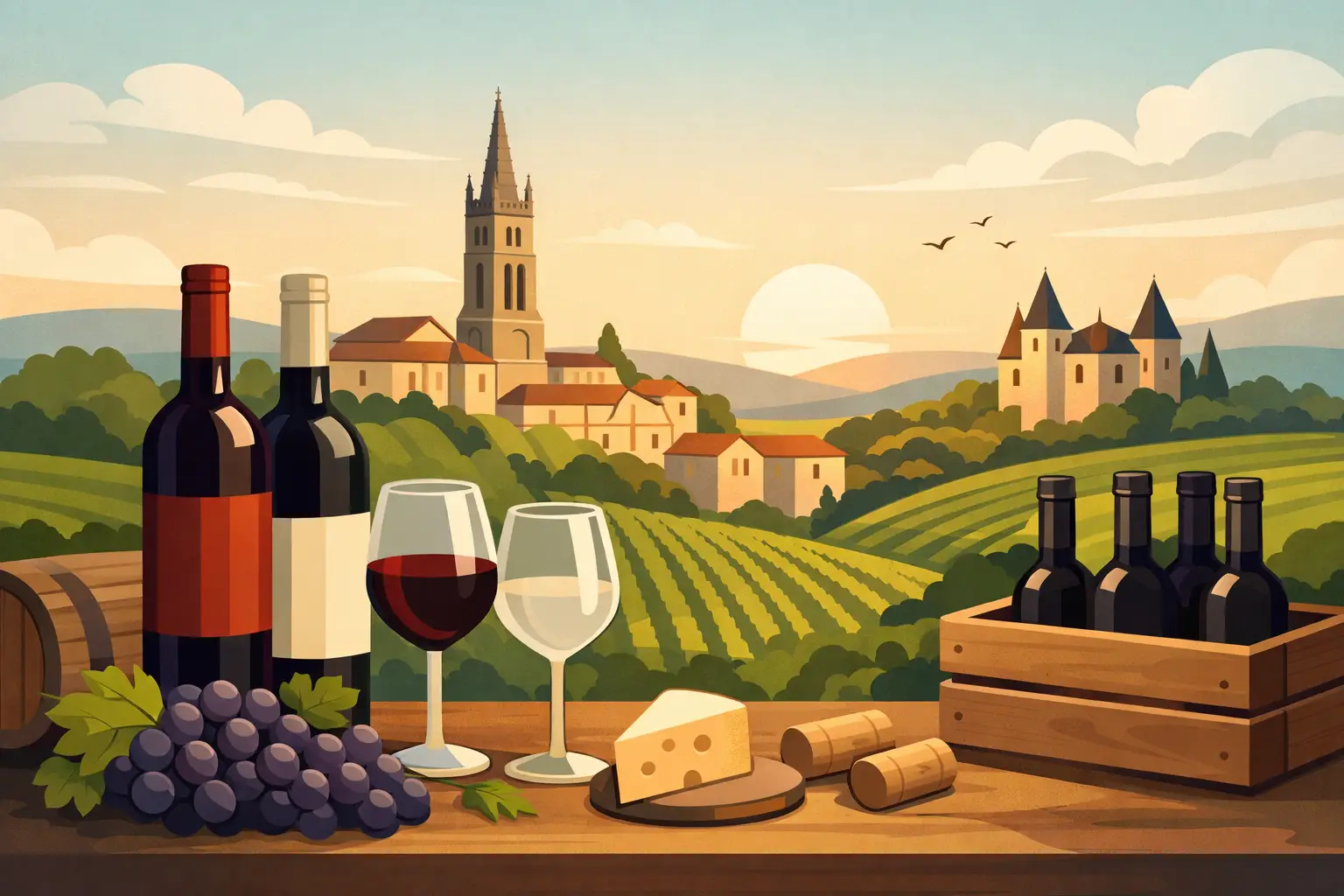
A great bottle can make a Bordeaux dinner feel effortless: the perfume is already rising from the glass, the texture is generous without heaviness, and the finish keeps pace with the conversation. Saint Emilion wines occupy this especially appealing part of Bordeaux. They can offer the pedigree and ageworthiness collectors expect, yet their Merlot-led character often makes them more immediately expressive than the region’s most structured Left Bank classics.
For buyers, the attraction is not simply a famous name on the label. Saint-Émilion rewards precision. Soil, slope, producer philosophy, vintage conditions, and the distinction between a village appellation and a classified estate can materially change what is in the bottle. Knowing where to look makes it easier to choose well, whether the occasion calls for a polished dinner wine tonight or a case with a decade or more ahead of it.
What defines Saint Emilion wines?
Saint-Émilion sits on Bordeaux’s Right Bank, east of the city of Bordeaux, where Merlot is the principal grape. Cabernet Franc is its essential partner, frequently bringing floral lift, graphite, red-fruit detail, and freshness. Cabernet Sauvignon appears in smaller quantities at some estates, particularly where gravelly soils and warm exposures allow it to ripen convincingly.
The region’s finest sites are remarkably varied for such a compact area. The limestone plateau and its slopes are central to Saint-Émilion’s identity. Limestone can preserve tension in Merlot, shaping wines with cool mineral notes, violet perfume, firm but refined tannins, and an unusually long, saline finish. On clay-rich parcels, Merlot tends to become broader and more sensual, with black plum, cocoa, and plush fruit. Sandier areas often yield earlier-drinking wines with softer structure and bright, straightforward charm.
This is why two bottles from neighboring estates can feel so different. One may be sleek, floral, and chalky; another may be sumptuous, dark-fruited, and velvety. Neither is automatically better. The right choice depends on whether you value immediate generosity, architectural structure, or the complexity that arrives after time in the cellar.
The labels worth understanding
Saint-Émilion labels can seem deceptively simple. The base Saint-Émilion appellation generally offers the most accessible entry to the region, often with fruit-forward appeal and a shorter drinking window. Saint-Émilion Grand Cru is a separate appellation with more demanding production rules. It should not be confused with the formal Saint-Émilion classification, although many famous classified estates bottle under the Grand Cru appellation.
The classification identifies estates as Grand Cru Classé or Premier Grand Cru Classé, and it is periodically reviewed. That differs from Bordeaux’s 1855 classification, which is largely fixed and applies principally to Médoc and Sauternes properties. For a collector, classification is a useful signal of reputation, but it is not a substitute for checking the producer, the vintage, storage history, and the wine’s critical reception.
A label from a celebrated château can be compelling, but the broader appellation deserves attention too. Satellite estates, second wines, and less heralded producers on excellent limestone or clay sites can represent superb value. These bottles are often a thoughtful route into Saint-Émilion for a host who wants genuine regional character without opening a trophy wine at every dinner.
Plateau, slope, and clay: reading the style
If you favor a refined, cerebral Saint-Émilion, seek producers associated with the limestone plateau or upper slopes. These wines can show cassis, raspberry, iris, pencil shavings, crushed stone, and a line of freshness that becomes more pronounced with bottle age. Their tannins may be reserved in youth, so decanting is worthwhile.
For richness and velvet texture, clay-dominant sites are a natural starting point. Expect ripe black cherry, plum, licorice, espresso, and chocolate, often wrapped in generous oak when young. The best examples retain balance rather than relying on sheer weight. They are particularly satisfying with deeply flavored meats and can evolve beautifully for 10 to 20 years, depending on the estate and vintage.
Choosing by vintage, not just score
A high critic score can be an excellent buying tool, especially for fine-wine purchases, but it tells only part of the story. In Saint-Émilion, vintage character is often easy to taste. Warm, dry years may yield opulent fruit, supple tannins, and early appeal. Cooler or more classically proportioned years can emphasize aromatics, acidity, and structure. The latter may be less demonstrative on release yet more compelling after patient cellaring.
Buyers seeking generosity for near-term drinking may gravitate toward a ripe, successful vintage from a reliable producer. Those building a cellar should consider mixing styles: a few richly textured bottles for earlier enjoyment alongside more structured, limestone-driven wines for the longer term. This approach gives a collection range rather than leaving every bottle dependent on the same drinking window.
Age also changes the Saint-Émilion experience. Young examples can be lavish, with new oak, dense fruit, and powerful tannin at the forefront. After seven to 12 years, the profile often broadens into cedar, truffle, tobacco leaf, dried flowers, and earthy complexity. Mature bottles need careful handling. Provenance, fill level, and storage conditions matter as much as the vintage on the capsule.
Serving Saint-Émilion at its best
Saint-Émilion is versatile at the table because Merlot brings both richness and softness. A youthful, concentrated bottle is excellent with ribeye, lamb shoulder, roast duck, or beef short ribs. The wine’s fruit and tannin can stand up to caramelized surfaces, pepper, herbs, and savory reductions.
A more mature bottle deserves subtler treatment. Roast chicken with mushrooms, herb-crusted pork, veal, or a mushroom tart will allow its secondary notes to speak. With cheese, choose aged Comté, Gruyère, or a firm sheep’s milk cheese rather than aggressively blue styles, which can dominate the wine’s perfume.
Serve most bottles around 60 to 64°F. In a warm dining room, especially in Singapore, that often means chilling the bottle briefly before opening rather than serving it at ambient temperature. Young, serious vintages usually benefit from one to two hours in a decanter. For an older bottle, stand it upright beforehand, open gently, and decant only if there is substantial sediment. A slow pour into a broad glass may be all it needs.
Building a Saint-Émilion buying strategy
For entertaining, choose wines with a few years of bottle age or a producer known for supple tannins. The immediate perfume and round palate will make an impression without requiring guests to wait for the wine to unfold. For gifts, a well-regarded château, a notable vintage, and a pristine presentation all carry weight, particularly when the recipient appreciates Bordeaux provenance.
For the cellar, buy in pairs or small groups rather than a single bottle. Open one after several years to understand how the estate and vintage are developing, then let the remaining bottles continue their journey. Large formats can be especially attractive for milestone dinners, as they tend to mature more slowly and bring genuine theater to the table.
Crystal Wines’ specialist selection and score-led filters can help narrow the field, but the best starting point is still your preferred style. Tell a wine adviser whether you enjoy perfume and freshness, plush richness, mature complexity, or wines intended for a specific menu. That small detail can turn a respected bottle into the right bottle.
The next time you choose Saint-Émilion, give the back label and the estate’s location a moment of attention. A limestone-led wine for a quiet dinner, or a generous clay-grown Merlot blend for a celebratory roast, can make the occasion feel considered long before the cork is pulled.


