


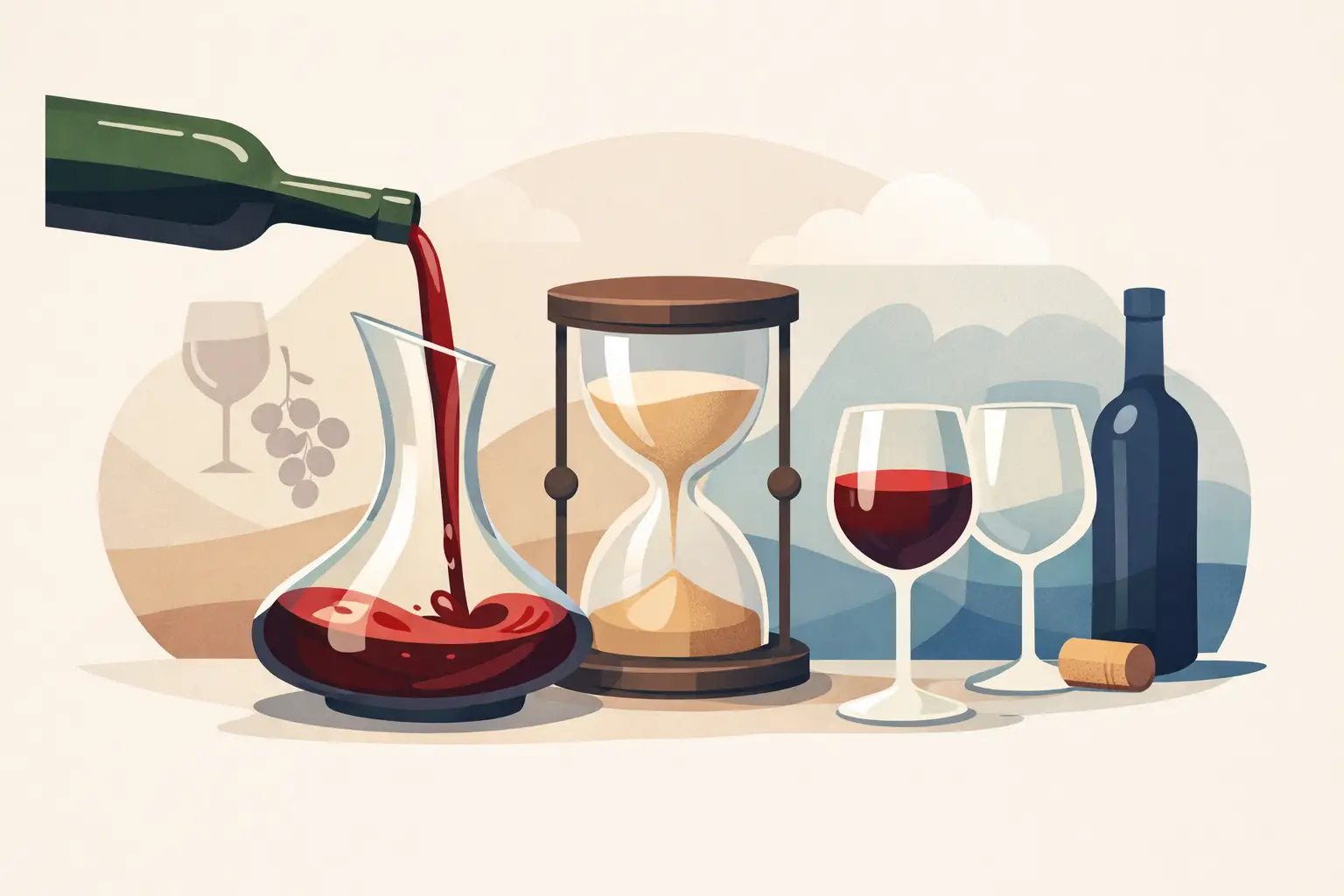
A great bottle can change dramatically in the first hour after opening. A tightly wound young Barolo may trade its stern tannins for rose petal, tar, and dark cherry. A mature Bordeaux may reveal cedar, cigar box, and silky fruit – or, if handled carelessly, fade before the first course arrives. Wine decanting is therefore not a ritual performed for appearance alone. It is a practical decision about air, sediment, timing, and the particular bottle in front of you.
For collectors and generous hosts, the aim is simple: serve each wine at its most expressive point. That may mean a broad-based decanter for a youthful Cabernet Sauvignon, a gentle separation from sediment for an older claret, or no decanting at all for a fragile mature Burgundy.
What wine decanting actually does
Decanting serves two distinct purposes. The first is aeration. By exposing wine to oxygen, a decanter can soften the impression of tannin, disperse reductive or closed aromas, and allow fruit, floral, spice, and savory notes to emerge. This is most useful for concentrated young reds that have spent time in bottle but still carry the firmness of their structure.
The second purpose is separating clear wine from sediment. As red wines age, especially traditionally made Bordeaux, Barolo, Brunello di Montalcino, and vintage Port, pigments and tannins gradually form a harmless deposit. Sediment is not a flaw, but it can feel gritty and bitter on the palate. Decanting lets you leave it behind in the bottle.
These purposes call for different techniques. Aeration favors surface area and a little time. Sediment removal favors patience, minimal agitation, and a narrow, controlled pour. Treating every bottle the same way is the quickest route to disappointment.
Which wines benefit most from wine decanting?
Young, structured reds are usually the safest candidates. Cabernet Sauvignon-based Bordeaux, Napa Valley Cabernet, Syrah, Barolo, Brunello, Rioja Gran Reserva, and powerful blends from Tuscany or the Rhône often have the concentration to benefit from one to three hours in a decanter. A wine with firm tannins, dense color, new oak, or a reserved nose is often signaling that it needs air.
A young bottle with a high critic score is not automatically ready to decant for several hours. A 100-point wine may be magnificent but still be built for decades of development. The producer, vintage, storage history, and bottle format all matter. Magnums evolve more slowly than standard bottles, while a warm bottle can open quickly and then lose freshness just as fast.
Full-bodied whites can also reward a short decant. White Burgundy, top Chardonnay from California or Australia, aged white Rioja, and serious Rhône whites may show more dimension after 20 to 45 minutes. Their texture becomes more integrated, and aromas of hazelnut, stone fruit, citrus oil, and flint can become clearer. Use a smaller decanter or carafe and taste regularly.
Champagne is more conditional. Decanting can broaden the texture of a mature, vinous Champagne, particularly a prestige cuvée with bottle age, but it also reduces the mousse. For most non-vintage and younger vintage Champagnes, a generous white wine glass and a few minutes in the glass are the more elegant choice.
Delicate wines deserve restraint. Mature Pinot Noir, aged Burgundy, older Nebbiolo, and mature Bordeaux can be breathtakingly perfumed yet vulnerable to too much oxygen. Their bouquet may bloom soon after opening, then recede within an hour. With these bottles, decant only to remove sediment, or simply stand the bottle upright and pour carefully into glasses.
How long should you decant wine?
There is no universal timetable, but the following ranges offer a reliable starting point. Taste before and during the process rather than treating the clock as an authority.
| Wine style | Suggested decanting time | | — | — | | Young, light to medium-bodied red | 30 to 60 minutes | | Young, powerful Cabernet, Syrah, Barolo, or Brunello | 1 to 3 hours | | Mature red with visible sediment | Decant immediately before serving | | Mature, fragile red | 10 to 30 minutes, if at all | | Full-bodied white wine | 20 to 45 minutes |
The practical test is in the glass. Pour a small taste on opening. If the wine smells muted, overly oaky, hot, or tannic, decant it and revisit it every 20 to 30 minutes. When the fruit becomes clearer, the palate feels more harmonious, and the finish lengthens, it is ready for the table.
Do not mistake a wine’s initial austerity for a fault. Young classed-growth Bordeaux and collectible Italian reds are often designed to be reserved at first. Air may reveal an entirely different register of perfume and texture. Conversely, if an older bottle already smells open, complex, and gentle when the cork is pulled, serve it sooner rather than later.
How to decant a bottle properly
For a young wine, the process is straightforward. Open the bottle, taste a small pour, then pour the wine steadily into a clean decanter. A wide-bottomed decanter provides more contact with air and is useful for tightly knit reds. Keep the decanter away from direct sunlight, heat, and strong kitchen aromas. Covering it lightly is sensible if dinner is being prepared nearby.
For an older bottle, stand it upright for 12 to 24 hours beforehand when possible. This allows sediment to settle at the bottom. Open the bottle carefully, remove the capsule fully, and wipe the neck. Then pour slowly into a clean decanter while watching the shoulder of the bottle against a light background. Stop as soon as sediment approaches the neck. A candle may look ceremonial, but a small lamp or pale tabletop works just as well.
If the cork is fragile, use an appropriate old-wine opener or ask a knowledgeable wine merchant for advice before a significant dinner. Crumbling cork does not mean the wine is ruined. Strain it only if necessary, and avoid splashing the wine during transfer.
Temperature matters as much as oxygen. Decanting a red that is too warm magnifies alcohol and makes fruit taste heavy. Most structured reds show best around 60 to 65°F, while lighter reds can be slightly cooler. If the bottle has been stored in a warm room, chill it briefly before decanting rather than hoping the decanter will correct the problem.
Common wine decanting mistakes
The most common mistake is decanting by reputation instead of condition. Not every Bordeaux needs two hours, and not every Burgundy should be left untouched. Vintage variation is real: a warm, generous vintage may be expressive on release, while a cooler, more classical vintage may need considerably more time.
Another mistake is using a decanter as storage. Once wine has reached its best point, it will not hold there indefinitely. If the meal is delayed, pour the wine back into the bottle with a funnel, or keep the decanter cool and taste frequently. This is especially useful in Singapore’s warm climate, where room temperature can accelerate a wine’s development.
Finally, do not decant merely because the vessel is beautiful. Crystal, hand-blown glass, and sculptural silhouettes certainly add occasion to a dinner table, but the bottle should determine the method. A fine decanter is a service tool first and an object of pleasure second.
Choosing the right decanter for your cellar
One versatile, medium-to-wide decanter suits most households. It gives young reds enough air while remaining easy to pour and clean. Enthusiasts who open mature bottles regularly may also appreciate a narrow decanter designed for sediment removal. For travel, casual dinners, or wines that need only a little air, a simple glass carafe is often all that is required.
Avoid aggressive gadgets that force wine through screens or vents unless you have tasted the result and enjoy it. They can make a young wine seem more open immediately, but rapid aeration is not always the same as graceful development. Time in the glass remains the most precise and revealing tool available.
The best decanting decision begins with attention: know the wine’s age, taste it when opened, and let its condition set the pace. When a fine bottle finally releases its perfume and settles into a breathtakingly long finish, the extra care becomes part of the occasion.


