


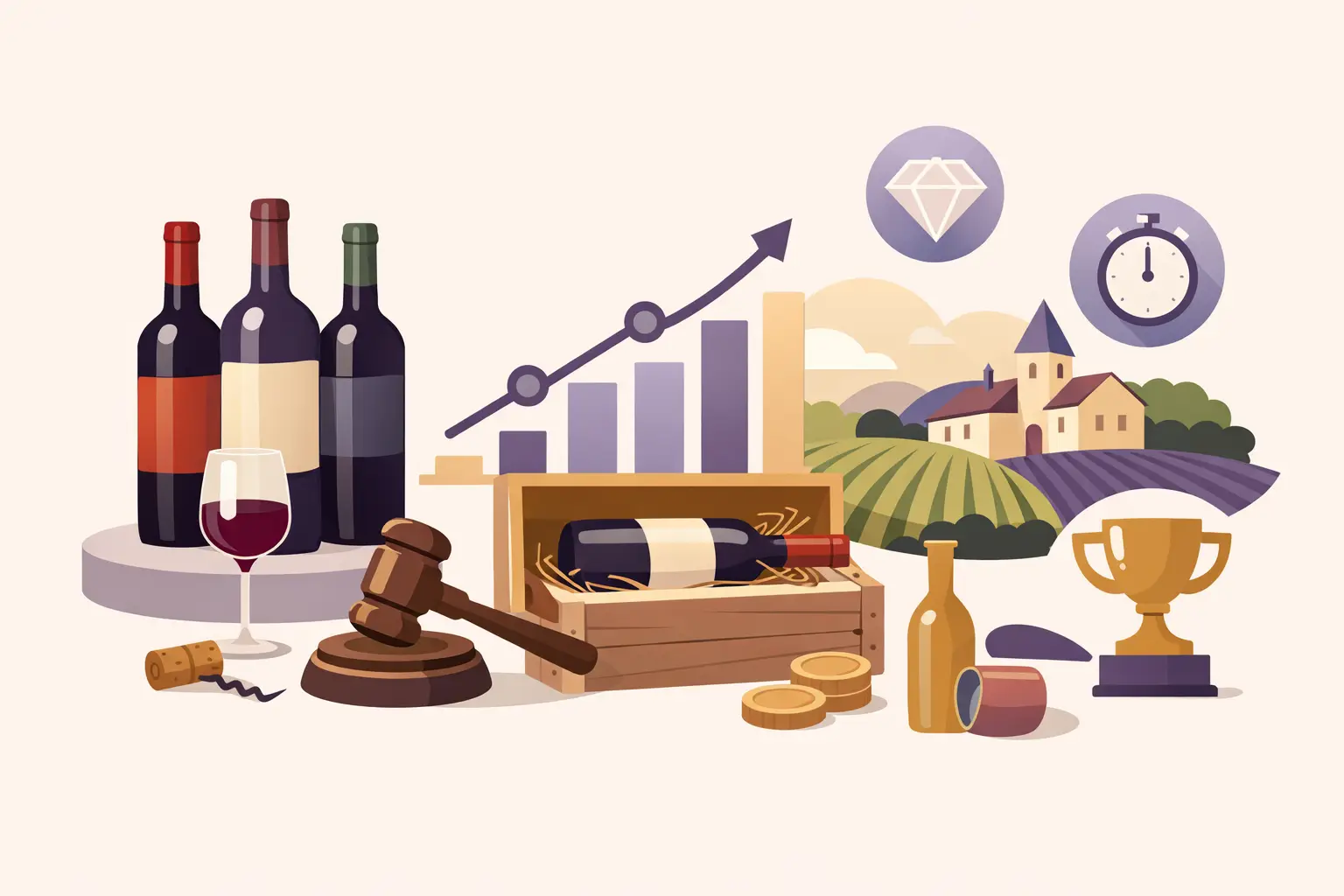
A bottle’s price tag is only the opening figure in its story. True collectible wine value is earned over time through the reputation of the estate, the character of the vintage, scarcity, condition, and the confidence a future buyer has in its journey from cellar door to glass. For collectors, understanding that distinction helps separate wines made for a memorable dinner from wines with the pedigree to reward long-term cellaring.
What Creates Collectible Wine Value?
The most sought-after wines tend to combine four qualities: an exceptional producer, a recognized place of origin, limited supply, and a proven ability to develop beautifully in bottle. A great name alone is not enough. The market also looks for consistency, critical validation, and a record of demand across multiple vintages.
Bordeaux’s first growths, top Saint-Émilion estates, grand cru Burgundy, leading Barolo and Brunello producers, and prestige Champagne houses have spent decades establishing this trust. Their wines are not valuable merely because they are expensive. They are valuable because collectors around the world understand what the labels represent: a specific vineyard or estate, a disciplined approach to quality, and wines that can offer profound complexity after years in the cellar.
This is why appellation matters. A bottle from a modestly sized, revered vineyard can command more attention than a larger-production wine from the same producer. In Burgundy, the hierarchy between regional, village, premier cru, and grand cru is especially consequential. In Piedmont, a distinguished MGA within Barolo may hold a meaningful premium over a broader appellation bottling. Place is not marketing detail. It is a central part of the wine’s identity and potential scarcity.
Producer Reputation Is a Long-Term Asset
Collectors generally favor estates with an established record rather than a single highly praised release. A producer that performs strongly through warm, cool, easy, and challenging years gives buyers greater confidence that its wines are made with precision rather than good fortune.
Critic scores can strengthen that confidence, particularly when respected reviewers identify a wine’s balance, aromatic detail, structure, and aging potential. A 98-point review may increase attention and demand, but the score works best as supporting evidence. The producer, vineyard, vintage, and condition still determine whether that interest endures.
For a new collector, this is a useful discipline: buy the producer first, then choose the vintage and cuvée that suit your budget and drinking horizon. A celebrated label from an ordinary year may be less compelling than an excellent release from a less fashionable but reliable estate.
Vintage Can Change a Wine’s Value
Vintage is one of the most visible signals on a collectible bottle, yet it is often misunderstood. The strongest vintages can produce wines with concentration, freshness, harmonious tannins, and the capacity to evolve for decades. These are the years that attract early demand and may become more difficult to source once they are widely cellared.
But great vintages are not the only vintages worth buying. Cooler years can yield classical structure and lifted perfume in Bordeaux or Burgundy. In Barolo and Brunello, a more restrained vintage may appeal to collectors who prize savory complexity and earlier approachability over sheer power. Champagne can be particularly nuanced, with vintage declarations depending on the house’s assessment of the year and its potential to express a singular character.
The key question is not simply, “Was this a great year?” Ask instead: “Was this a great year for this region, this producer, and this wine?” A capable estate may make one of its most refined wines in a vintage that receives less broad press attention. That creates an opportunity for buyers who value quality in the glass over consensus alone.
Timing Matters More Than Many Buyers Expect
A wine may appreciate after release, but that progression is rarely straight or guaranteed. Initial release pricing, critic reviews, global demand, exchange rates, and available stock all shape the market. Wines purchased En Primeur can offer early access to important Bordeaux releases, although the eventual financial outcome depends on the release price, vintage reception, and future demand.
There is also the practical value of maturity. A wine that has spent ten or twenty years developing in ideal conditions can be more desirable than the same bottle on release because the buyer avoids the wait and gains the pleasure of a mature bouquet. Dried rose, cedar, truffle, forest floor, cigar box, and savory spice are not instant qualities. They are part of why collectors cellar serious wine in the first place.
Provenance Protects Collectible Wine Value
For fine wine, provenance is as important as the label. It answers the questions that matter after a bottle leaves the producer: Where has it been? How was it transported? Was it kept at a stable temperature? Has it remained in a sealed original case? Can its ownership history be understood?
A pristine case from a specialist merchant is often more desirable than loose bottles with unclear storage. Original wooden cases, intact labels, appropriate fill levels, capsules in good condition, and professional storage all make a future buyer more comfortable. They do not transform an unremarkable wine into a collectible one, but they protect the value of a wine that already has collector standing.
Heat exposure is a particular concern in warm climates. Fine wine should be stored away from light, vibration, and temperature swings, ideally in a purpose-built wine refrigerator or professional bonded storage. A constant environment matters more than chasing a perfectly precise number. The aim is to preserve the wine and its presentation, not simply to keep bottles out of sight.
If you intend to resell eventually, retain invoices and case documentation. Keep bottles together where possible, especially if they were purchased as an original case. Opening one bottle from a six-pack is a perfectly reasonable choice for personal enjoyment, but it can reduce the desirability of the remaining partial case in a collector market.
Bottle Format, Scarcity, and Presentation
Format can materially influence collectible wine value. Magnums often age more gradually because of their lower oxygen-to-wine ratio, and they bring real drama to a dinner table. They are also produced in smaller quantities than standard bottles, which can make them especially attractive for mature vintages and celebratory occasions.
Large formats beyond magnum can be even scarcer, though their market is more specialized. They require more storage space, careful handling, and an occasion large enough to justify opening them. A rare double magnum may be an impressive centerpiece, but a standard bottle or magnum is usually more practical for building a versatile cellar.
Presentation matters, too. A clean label, sound capsule, and strong fill level signal careful custody. This may seem secondary to what is inside the bottle, yet fine wine is bought partly on trust. When the bottle itself communicates careful handling, it supports that trust before the cork is ever pulled.
Build a Collection With Both Pleasure and Discipline
Treating every fine bottle as an investment can narrow the joy of collecting. The most satisfying cellar has wines for landmark anniversaries, intimate dinners, gifts, and spontaneous discoveries, alongside a smaller group of bottles chosen for rarity and long-term potential.
A practical approach is to buy across drinking windows. Include wines ready to enjoy over the next two to five years, structured bottles that need a decade or more, and a few benchmark bottles that define your collection. This reduces the temptation to open wines before they are ready or to hold every bottle indefinitely waiting for an imagined peak.
At Crystal Wines, a thoughtful selection can begin with producer reputation, exact vintage, bottle format, and critic perspective, then become more personal through the wines you are genuinely excited to serve. A high-scoring grand cru may be breathtakingly long and refined, but a beautifully stored Barolo shared with friends at the right moment can be just as valuable in the ways that matter.
The best collectible bottles are not trophies hidden at the back of a cabinet. They are wines with a credible future, carefully chosen and properly kept, waiting for an occasion worthy of their story.


