


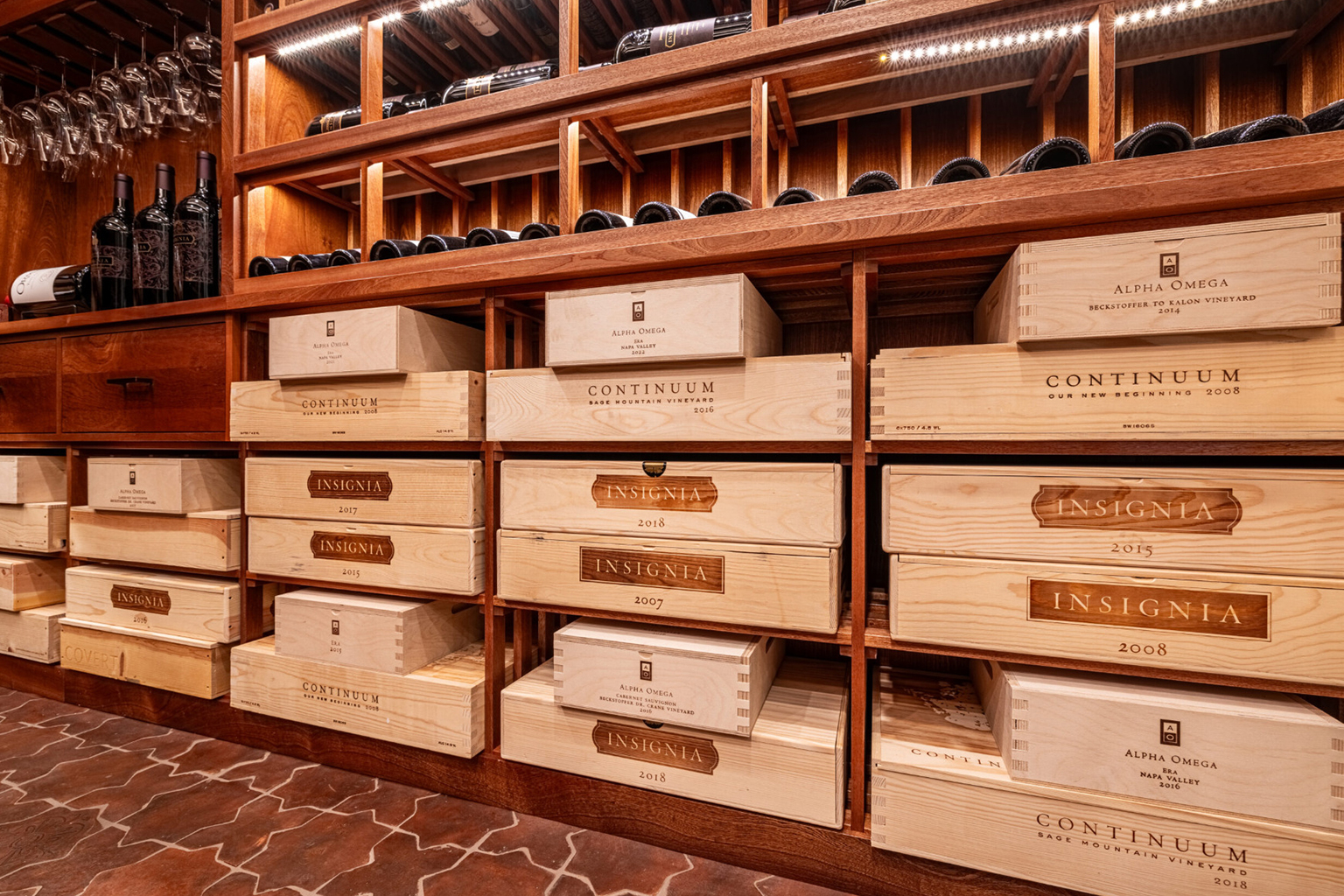
A great bottle can be difficult to replace. A great bottle in a pristine case is something more: a collector-grade purchase with its presentation, chain of custody, and resale appeal intact. So, what is a pristine case of wine? In fine-wine terms, it generally describes a complete case whose bottles, original packaging, labels, capsules, and overall condition have been exceptionally well preserved.
The phrase is widely used by merchants, collectors, and auction specialists, but it is not a universal legal grade. Its precise meaning depends on the wine, the format, the producer’s original packaging, and the seller’s condition notes. Still, the underlying promise is clear: the case has been kept with unusual care and presents as close as possible to how it left the estate or authorized distributor.
What Is a Pristine Case of Wine?
A pristine case is usually an original, unopened case of wine in outstanding condition. For Bordeaux, this may mean a full 12-bottle wooden case, often called an original wooden case or OWC, with the producer-branded lid, straps, stenciling, and inserts intact. For Champagne, Burgundy, Barolo, or other regions, the original case may be a cardboard carton, a wooden box, or another producer-specific configuration.
The word pristine applies to more than the outer box. It suggests that the bottles inside are consistent in presentation and fill, with clean labels, sound capsules, and no signs of poor storage. A lightly scuffed wooden lid may be acceptable for an older case that has moved through legitimate cellars, but it would not carry the same appeal as a case with sharp printing, intact seals, and no water staining, mold, crushing, or repair.
A pristine case should also be complete. A 12-bottle case missing one bottle is no longer a full original case, even if the remaining 11 bottles are impeccable. Likewise, a case assembled from bottles bought separately is not equivalent to a case that has remained together since release.
Pristine Does Not Mean the Wine Is Guaranteed Perfect
Condition is a powerful indicator, not a crystal ball. Even a flawless-looking case cannot prove that every bottle will show perfectly when opened decades later. Cork variation, natural bottle evolution, and historic conditions before the wine entered a merchant’s inventory can all affect the drinking experience.
For that reason, serious buyers should view pristine condition as one part of a larger quality picture. Producer reputation, vintage character, storage history, provenance, bottle fills, capsule condition, and the credibility of the selling merchant all matter. A pristine case supports confidence. It does not eliminate the inherent uncertainty that makes mature wine both thrilling and individual.
Why a Pristine Case Commands Attention
Fine wine is unusual because the vessel is part of the value. The bottle, label, capsule, wooden case, and documentation help tell the story of where a wine has been. When those elements remain intact, a buyer has more reason to believe the wine has avoided careless handling, excessive heat, damp conditions, and repeated movement.
For collectors, original packaging also matters because it is easier to authenticate and easier to sell. Prestigious wines from leading estates – particularly classified-growth Bordeaux, sought-after Burgundy, blue-chip Barolo, and rare Champagne – are frequently traded in full cases. An intact original case gives future buyers a more complete object, not merely a group of bottles.
This can affect value. A pristine, full OWC may command a premium over the same wine offered as loose bottles, especially for scarce vintages and wines intended for long-term cellaring. The premium is not automatic, however. If the wine is widely available, relatively young, or bought purely for near-term drinking, the practical difference may be modest.
There is also a more personal reason to care. Opening a case that has remained undisturbed since release can be deeply satisfying. The uniform bottles, estate markings, and sense of continuity heighten the occasion, whether the bottles are being poured over a long dinner or placed in a private cellar for the next decade.
The Details That Define Pristine Condition
When assessing a pristine case, start with the packaging. Original wooden cases should have clean, legible branding and a structurally sound lid. Look for dry wood, intact hinges or fastenings where applicable, and no evidence of water exposure, pest damage, or replacement panels. Cardboard cases should be firm and clean, without severe crushing, staining, or faded printing caused by damp storage.
Then consider the bottles. Labels should be fresh, attached, and free of major tears or staining. On mature bottles, a little age-related wear can be normal, but extensive label damage reduces collector appeal. Capsules should be intact, without corrosion, seepage, or signs of tampering.
Fill level is particularly relevant for older wines. A high shoulder fill on mature Bordeaux can be reassuring, while lower fills may signal evaporation through the cork over time. The acceptable level varies with the bottle’s age and style, so it should never be judged without context. A bottle from the 1980s will not necessarily look like a recent release, nor should it.
Finally, look for consistency. Do the bottles appear to be from the same release and have matching labels, capsules, and levels? Is the case’s stated vintage correct? A pristine case should feel coherent. Any mismatch deserves a question, even when the wine itself may still be genuine and enjoyable.
Original Wooden Cases and Other Formats
Original wooden cases have particular cachet, but wood is not the only mark of quality. Many revered producers release wines in branded cardboard cartons, six-bottle cases, mixed-format sets, or specialty presentation boxes. The key is originality and condition, not the material alone.
A six-bottle original case of Burgundy may be more typical than a 12-bottle case. Champagne can appear in six- or 12-bottle cartons, while large formats may have individual wooden crates. Some producers also use tissue wraps, dividers, branded neck tags, or specific closure details that help establish the completeness of the offering.
Do not assume that every unopened case is pristine. A sealed case that has been stored in a hot warehouse or humid garage may conceal problems. Conversely, an opened original case can still be highly desirable if every bottle is present, the contents have been professionally stored, and the condition is transparently described. “Unopened” and “pristine” often overlap, but they are not interchangeable terms.
Provenance Is the Other Half of the Story
The strongest pristine-case offering pairs excellent physical condition with credible provenance. Ideally, the wine comes directly from the producer, a recognized importer, a bonded warehouse, a respected private cellar, or an established fine-wine merchant with disciplined storage and inventory practices.
Ask sensible questions before purchasing a high-value case. Has it remained in professional temperature-controlled storage? Is it an original case from release? Has it been moved frequently? Are there condition photos or notes on labels, capsules, fills, and packaging? If the wine has changed hands, can the seller explain that journey clearly?
A trustworthy merchant will not treat these questions as inconvenient. Fine wine is bought on confidence as much as taste. At Crystal Wines, a collector-focused selection is valuable not simply because it includes celebrated names and sought-after vintages, but because buyers can make decisions with the benefit of specialist attention to condition and provenance.
When a Pristine Case Is Worth Paying More For
Paying a premium makes the most sense when the wine is rare, collectible, or likely to be resold or gifted. It is especially relevant for mature Bordeaux, limited-production Burgundy, cult estates, investment-minded purchases, and cases destined for a long private cellar life. Presentation matters when the recipient understands what they are receiving.
For a bottle you plan to open this weekend, perfection in the outer case may matter less than the wine’s style, vintage, and price. A slightly marked carton does not make a sound bottle less delicious. The sensible choice depends on your purpose: drinking, collecting, gifting, or preserving value across time.
A pristine case is ultimately an expression of care. It gives a remarkable wine the setting it deserves and gives its next owner a clearer, more reassuring story. When you find one, consider not only what is inside the bottles, but what the condition of the entire case says about the journey still ahead.


