


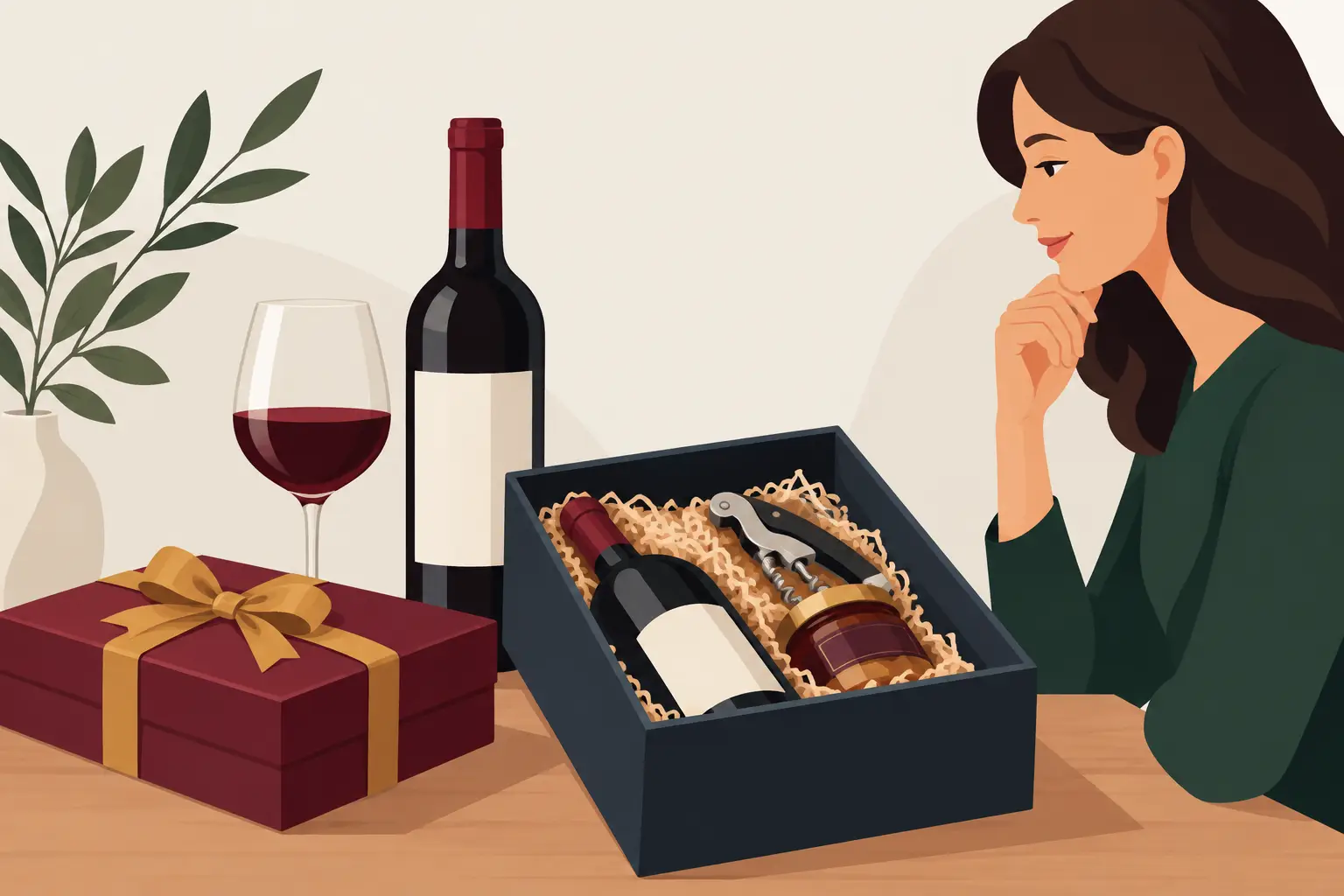
A wine gift is often opened in front of the person who gave it. That is precisely why it deserves more thought than picking the most expensive label on the shelf. To select wine gifts well, begin with the occasion, the recipient’s level of interest, and the kind of moment you hope the bottle will create.
A beautifully chosen Champagne can make a new-home celebration feel instantly festive. A mature Bordeaux can recognize a major professional milestone with appropriate gravitas. For a friend who enjoys wine but does not collect it, a polished bottle from a trusted producer may be far more welcome than an obscure, demanding rarity. The best gift feels considered, not complicated.
Start With the Recipient, Not the Price
The recipient’s drinking habits should shape the choice before budget enters the picture. Think about what they order at dinner, what they serve at home, and whether they enjoy discussing vintages and regions or simply appreciate a delicious bottle shared with friends.
For an enthusiastic but newer wine drinker, choose a recognizable region and a style that is generous on release. A refined Napa Cabernet Sauvignon, a supple Brunello di Montalcino, an expressive Barossa Shiraz, or a well-made white Burgundy can offer immediate pleasure while still conveying quality. These wines are easier to enjoy without a cellar, elaborate decanting routine, or technical knowledge.
For a serious collector, specificity carries weight. A sought-after Bordeaux château, a Burgundy premier cru from a respected domaine, a benchmark Barolo, or vintage Champagne from a great house signals that you understand the appeal of provenance. Here, vintage, bottle condition, storage history, and producer reputation matter as much as the appellation on the label.
If you are uncertain, do not assume red wine is the safe choice. Many experienced drinkers are delighted by top Champagne, mature Riesling, white Burgundy, or a finely structured Loire Chenin Blanc. The most useful clue is the recipient’s table: someone who loves seafood, Japanese cuisine, or lighter dishes may appreciate a luminous white far more than a powerful red.
Select Wine Gifts for the Occasion
The right bottle should match the scale and timing of the event. A dinner invitation calls for a different gesture than a retirement, wedding, or corporate thank-you.
For hosts and dinner invitations
Bring a bottle that can be opened that evening, but avoid treating it as a contribution to the meal unless you know the menu. Champagne is dependable because it works as an aperitif and pairs comfortably with a wide range of dishes. For a red, choose something balanced rather than aggressively tannic: Cru Beaujolais, Rioja Reserva, Côtes du Rhône, or an approachable Tuscan red are thoughtful options.
A host gift is also a chance to give something the recipient may save for themselves. A half bottle of aged Sauternes, a distinctive dessert wine, or a smartly selected bottle of single malt whisky can feel personal without requiring the host to alter the dinner plan.
For milestones and celebrations
Major occasions reward bottles with a sense of occasion. Vintage Champagne remains one of the most versatile choices for engagements, anniversaries, promotions, and new ventures. It is celebratory by nature, easy to share, and meaningful without requiring the recipient to be a collector.
For a wedding or landmark birthday, consider wines with the capacity to age. A classified-growth Bordeaux, Brunello di Montalcino, Barolo, or prestige cuvée Champagne can become part of the recipient’s own story. If the wine is intended for a birth year, anniversary year, or another significant date, verify that the vintage is both available and drinking well. A famous year is not automatically the right year for every region.
For business and corporate gifting
Corporate wine gifts demand restraint and polish. A well-regarded Champagne, a classic Bordeaux, or a premium mixed case communicates appreciation without being overly intimate. Presentation matters, but discretion matters too. Confirm any company gifting policies, avoid overly personal messages, and choose a bottle with broad appeal.
When recipients have varied preferences, a digital gift card can be the more elegant choice. It allows a Champagne devotee, Burgundy collector, or whisky enthusiast to select precisely what they enjoy, while preserving the thought behind the gesture.
Let Provenance Do the Talking
Fine wine is not merely a luxury product. Its value rests on place, producer, vintage, and condition. For a gift meant to impress a knowledgeable recipient, these details offer confidence that flashy packaging alone cannot.
Look for estates and producers with a clear track record. In Bordeaux, that may mean a respected château from Saint-Émilion, Pauillac, or Pomerol. In Burgundy, it may mean a trusted domaine with vineyard-specific bottlings. In Piedmont, established producers in Barolo or Barbaresco offer a strong foundation. The same principle applies to Champagne houses and grower-producers whose styles are consistent and distinctive.
Critic scores can help, particularly when choosing among several vintages or producers at a similar price. A high score from Wine Advocate, James Suckling, Antonio Galloni, Wine Spectator, Jeb Dunnuck, or The Wine Independent can provide useful context. Still, scores should support the decision rather than replace it. A 96-point, full-bodied Cabernet may be technically exceptional but unsuitable for someone who prefers graceful, lower-alcohol reds.
For collectible bottles, purchase through a specialist merchant that can speak clearly about provenance, bottle format, vintage character, and storage. Original wooden cases, pristine labels, and sound capsules are especially relevant when the wine may be cellared or gifted to a collector.
Choose a Budget That Feels Generous, Not Performative
Wine gifts do not need to be extravagant to be memorable. The value lies in how closely the bottle suits the person and occasion. A beautifully selected $50 to $80 bottle from a strong producer can feel more generous than a costly but generic label.
At higher budgets, it is worth paying for distinction rather than simply more power or oak. Consider a more compelling appellation, an excellent vintage, a smaller-production cuvée, or a larger bottle format. Magnum bottles are particularly effective for celebrations: they make an immediate visual statement, serve a group, and often age more gradually than standard bottles.
There are trade-offs. A single prestige bottle creates a dramatic impression, while a mixed case provides discovery and repeated enjoyment. One mature bottle offers immediate pleasure, whereas a younger cellar-worthy wine gives the recipient something to anticipate. Neither approach is universally better. The recipient’s habits should decide it.
Presentation Should Support the Bottle
A wine gift should arrive ready to give. Keep the presentation refined rather than overdone: a clean gift box, tissue, a simple card, or a wooden case when appropriate. Include the producer, vintage, and a brief personal note about why you chose it. That small explanation can turn an impressive bottle into a meaningful one.
Avoid adding accessories simply to make the gift appear larger. A quality corkscrew, decanter, or set of glassware is useful when it genuinely fits the recipient’s needs. Otherwise, let the wine remain the focus. Champagne needs no ornament beyond a well-chosen bottle and the promise of a shared toast.
When You Do Not Know Their Taste
Uncertainty is common, especially when buying for a client, in-law, or colleague. In that case, favor versatile classics over polarizing styles. Champagne is the clearest answer, followed by elegant reds with moderate tannin and broad food compatibility. Avoid heavily oaked wines, intensely sweet bottles, or sharply unusual grape varieties unless you have a reliable clue that they will be appreciated.
Another sensible approach is to give a choice without making the gesture feel impersonal. A curated mixed selection can introduce the recipient to several regions, while a digital gift card lets them choose by country, vintage, price tier, bottle size, or critic score. At Crystal Wines, knowledgeable retail guidance can also help narrow the field when all you know is the occasion and a rough budget.
The most memorable wine gifts are rarely the ones with the loudest label. Choose a bottle with a reason behind it, add a note that shares that reason, and give the recipient an occasion worth opening it for.


