


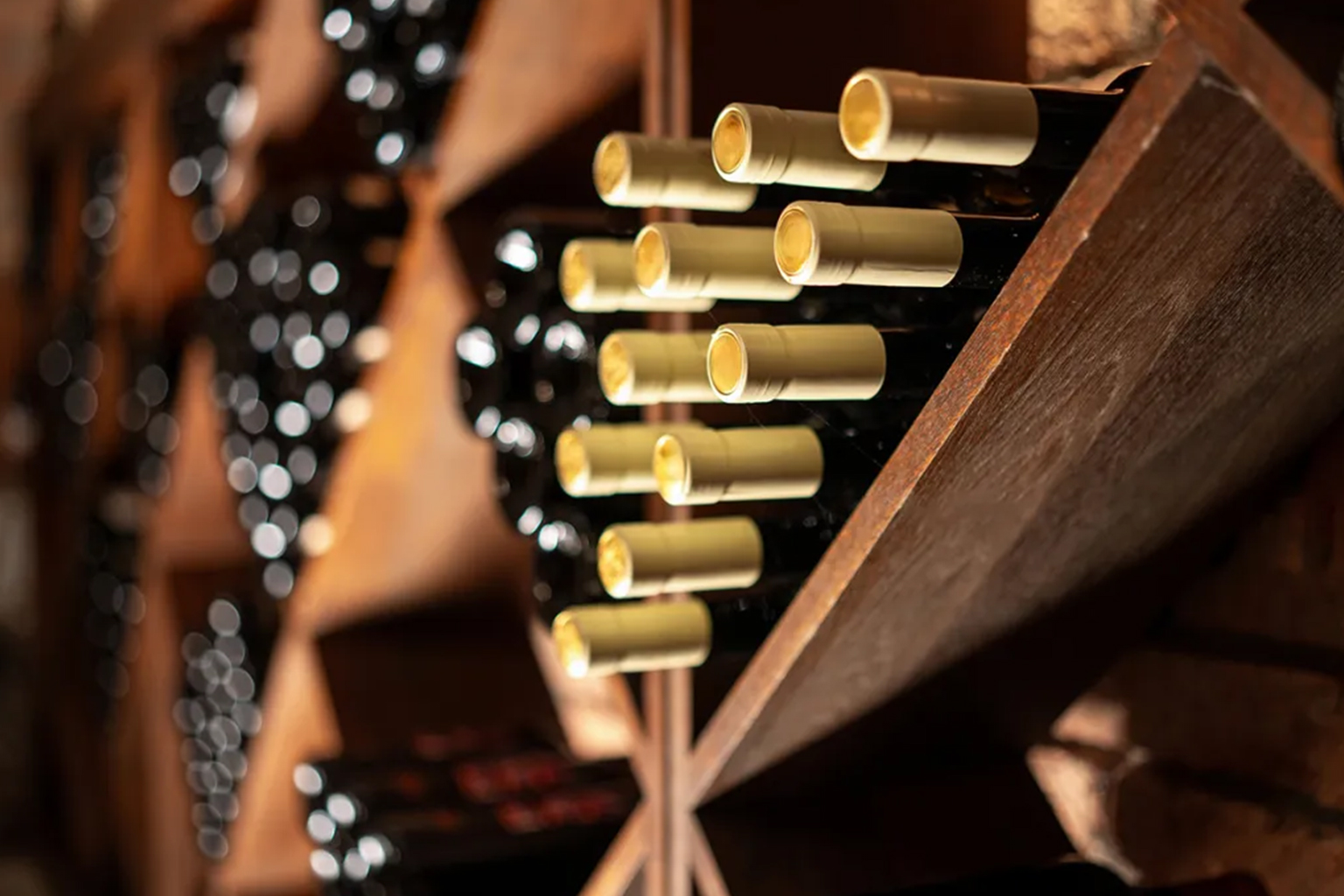
A great bottle can spend decades developing a sensational perfume, refined texture, and breathtakingly long finish. It can also lose its promise in a single hot afternoon. Knowing how to store fine wine is therefore not only a collector’s concern. Whether you are holding a classified-growth Bordeaux, a case of Barolo, or a few special bottles of Champagne for future celebrations, the conditions around the bottle matter.
For most wines, storage is about restraint. Keep conditions cool, dark, still, and consistent, then resist the urge to move bottles unnecessarily. In Singapore’s heat and humidity, that usually means creating a deliberately controlled environment rather than relying on a kitchen cabinet, display rack, or room with air conditioning.
How to Store Fine Wine for Graceful Aging
Temperature is the first priority. Fine wine is happiest at a steady 53-57°F, with 55°F widely regarded as the ideal long-term benchmark. A bottle stored at 60°F is not automatically ruined, particularly if the temperature stays stable. The greater concern is heat and fluctuation. Repeated swings cause the wine and air inside the bottle to expand and contract, placing pressure on the cork and accelerating development.
At sustained temperatures above 70°F, aging moves faster and less predictably. Aromas can become muted or stewed, color may evolve prematurely, and the wine can lose the precision that made a distinguished vintage worth cellaring. A warm room is particularly risky for mature Burgundy, delicate older Bordeaux, and vintage Champagne, whose complexity relies on slow, controlled evolution.
Do not confuse serving temperature with storage temperature. A full-bodied red may be served around 60-65°F, while Champagne is more expressive when properly chilled, but both benefit from long-term storage around 55°F. Chilling a bottle before dinner is a short-term adjustment. Cellaring is preservation.
Consistency Matters More Than a Perfect Number
Few home collectors have access to a faultless underground cellar, and that is perfectly acceptable. A wine refrigerator holding a steady 58°F is preferable to a theoretical ideal that fluctuates daily. Choose the most stable setting your equipment can maintain, particularly during hot weather or when the home is vacant.
Avoid placing a wine cabinet next to an oven, dishwasher, sunny window, or exterior wall that receives afternoon heat. It should also have clearance for ventilation. Compressors produce heat as they work, and a tightly enclosed cabinet may struggle to hold its target temperature.
Humidity, Darkness, and Bottle Position
Humidity is often misunderstood. The goal is not dampness for its own sake but a healthy cork. For wines sealed with natural cork, relative humidity around 60-70% helps prevent the cork from drying out from the outside. Excessively dry conditions can contribute to cork shrinkage over time, increasing the chance of oxidation. Excessively humid conditions are less harmful to the wine itself, though labels, capsules, and original wooden cases may develop mold or deteriorate.
This is one reason a standard household refrigerator is not suitable for long-term storage. It is cold, but its low humidity and frequent vibration make it a poor home for collectible bottles. Use it for a bottle you plan to drink within a few days, not for a 2016 Brunello you hope to revisit in a decade.
Light is equally unforgiving. Ultraviolet exposure can damage wine and create unpleasant aromas, especially in clear or pale glass. Champagne and white Burgundy are notably vulnerable. Store bottles away from direct sunlight and bright display lighting. A glass-fronted wine refrigerator can work well if it has UV-protected glass, but a solid door offers an additional margin of protection.
Bottles with natural corks should generally rest on their sides so the wine keeps the cork moist. This also saves space and makes it easier to organize a growing cellar. Wines under screw cap, crown cap, or glass closure may be stored upright or on their sides, depending on your available space. For Champagne, either position is acceptable for shorter holding periods; for extended aging, many collectors prefer bottles on their sides for efficient, stable storage.
Choose Storage According to Your Drinking Window
Not every bottle requires a cellar. A fresh Sauvignon Blanc, young Prosecco, or everyday red purchased for the week can be kept in a cool, dark place and enjoyed soon after purchase. The more valuable question is whether a bottle has the structure, provenance, and intended drinking window to justify long-term storage.
Wines with the greatest cellaring potential tend to have a natural balance of acidity, tannin, concentration, and fruit. Top Bordeaux, Barolo, Brunello di Montalcino, Northern Rhône, certain Rioja, prestige Champagne, and serious Burgundy can develop beautifully over years when stored correctly. Vintage matters, but producer style and bottle condition matter too. A high critic score may indicate quality, yet it does not guarantee that every wine should be held indefinitely.
If you are buying for both current enjoyment and future milestones, separate the two. Keep ready-to-drink bottles accessible, and reserve the most age-worthy wines for the most stable section of your storage. This prevents constant searching and movement through the bottles you intend to preserve.
For collectors who purchase original cases, retain the case wherever practical. Original packaging protects bottles from light and knocks, and it can support provenance when the wine is eventually traded, gifted, or sold. Keep cases raised off the floor in a dry, temperature-controlled space. Cardboard and wooden cases absorb moisture readily, so they should never sit against a damp wall.
A Wine Refrigerator or Professional Storage?
A dedicated wine refrigerator is the practical answer for many enthusiasts. Look for stable single-zone temperature control if your priority is aging. Dual-zone cabinets are useful when you want to store reds and whites at separate serving temperatures, but they are not essential for a cellar collection. Capacity should be judged conservatively. Cabinet specifications often assume slim Bordeaux-shaped bottles, while Burgundy, Champagne, and magnums require more room.
Pay attention to shelf design. Bottles should lie securely without scraping labels, and you should be able to retrieve one bottle without disturbing an entire row. If you keep prized bottles, a lock is worthwhile, particularly in a busy household or entertaining space.
Professional wine storage becomes more compelling as collection value, volume, and holding period increase. It offers purpose-built climate control, stronger security, and less risk from a household power failure or appliance malfunction. It is particularly sensible for full cases, En Primeur purchases, older vintages, large formats, and bottles intended for eventual resale. The trade-off is access: you cannot spontaneously open a bottle that is stored off-site, so keep a thoughtfully selected drinking collection at home.
Protect Your Collection From Small, Costly Mistakes
Fine wine does not need to be handled delicately every day, but it should be handled intentionally. Vibration from a well-made wine refrigerator is usually minimal, yet avoid storing bottles near speakers, washing machines, or frequently slammed doors. Constant agitation can disturb sediment in mature reds and is simply unnecessary for wines being held at rest.
Keep an inventory from the beginning. Record producer, appellation, vintage, bottle size, quantity, purchase date, purchase source, and suggested drinking window. Add notes when you taste a bottle from the same case. Those notes become more useful than a generic chart because they tell you how your own bottles are progressing.
It also pays to inspect stored wine periodically, without overhandling it. Look for seepage around the capsule, unusually low fill levels in older bottles, damaged labels, or signs that your cabinet is not maintaining temperature. A small remote thermometer and humidity monitor can provide reassurance, especially if the cabinet display is not independently calibrated.
When buying cellar-worthy bottles from a specialist such as Crystal Wines, ask about provenance and the recommended drinking window. A bottle that has traveled and been stored well before it reaches you starts with a meaningful advantage. Your storage should preserve that advantage, not undo it.
Before You Put a Bottle Away
A quick check prevents most avoidable problems:
- Confirm that the bottle is intended for aging rather than near-term drinking.
- Keep it away from sunlight, heat sources, and strong odors.
- Store natural-cork bottles on their sides in a stable environment.
- Record where it is stored and when you expect to open it.
- Avoid moving it until the occasion or drinking window arrives.
The reward for proper storage is not merely a better-looking cellar. It is the moment a carefully kept bottle opens with the clarity, perfume, and poise its producer intended, ready to make an ordinary dinner or a long-planned celebration feel genuinely memorable.


