


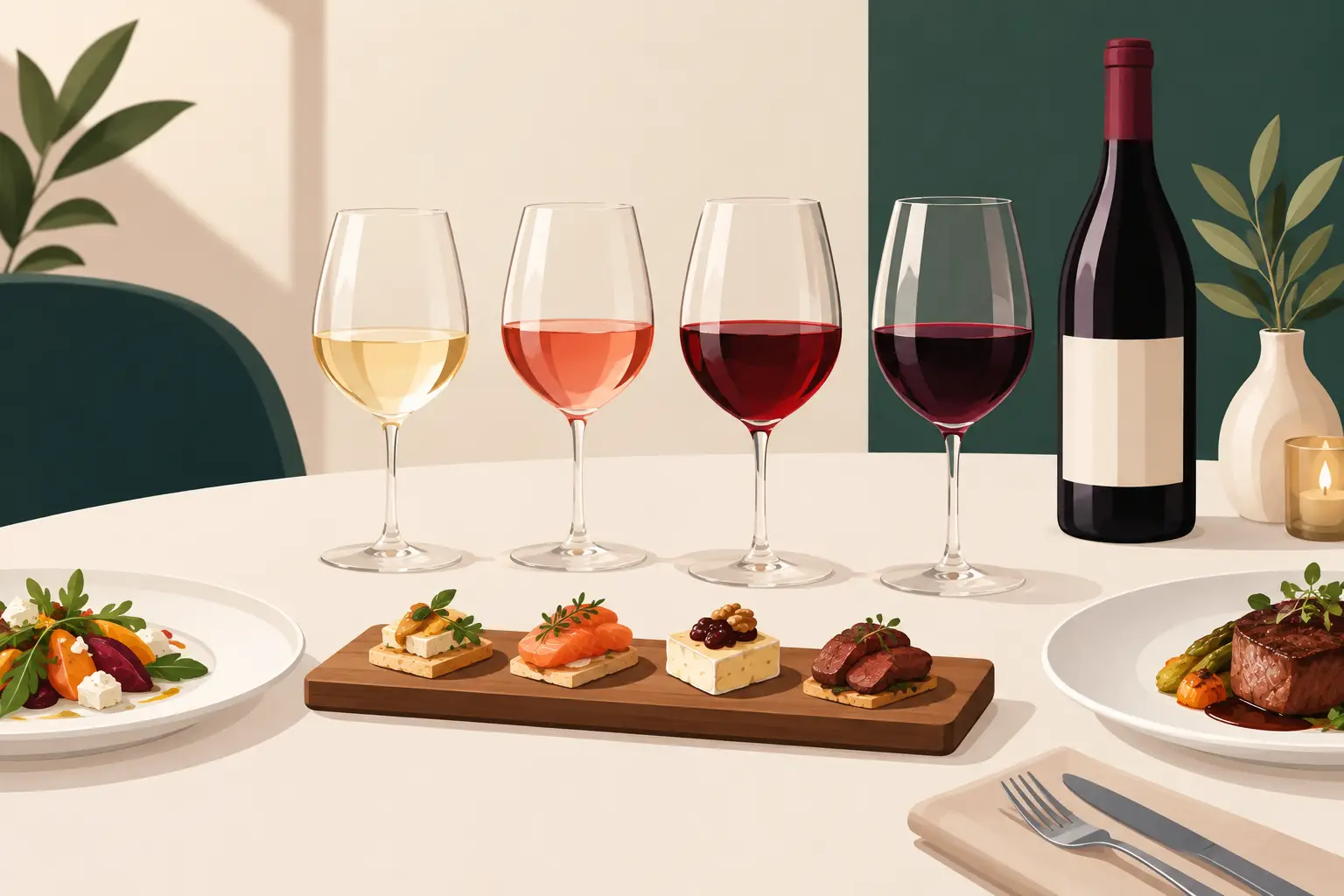
The most successful wine dinners do not begin with a prized bottle. They begin with a decision: what should guests remember most – a particular vintage, a favorite cuisine, a revealing comparison between regions, or simply an unhurried evening around the table? Once that is clear, it becomes far easier to plan a wine tasting menu that feels generous rather than overcomplicated.
A tasting menu should give every wine room to speak. For a dinner at home, that usually means four to six wines, measured pours, and dishes designed to complement rather than compete with the glass. The objective is not to demonstrate the depth of your cellar in one sitting. It is to create a progression of aromas, textures, and flavors that becomes more compelling as the evening unfolds.
Start With One Clear Tasting Idea
A focused theme makes bottle selection more confident and gives guests a useful frame of reference. A comparison of Chardonnay from Burgundy and California, for example, reveals how place and winemaking shape the same grape. A tour through Piedmont can move from Langhe Nebbiolo to Barolo, while a Bordeaux evening might compare left-bank Cabernet structure with the perfume and softness of Saint-Émilion.
For a less formal group, build the menu around food instead. Champagne and oysters or fried chicken, crisp white wines with seafood, and refined reds with roast duck create an intuitive arc. The wines can still be serious, but guests do not need prior knowledge of appellations to enjoy them.
Avoid making the theme so narrow that every wine tastes like a slight variation of the last. A vertical tasting of one château can be extraordinary for experienced collectors, particularly when mature bottles are involved, but it demands attentive guests and careful service. For a mixed group, contrast is often more rewarding than precision.
Decide How Many Wines to Pour
Five wines is the sweet spot for most seated tastings. It is enough to show range without tiring the palate or making dinner feel like an examination. Plan on 2-ounce pours per person, or slightly less if you are serving more bottles. A standard 750ml bottle provides approximately 12 tasting pours at that size.
For eight guests, one bottle per wine is generally sufficient for a five-wine menu, provided the host is not planning generous refills. If a wine is the centerpiece of the night – perhaps a mature Brunello di Montalcino or a highly rated Bordeaux – consider opening a second bottle. Nothing disrupts the rhythm of a dinner faster than realizing the final guests receive only a splash of the wine everyone is discussing.
Bottle format matters, too. A magnum makes a handsome statement for a celebratory main course and often matures more slowly than a standard bottle. Yet it is less practical when the aim is comparison. Use large formats for a shared moment, not for every course.
How to Plan a Wine Tasting Menu in the Right Order
The traditional rule is sound: move from sparkling to still, dry to sweet, light to full-bodied, and young to mature where possible. It protects the palate from being overwhelmed early in the meal.
A polished five-wine sequence could begin with non-vintage Champagne, followed by mineral-driven white Burgundy, then an elegant Pinot Noir, a structured Cabernet-based red, and a late-harvest wine or vintage Port with dessert. The exact regions can change, but the rhythm remains useful: freshness first, then detail, then depth, then a graceful finish.
There are exceptions. A mature Bordeaux may be lighter in body than a young, powerful Châteauneuf-du-Pape, and an older Barolo can show haunting florals and savory nuance rather than sheer weight. In those cases, taste the wines before guests arrive and place them by intensity, not label prestige or price.
Do not serve a heavily oaked red before a delicate white simply because it is the more expensive bottle. Great wine deserves the best possible context. A breathtakingly long finish is easily lost after excessive tannin, chili heat, or sweet sauces.
Build Each Course Around Texture
Pairing is less about finding a dramatic flavor match than managing texture, acidity, fat, salt, sweetness, and tannin. High-acid wines refresh rich foods. Tannic reds need protein or fat to soften their grip. Sweet wines must be sweeter than the dish beside them, or they can taste thin and bitter.
For the opening course, think of raw seafood, sashimi, oysters, or lightly fried snacks with Champagne, grower sparkling wine, or a taut dry Riesling. The saline, citrus-driven character of the wine lifts the food, while bubbles reset the palate.
A textured white such as white Burgundy, top-quality Chenin Blanc, or an elegant Rhône blend works beautifully with lobster, crab, roast chicken, or mushrooms. These wines have enough presence for savory dishes without asking for a heavy preparation. If serving Asian-influenced food, watch the heat level. Residual sugar and bright acidity can make an off-dry Riesling a better partner for spice than an expensive dry Chardonnay.
For red wine, choose the protein before choosing the sauce. Pinot Noir is especially convincing with duck, salmon, pork, and earthy mushroom dishes. Nebbiolo comes alive with truffle, braised meats, and aged hard cheeses. Cabernet Sauvignon and Bordeaux blends are natural companions to beef or lamb, especially when the dish carries a savory jus rather than a sweet glaze.
Dessert is optional. A cheese course can be a more relaxed finale, particularly if guests prefer one last glass of red. If you do serve dessert, keep it modest: stone fruit tart with Sauternes, dark chocolate with vintage Port, or blue cheese with a rich sweet wine offers a satisfying close.
Choose Bottles With Purpose, Not Just Scores
Critic scores are valuable signals, especially when selecting collectible wines or navigating unfamiliar vintages. They are not, however, a menu on their own. A 98-point wine may be too young, too powerful, or simply too stylistically dominant for the food you intend to serve.
Look for a mix of personalities. One wine may offer tension and citrus precision; another, a sensational perfume of rose, cherry, and spice; another, the cedar, cassis, and graphite complexity that calls for a slow-cooked main course. The conversation becomes richer when the wines have distinct voices.
Vintage should shape expectations. Young classified-growth Bordeaux or Barolo can need lengthy decanting and substantial food. Mature bottles can be more fragile, requiring gentle handling and a brief decant only if sediment demands it. For older wines, open carefully, taste immediately, and be ready to serve sooner than planned. Their most expressive window may be brief, but memorable.
When in doubt, build around one special bottle and choose supporting wines that create a logical path toward it. Crystal Wines can be a useful source of guidance when the selection includes mature vintages, prestige appellations, or a comparison you want to get right.
Prepare Service Before Guests Arrive
Fine bottles should not be fussed over at the table while guests wait. Chill sparkling wine and aromatic whites well, then allow them to warm slightly in the glass. Most full-bodied whites show best around 50-55°F. Light reds benefit from a brief chill, while structured reds are usually most expressive around 60-65°F, cooler than many dining rooms.
Set out enough clean glassware that guests can compare at least two wines side by side. Identical, medium-sized tulip-shaped glasses are more useful than a collection of novelty stems. If glassware is limited, pour, discuss, and clear each course before moving on.
Decant only when it serves the wine. Young, tannic reds often gain fragrance and silkiness from one to two hours of air. Mature wines need a gentler approach. Stand them upright beforehand to settle sediment, then pour slowly into a clean decanter or directly into glasses. The goal is clarity, not theater.
A simple printed card with producer, vintage, region, grape variety, and a few tasting notes is a thoughtful touch. Keep the notes brief. Guests should look, smell, and taste before being told what they are meant to find.
Let the Conversation Set the Pace
The best hosts do not turn every pour into a lecture. Offer one useful detail: why the limestone soils matter in Chablis, how the 2016 and 2019 vintages differ in Bordeaux, or why Nebbiolo can smell floral yet taste firm and structured. Then let the table respond.
Leave time between courses. Water and bread are essential, but bread should not become a substitute for pacing. Encourage guests to revisit a wine after ten or fifteen minutes, especially with serious reds. A glass that seemed reserved at first pour may become remarkably expressive beside the right dish.
A well-planned wine tasting menu is ultimately an act of hospitality. Select wines with a point of view, cook food that respects them, and leave enough space for surprise. The bottle guests remember may not be the rarest one on the table. It may be the one that arrived at exactly the right moment.


