


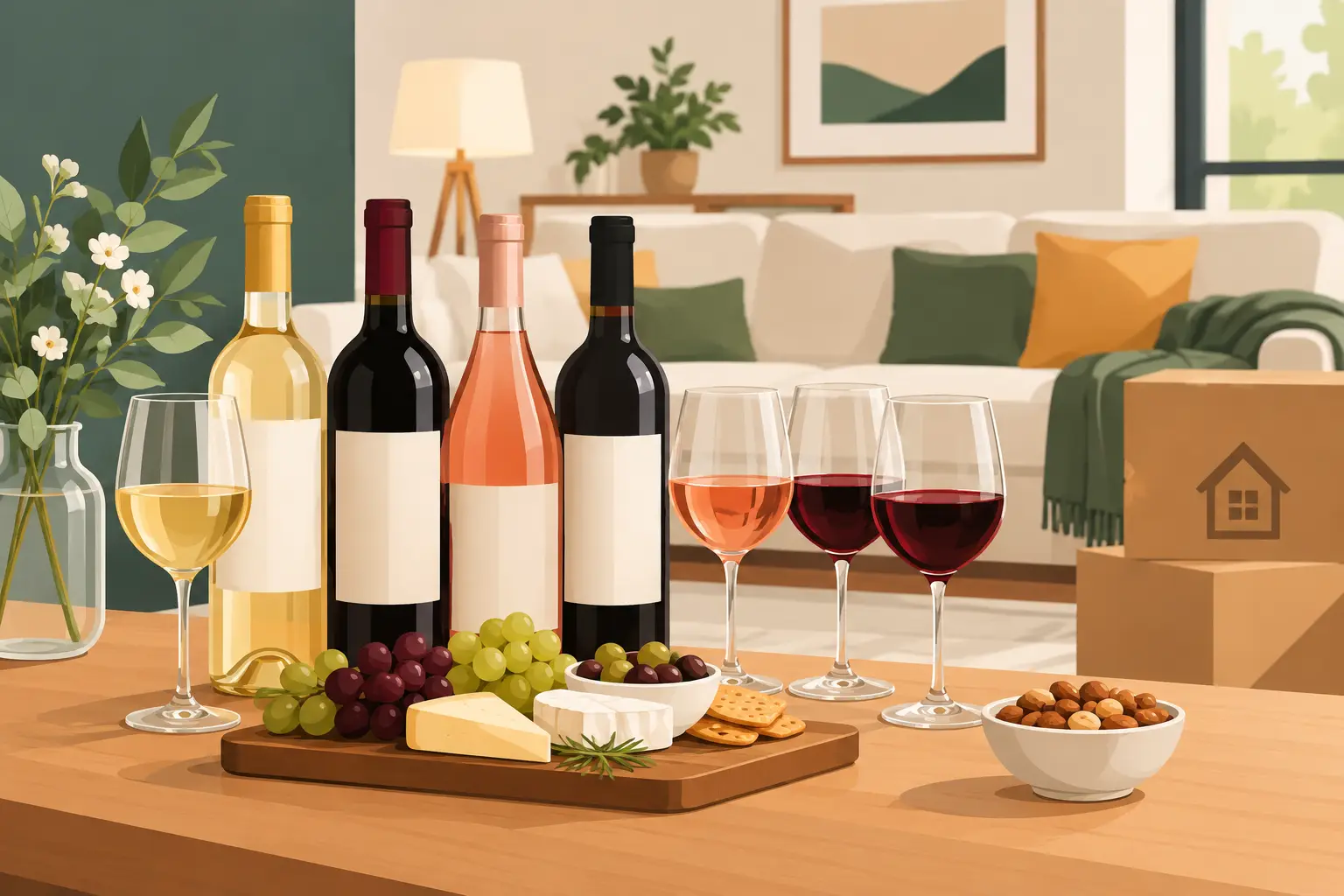
A housewarming calls for a bottle that feels more considered than a last-minute host gift, yet relaxed enough to open before the first box is unpacked. The best wines for housewarmings strike that balance: they offer immediate pleasure, suit a range of snacks and takeaway favorites, and make a new space feel instantly more hospitable.
The right choice depends on the hosts, the guest list, and whether the bottle is meant for the evening or the cellar. A serious collector may appreciate a beautifully mature Bordeaux or a fine Burgundy from a respected domaine. For friends assembling furniture and ordering pizza, a polished Beaujolais, aromatic Riesling, or festive Champagne may be the more generous gesture. The objective is not to bring the most expensive wine in the room. It is to bring the bottle that belongs in the moment.
What Makes a Wine Right for a Housewarming?
Housewarming food tends to be eclectic. There may be charcuterie, roast chicken, sushi, spicy noodles, cheese, delivery burgers, and a dessert someone remembered at the last minute. Wines with freshness, moderate structure, and clear fruit usually have the broadest appeal. This is why Champagne, dry Riesling, Pinot Noir, and well-balanced Italian reds are consistently useful choices.
Temperature matters, particularly for a warm gathering. White wine and Champagne should arrive properly chilled, while red wine is often better served cooler than most homes assume. A red at around 55 to 60 degrees Fahrenheit feels more vivid, less alcoholic, and far more inviting alongside casual food. If the party is in full flow, bring a bottle that does not demand a decanter or a lengthy discussion of its pedigree before anyone can enjoy it.
There is still room for grandeur. A housewarming can mark a meaningful purchase, a long-awaited move, or the start of a new chapter. In those cases, provenance, vintage, and producer reputation turn the gift into a lasting memory rather than simply another bottle emptied before midnight.
8 Best Wines for Housewarmings
Champagne for an immediate celebration
Champagne is the classic housewarming bottle because it creates an occasion the moment the cork is released. Its acidity and fine mousse cut through fried food, salty canapes, cured meats, and creamy cheeses with ease. A non-vintage Brut from a distinguished house is a confident choice for a mixed group, offering both familiarity and quality.
For a more personal gift, seek out a grower Champagne or a vintage cuvee with precision and depth. These wines reward the host who wants to linger over a glass after guests have left. Rosé Champagne is especially attractive for an afternoon gathering, bringing red-fruit fragrance and a touch more generosity to the table.
Dry Riesling for spicy food and warm weather
A finely made dry or off-dry Riesling is one of the most underestimated housewarming wines. Its lime, white peach, and floral notes are refreshing on arrival, while its bright acidity makes it unusually adaptable with food. It is exceptional with Singapore-style flavors, Thai curries, sushi, dumplings, and dishes with chili or aromatic herbs.
If you are unsure how spicy the food will be, a Riesling with a modest touch of residual sugar is often safer than a bone-dry white. The sweetness does not make it cloying when balanced by high acidity. Instead, it softens heat and keeps the palate refreshed.
Chablis or white Burgundy for polished hosting
For hosts who appreciate classic French wine, Chablis offers sophistication without unnecessary weight. Its citrus, oyster-shell minerality, and restrained texture pair naturally with seafood, roast chicken, soft cheese, and elegant hors d’oeuvres. It also suits a new home gathering where the menu is still taking shape.
A richer white Burgundy from the Côte de Beaune is more luxurious, with subtle toast, hazelnut, and stone-fruit character. Choose this when you know the hosts enjoy Chardonnay and are likely to serve roast poultry, lobster, buttery pasta, or a generous cheese board. The trade-off is that a top example can be expensive, and its nuance may be lost at a very crowded party. It may be better offered as a host gift to enjoy later.
Sauvignon Blanc for a bright, easygoing crowd
A poised Sauvignon Blanc is ideal for an informal afternoon or early-evening open house. Bottles from Sancerre or Pouilly-Fumé bring citrus, herbs, and stony freshness, while a high-quality New Zealand expression can offer more passion fruit and vivid aromatics. Either style works with salads, goat cheese, grilled prawns, and vegetable-forward dishes.
This is a practical choice rather than a showy one, and that is its strength. A good Sauvignon Blanc is instantly recognizable, refreshing, and unlikely to overwhelm guests who drink wine only occasionally.
Beaujolais for relaxed red-wine drinkers
Cru Beaujolais, particularly from Morgon, Fleurie, or Moulin-à-Vent, is a brilliant answer to the question of what red to bring when the menu is uncertain. Made from Gamay, it carries juicy red cherry and violet perfume, with enough structure to feel serious but not so much tannin that it clashes with snacks or spicy food.
Serve it lightly chilled. That small detail transforms the wine at a housewarming, making it energetic and wonderfully drinkable. It is also an excellent bridge between guests who usually choose white wine and those who prefer reds.
Pinot Noir for versatility with finesse
Pinot Noir is among the safest premium red-wine choices for a housewarming because it rarely dominates the food or the conversation. A well-made Pinot offers red berries, spice, forest floor, and silky tannins rather than sheer power. It works with duck, salmon, mushroom dishes, roast chicken, and even pizza.
Burgundy remains the reference point for many enthusiasts, whether from village-level appellations or a more distinguished premier cru. Yet excellent Pinot Noir from Oregon, New Zealand, and cooler parts of California can be equally rewarding for a contemporary gathering. The key is freshness. Avoid overly ripe, heavily oaked examples if the party includes a wide range of palates.
Barolo or Brunello for a meaningful milestone
When the move marks a major life event, Barolo and Brunello di Montalcino bring gravitas. Barolo is perfumed and structured, with rose petal, tar, cherry, and earthy complexity. Brunello offers dark cherry, savory herbs, tobacco, and firm yet refined tannins. Both are wines of place, patience, and ceremony.
These are not necessarily the bottles to pour casually while guests are standing in the kitchen. Younger vintages may need air, large glasses, and a proper meal. Instead, present one as a considered gift for the hosts’ first celebratory dinner in their new home. Include a simple note suggesting they open it with braised meat, steak, or a Sunday roast.
Bordeaux for the host building a cellar
A classically styled Bordeaux is a strong choice for a wine-minded host who values vintage and estate character. Saint-Émilion and Pomerol offer plush Merlot-led texture, while Cabernet-based wines from the Médoc bring cassis, cedar, graphite, and age-worthy structure. A respected cru bourgeois, a strong second wine, or an established château from a good vintage can be more appropriate than chasing a trophy label.
For a collector, the thought behind the selection matters as much as the price. A bottle with clear provenance and the potential to evolve in a new cellar has particular resonance. Crystal Wines can help match a vintage, appellation, and price level to the recipient’s preferences, especially when the gift is intended to be kept rather than opened immediately.
How to Bring Wine That Feels Like a Gift
Presentation changes the experience. Remove any retail receipt, carry the bottle in a simple gift bag or wooden case when appropriate, and include a brief handwritten card. If you have chosen a cellar-worthy bottle, mention that it is intended for a future dinner. That gives the hosts permission not to open it during the party.
Consider bringing two bottles when you know the gathering will be busy: one crowd-pleasing wine for immediate pouring and one more distinctive bottle for the hosts. Champagne plus Pinot Noir is an especially effective pairing. So is dry Riesling plus Barolo, giving the hosts both a generous party wine and something to look forward to.
A magnum can be memorable for a larger celebration, especially in Champagne, Provence rosé, or approachable Bordeaux. It makes an entrance and stays festive longer than several standard bottles. Still, it is only the right choice if the guest count and refrigerator space make sense. A magnum that cannot be chilled or finished can become an awkward luxury.
A Bottle for the First Dinner After the Guests Leave
The most thoughtful housewarming wine often anticipates the quiet moment after the party. Choose a bottle that reflects how the hosts will actually live in their new space: crisp white wine for balcony dinners, Champagne for spontaneous celebrations, Pinot Noir for shared takeout, or age-worthy Bordeaux for the beginnings of a serious cellar. A well-chosen bottle does more than christen a home. It gives its owners a reason to pause, pour a glass, and enjoy being there.


