


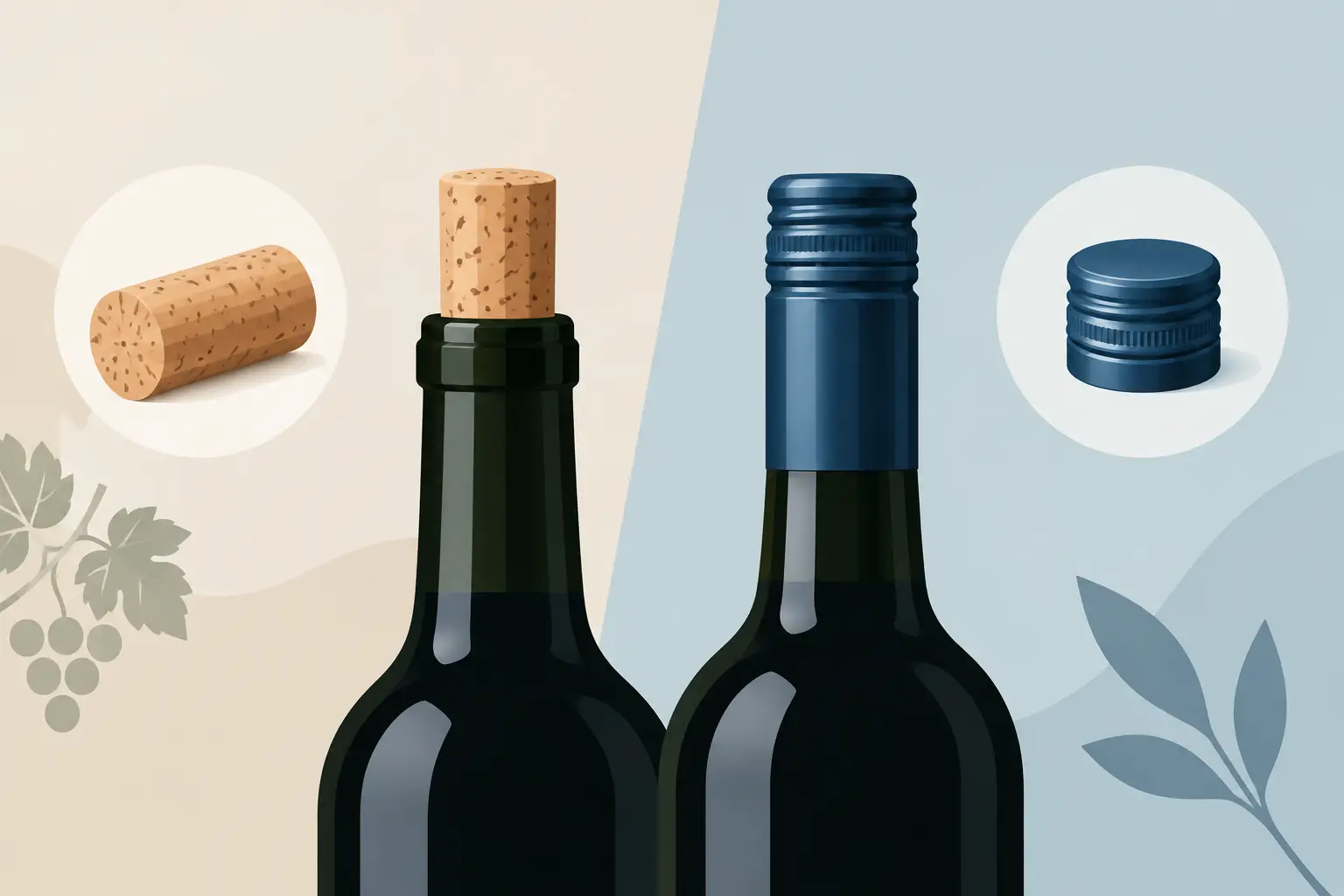
A bottle of mature Bordeaux being drawn at the table has a certain ceremony: the cut foil, the corkscrew, the brief anticipation before the first aromatic pour. Yet cork versus screw caps is not simply a contest between romance and convenience. The closure affects a wine’s protection from oxygen, its consistency from bottle to bottle, its expected evolution, and the confidence with which you can open it for dinner.
For collectors, the choice can also signal a producer’s philosophy and a wine’s intended drinking window. For everyday buyers, it can make selecting a crisp white for seafood or a red to cellar feel unnecessarily complicated. The useful answer is not that one closure always wins. It is knowing what each one is designed to preserve, and what the wine in your hands needs.
Cork Versus Screw Caps: What Actually Changes
Wine is never completely static after bottling. It develops through a combination of its fruit, acidity, tannin, sulfur management, pH, residual oxygen at bottling, and storage conditions. A closure is one part of that equation, but it is an influential one.
Natural cork has long been the traditional seal for fine wine. Its cellular structure compresses into the neck of a bottle, then expands to form a tight closure. Although cork is often described as allowing wine to breathe, that phrase can be misleading. Oxygen transfer through a sound cork is extremely small, and much of the oxygen that shapes a wine’s early bottle development was introduced before or during bottling rather than steadily passing through the cork for decades.
Screw caps create a highly consistent seal using an aluminum capsule and an internal liner. Modern liners can be selected for different levels of oxygen transmission, so a screw cap is not necessarily an airtight, one-size-fits-all closure. In practice, it usually protects youthful fruit, acidity, and primary aromatics very effectively.
The real distinction is consistency. Natural corks vary because they are a natural material. Screw caps are manufactured to close with far narrower variation. That reliability is particularly valuable for aromatic whites, rosés, and fresh, fruit-driven reds, where a muted nose or premature oxidation can overshadow the wine’s intended character.
The Case for Natural Cork
For the world’s most established cellar wines, natural cork remains deeply connected to tradition, provenance, and the experience of opening a significant bottle. Many leading estates in Bordeaux, Burgundy, Barolo, Brunello di Montalcino, and Champagne continue to use it because it has a long, proven record with wines intended to evolve over decades.
A great cork-sealed wine can develop a refined bouquet that is difficult to reduce to a single technical explanation. Over time, youthful fruit may give way to cedar, tobacco, dried rose, truffle, forest floor, spice, or savory complexity. That evolution comes primarily from the wine itself and the conditions in which it was made, but the closure has been part of the successful aging model for generations.
Cork also matters emotionally. When opening a carefully cellared vintage for an anniversary, a business dinner, or a serious tasting, the ritual feels appropriate to the occasion. For collectors, an intact branded cork offers another small piece of reassurance about the bottle’s identity and handling, especially in the secondary market.
There are environmental considerations as well. Natural cork is renewable, biodegradable, and harvested without cutting down the cork oak tree. Well-managed cork landscapes support biodiversity and rural economies in Mediterranean regions. That does not make every cork automatically superior in every sustainability calculation, but it is a meaningful advantage for buyers who value a natural material with an established reuse and recycling story.
Cork’s principal drawback: cork taint
The familiar risk is cork taint, usually associated with TCA, a compound that can make wine smell like damp cardboard, wet newspaper, or a musty cellar. At stronger levels, the fault is obvious. At lower levels, it may simply strip a wine of its fruit and leave it strangely dull.
Cork quality has improved substantially, and leading producers increasingly use advanced screening and quality-control methods. Still, the risk cannot be eliminated completely. A flawed cork does not mean the wine was badly made, but it can be disappointing when the bottle is a prized vintage or the centerpiece of a meal.
Why Screw Caps Earn Serious Respect
Screw caps are no longer a shorthand for inexpensive wine. Top producers in regions such as New Zealand, Australia, Austria, and parts of Germany have demonstrated their value for wines made with precision, purity, and longevity in mind. A mineral-driven Riesling, vibrant Grüner Veltliner, or concentrated Australian Semillon can be magnificent under screw cap, retaining striking freshness for many years.
For the drinker, the practical benefits are immediate. There is no corkscrew to find, no broken cork to retrieve, and no concern that the bottle has suffered from cork taint. If only half the bottle is finished, the cap can be resealed securely for the next day. That is particularly useful for weeknight drinking, smaller households, or comparative tastings where several bottles are open at once.
Screw caps can also protect wines from premature oxidation. Fresh citrus, white flowers, stone fruit, crisp berry flavors, and lively acidity often remain exceptionally clear. For a young Sauvignon Blanc with oysters, a dry Riesling with spicy food, or a rosé served chilled before dinner, that directness is usually exactly the point.
The trade-off is that some screw-capped wines can show reduction, especially shortly after opening. This may appear as struck match, flint, rubber, or cabbage-like notes. A little flinty character can be attractive in certain styles; stronger reduction is less appealing. Often, a few minutes in a glass or a quick decant will allow the wine to open. It is a winemaking and bottling issue rather than an inevitable flaw of every screw cap.
Can Screw-Capped Wine Age?
Yes. The outdated assumption that screw caps are only for wines to drink young is no longer credible. A closure does not create age-worthiness where the wine lacks structure, but a well-made wine with concentration, acidity, balance, and the right screw-cap liner can mature beautifully.
What may differ is the style of evolution. Screw-capped wines often retain fresher fruit and more youthful color for longer. Cork-sealed wines may show more variation between bottles and, depending on the wine and storage, may appear to evolve in a more familiar traditional pattern. Neither result is automatically better. Some drinkers prize the tension and purity of a slowly unfolding screw-capped Riesling; others seek the softened, tertiary complexity of a mature cork-sealed claret.
For serious cellaring, producer track record matters far more than closure alone. Consider the vintage, appellation, vineyard, winemaking style, critic commentary, and the estate’s demonstrated ability to age. A great wine under screw cap deserves the same disciplined storage as one under cork: a cool, dark place with stable temperatures and minimal vibration.
Choosing the Right Closure for the Occasion
Start with the wine style and your plans for it. If you are buying a young, aromatic white or a bright everyday red to open soon, screw cap is often an advantage. It promises convenience and a strong chance that the bottle will taste exactly as the producer intended.
If you are selecting a classified-growth Bordeaux, a mature Burgundy, a prestige Champagne, or a bottle intended as a gift for an important occasion, natural cork is likely to be part of the experience. That does not guarantee quality, but it aligns with the tradition, presentation, and long-term record of many benchmark wines.
Storage deserves special attention in warm climates. A cork closure is not a substitute for proper cellaring, and a screw cap cannot rescue a bottle that has been repeatedly overheated. Keep wine away from sunlight and temperature swings. Cork-sealed bottles are conventionally stored on their sides to help maintain cork contact with the wine, while screw-capped bottles can be stored upright or on their sides without concern.
When building a mixed case, the smartest approach is to buy by producer and purpose, not by closure prejudice. Choose the beautifully scented, immediately drinkable white that suits your menu. Choose the structured red with the pedigree to reward patience. At Crystal Wines, that is the value of selecting with details such as vintage, region, producer reputation, and professional scores in view.
The best closure is the one that lets a wine arrive at your table in its finest form. Open it at the right temperature, give it the air it needs, and let the first glass decide the conversation.


