


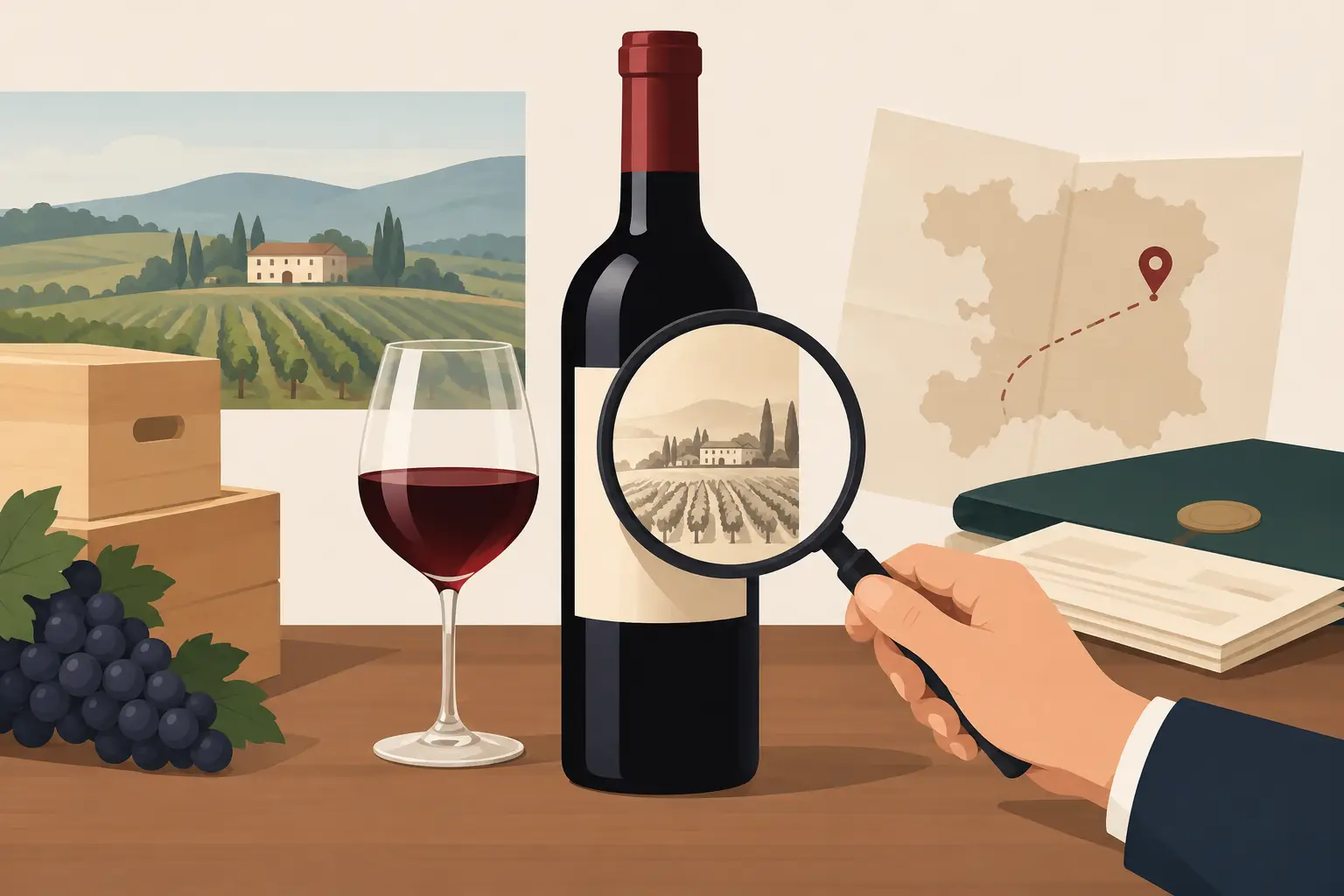
A 2005 first-growth Bordeaux and a mature grand cru Burgundy may look impeccable across a dinner table, yet their value can diverge sharply before the cork is ever pulled. To evaluate wine provenance is to understand where a bottle has been, who handled it, and whether its journey supports the condition promised by its label. For collectors, this is not paperwork for paperwork’s sake. It is the foundation of authenticity, drinkability, and long-term value.
Provenance matters most when a wine is rare, mature, high in demand, or intended for cellaring. A recent-release bottle from a respected producer carries less uncertainty than an older, secondary-market case with an incomplete history. Still, every fine-wine purchase benefits from a few disciplined checks, particularly in Singapore’s warm climate, where professional temperature-controlled storage is not a luxury but a practical safeguard.
What Wine Provenance Actually Tells You
Wine provenance is the documented and credible ownership, storage, and transport history of a bottle or case. It answers several related questions: Did the wine originate from a legitimate source? Has it been stored at stable, appropriate conditions? Has it changed hands through reputable channels? Does its physical condition align with its age and declared history?
A strong provenance does not make every bottle extraordinary. Vintage quality, producer, appellation, format, and cellar condition still determine how a wine will perform. But it reduces avoidable risk. A pristine bottle of 1990 Château Margaux sourced from a private collector with no storage records is less reassuring than a comparable bottle released from a professional bonded warehouse with a clear chain of custody.
This distinction is especially relevant for blue-chip regions. Bordeaux, Burgundy, Champagne, Barolo, Brunello di Montalcino, and cult Napa Cabernet command attention from collectors precisely because the best wines can improve for decades. Their reputation and scarcity also make them more vulnerable to poor storage, refills, counterfeit concerns, and vague seller descriptions.
How to Evaluate Wine Provenance Before Purchase
The best approach is cumulative. A single detail rarely proves a bottle’s entire story, but several consistent signals can provide a convincing picture.
Start with the source
Ask who is selling the wine and how they acquired it. Established specialist merchants, respected importers, wineries, and recognized auction houses generally have procedures for supplier assessment, inspection, and storage. That does not make every bottle automatically flawless, but it creates accountability.
Be more cautious with anonymous marketplace listings, informal private sales, or offers that rely on phrases such as “from an old cellar” without further detail. An attractive price may reflect an opportunity, but it may also reflect uncertainty. For collectible wine, a modest saving can be poor value if the bottle arrives with compromised condition or an unverifiable history.
For original wooden cases, confirm whether the case is truly original and intact. Original packaging is desirable, particularly for investment-minded buyers, but it is not a substitute for storage evidence. A pristine crate can contain wine that spent years in unsuitable conditions before being repacked or resold.
Examine storage and transport history
Fine wine prefers consistency. Ideal cellaring typically means darkness, minimal vibration, stable humidity, and cool temperatures with no dramatic fluctuations. The exact temperature matters, but stability matters just as much. Repeated exposure to heat can accelerate aging, flatten freshness, push corks, and leave a wine tired well before its time.
Ask whether the wine was held in professional temperature-controlled storage, a bonded warehouse, winery cellars, or a private cellar. Each can be suitable, provided the account is specific and credible. A well-managed private cellar may produce superb bottles; a generic claim that wine was “cellared properly” offers little assurance on its own.
Transport deserves attention, particularly for bottles that have crossed multiple climates. One brief shipment is not necessarily a problem, while repeated exposure to heat during storage, delivery, or consolidation can be. For high-value purchases, it is reasonable to ask about recent shipping and current holding conditions.
Read the bottle as evidence
The bottle itself provides a useful condition report. Inspect the fill level first. As wine ages, a small amount of ullage is normal, especially in older Bordeaux. However, a noticeably low fill can indicate cork seepage or prolonged storage in unfavorable conditions. What is acceptable depends on the wine’s age, format, and region, so a 40-year-old bottle should not be judged by the standard of a recent vintage.
Look next at the capsule and cork area. Signs of seepage, staining, or a pushed cork deserve questions. Label condition is more nuanced. A lightly scuffed or cellar-marked label can be entirely consistent with genuine age and careful storage. Conversely, a perfect label on a mature bottle is not proof of exceptional provenance. It may simply mean the bottle was well protected.
Check glass clarity and color where visible. Excessive browning in a young white Burgundy, a pale or brick-orange appearance in a relatively young red, or unusual sediment patterns may warrant further investigation. Sediment itself is not a fault. Mature, unfiltered wines often throw sediment naturally and may need careful standing and decanting.
Match labels, capsules, and bottle details to the wine
Counterfeit detection is a specialist discipline, and no buyer should assume they can authenticate a rare bottle from one visual clue. Still, obvious inconsistencies should never be ignored. Compare the vintage, appellation, producer name, bottle shape, label typography, capsule, and importer markings with known examples from that era.
Older bottles often show legitimate variation. Estates update labels, bottle molds, cork brands, and back labels over time. Imported bottles may also carry market-specific labels or importer strips. The objective is not to reject every difference, but to seek a coherent explanation for each one.
For scarce wines, large formats, or trophy bottles, documentation is especially valuable. Original invoices, release letters, warehouse records, allocation correspondence, and prior auction catalog descriptions can support a bottle’s history. Documents can also be forged, so they should complement, rather than replace, a trusted source and expert inspection.
When Provenance Matters Most
Every bottle deserves sensible handling, but the degree of scrutiny should match the stakes. A young, accessible Rioja for a weekday dinner does not require the same investigation as a case of 1996 Champagne or a bottle of Domaine de la Romanée-Conti. The price, rarity, intended holding period, and consequence of disappointment should guide your effort.
For wines intended to drink soon, condition and merchant reliability may be sufficient. For wines intended as gifts, cellar anchors, or future auction assets, insist on more detail. Case provenance, professional storage, original packaging, and documented transfers become part of the wine’s value proposition, not peripheral extras.
Bottle format also changes the calculation. Magnums and larger formats often mature more slowly and can be compelling for celebrations or extended cellaring. Yet they are harder to store, more expensive to ship, and less common on the secondary market. Their provenance should be equally clear, especially when buying mature examples.
Red Flags That Deserve a Pause
A red flag is not always a verdict, but it is an invitation to slow down. Be wary when a seller cannot identify the source, offers only stock images for a valuable mature bottle, avoids questions about storage, or presents a price dramatically below the prevailing market. Likewise, be careful with unusually high volumes of rare labels from a seller without a recognizable fine-wine track record.
Physical warning signs include severe leakage, a deeply depressed fill level for the wine’s age, a protruding cork, suspiciously fresh labels on bottles said to be very old, or damaged capsules that obscure key information. None of these details alone proves a problem. Together, they may justify passing on the bottle.
The trade-off is straightforward: exhaustive verification costs time, and not every purchase warrants it. A dependable fine-wine merchant helps by curating producers, maintaining proper storage, and providing knowledgeable advice before the transaction rather than leaving the buyer to decode uncertainty afterward.
Build a Provenance-First Cellar
A thoughtful cellar is built through repeatable habits, not occasional lucky finds. Keep invoices, photograph rare bottles when they arrive, retain original cases where practical, and record where and when you purchased key wines. If you later gift, sell, or pass on those bottles, this simple record becomes part of their story.
At Crystal Wines, specialist guidance can be particularly useful when comparing mature vintages, case formats, critic scores, and cellar-worthy producers. A conversation before purchase may reveal whether a younger vintage offers better value, whether a magnum suits the occasion, or whether a mature bottle’s condition calls for immediate enjoyment rather than further aging.
The finest bottles are made to be shared, not merely cataloged. Buy with enough provenance to feel confident, store with care, and open the right bottle when the table, the food, and the company give it a worthy reason to speak.


