


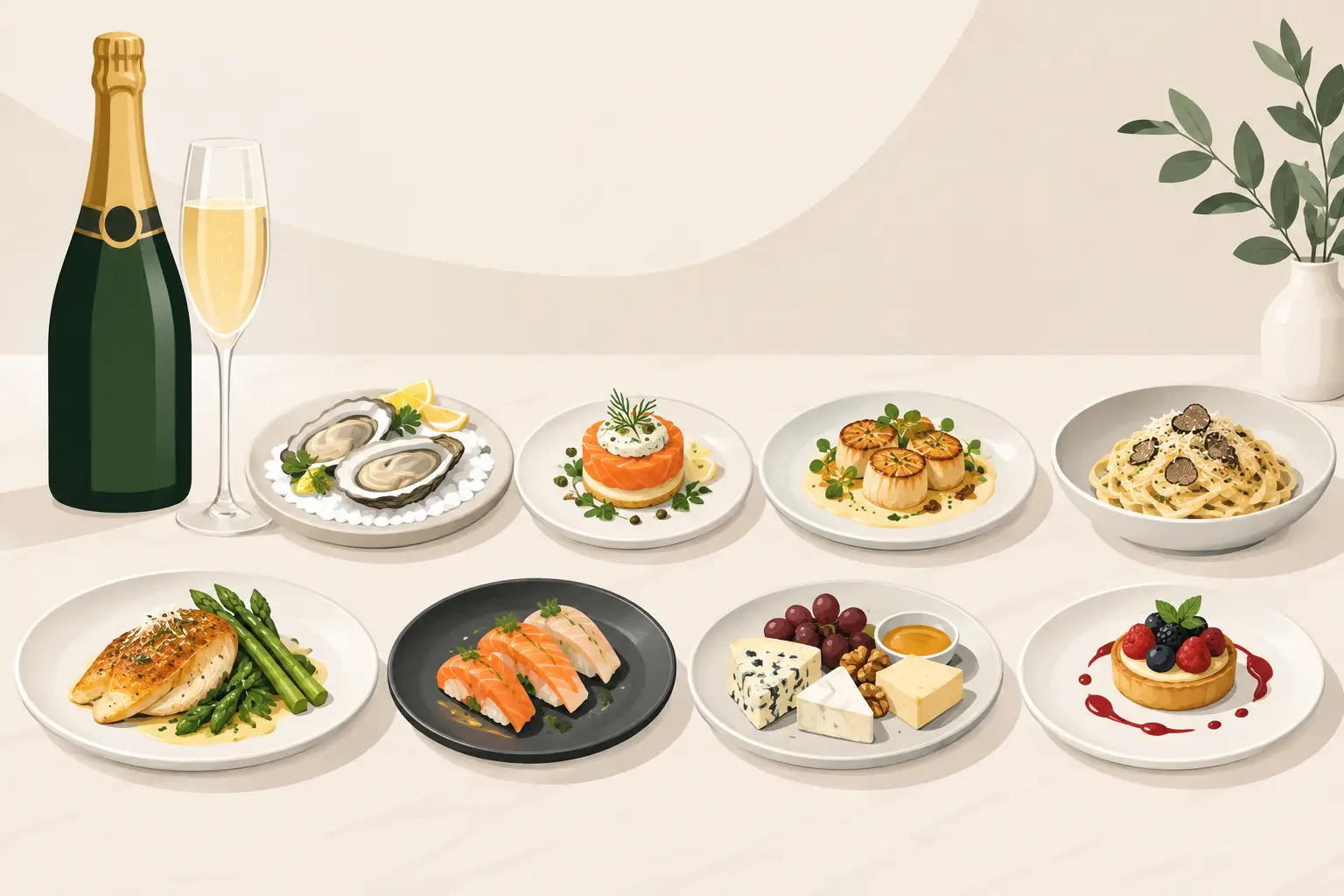
A memorable dinner rarely needs more complexity. Start with a well-chosen bottle, serve food with a clear sense of contrast or harmony, and let the conversation take over. The best Champagne pairing example is not simply oysters and Blanc de Blancs, although that classic has earned its place. It is the moment when the wine’s acidity, mousse, dosage, and bottle age meet the dish’s salt, richness, spice, or texture.
For a celebratory lunch, an intimate supper, or a polished Singapore dinner party, Champagne offers more range than most tables give it credit for. The key is to select by style rather than treating every bottle as interchangeable. A racy non-vintage Brut, a creamy vintage cuvée, a structured Blanc de Noirs, and a gently sweet Demi-Sec belong beside very different plates.
A Champagne Pairing Example Starts With Style
Champagne’s pairing power comes from its tension. High acidity refreshes the palate after fried or fatty food, while persistent bubbles lift delicate textures and amplify savory flavors. Autolytic notes – think brioche, hazelnut, pastry, and toast – connect beautifully with roasted, buttery, and umami-rich dishes. The dosage, or added sweetness at bottling, determines whether the finish feels brisk and dry or softer and more generous.
Before choosing the food, consider the personality of the Champagne. Blanc de Blancs, made principally from Chardonnay, is often citrus-led, chalky, and finely cut. It is a natural choice for pristine seafood and vegetables. Blanc de Noirs, made from Pinot Noir and Pinot Meunier, tends to bring broader fruit, spice, and structure. Rosé Champagne can handle dishes with a touch more sweetness or aromatic spice. Mature vintage Champagne, particularly from a leading house or grower-producer, often has the depth to accompany poultry, mushrooms, and even certain red-meat preparations.
Temperature matters, too. Serve youthful Brut around 46 to 50°F and allow a complex vintage bottle to warm slightly in the glass. A Champagne that is too cold will hide its perfume and make a carefully chosen pairing seem less expressive.
8 Champagne Pairing Examples for the Table
1. Oysters with Blanc de Blancs
This is the reference point for good reason. Briny oysters mirror Champagne’s mineral, saline edge, while the wine’s lemony acidity sharpens the shellfish’s creamy texture. Choose a lean, low-dosage Blanc de Blancs with a chalk-driven profile for freshly shucked oysters, especially when serving them simply with a squeeze of lemon.
Avoid heavily sauced oysters here. A sweet chili dressing or a rich baked topping shifts the balance and calls for a more generous style. When the oyster is the star, finesse wins.
2. Sushi and Sashimi with Extra Brut or Brut
Clean, precise sushi is one of Champagne’s finest modern companions. The bubbles freshen the palate between bites of fatty toro, salmon, or yellowtail, while acidity handles soy sauce and pickled ginger better than many still wines. A refined non-vintage Brut is the most versatile choice, offering enough fruit for richer fish without overwhelming delicate white fish.
For omakase, take care with wasabi. A little is enlivening; too much makes even a powerful Champagne taste thin and hot. If the menu includes sweet eel sauce or spicy rolls, a rosé with generous red-fruit notes will be more accommodating.
3. Fried Chicken with Rosé Champagne
Few pairings demonstrate Champagne’s practical brilliance better than crisp fried chicken. The salt and crunch call for bubbles, while the meat’s juicy richness needs acidity. Rosé Champagne brings enough fruit and vinous breadth to meet a well-seasoned crust, especially one with a whisper of paprika, white pepper, or five-spice.
This is an excellent choice for a relaxed gathering because it feels festive without requiring formal food. Choose a dry rosé rather than a noticeably sweet bottle. The goal is refreshment, not a fruit-forward contrast that makes the seasoning taste sharper.
4. Caviar with Prestige Cuvée
Caviar and Champagne is a luxury pairing, but it works because both sides have precision. The caviar’s creamy salinity finds lift in a finely beaded, complex Champagne, while the wine’s subtle biscuit and almond notes echo the blini or toast traditionally served alongside it.
A prestige cuvée or mature vintage Champagne is fitting when the caviar is exceptional, particularly if it has enough concentration to hold its own without becoming oxidative or overtly oaky. Keep the garnishes restrained. Crème fraîche, chives, and warm blini are enough; onion, lemon, and aggressive sauces can obscure the bottle’s detail.
5. Roast Chicken with Vintage Champagne
Roast chicken is where serious Champagne begins to look like a complete dinner wine. Golden skin, pan juices, herbs, and a touch of butter draw out the deeper side of a vintage cuvée. Look for a bottle with several years on lees or additional bottle age, showing toasted hazelnut, orchard fruit, and a broad, refined palate.
The side dishes set the limit. A simple roast chicken with pommes purée or sautéed mushrooms is ideal. A heavily sweet glaze, however, can make Brut Champagne feel austere. If the dish includes caramelized fruit, choose a fuller rosé or a richer Blanc de Noirs instead.
6. Chili Crab with Rosé or Rich Blanc de Noirs
Singapore’s iconic chili crab is not an obvious textbook match, which is exactly why it deserves attention. The dish combines sweetness, chile heat, tomato richness, and the natural delicacy of crab. A bone-dry, highly linear Blanc de Blancs can feel severe beside the sauce. A fuller rosé Champagne, or a Pinot-led Blanc de Noirs with ripe fruit and creamy texture, is more persuasive.
Keep the bottle firmly chilled and favor Brut over Extra Brut. The modest dosage softens the heat without turning the pairing cloying. The same principle works for black pepper crab, although its darker, more savory spice may suit a structured Blanc de Noirs particularly well.
7. Aged Comté with Mature Champagne
Hard, nutty cheeses reward bottle age. Aged Comté, Gruyère, or Beaufort brings caramelized, savory notes that meet mature Champagne’s brioche, toasted nuts, and dried citrus. This is a compelling late-evening pairing when a full meal has given way to conversation.
Avoid very pungent blue cheeses with dry Champagne. Their salt and intensity can dominate the wine, and the pairing often needs a sweeter style to regain balance. With Comté, restraint is the virtue: let the cheese’s crystalline texture and the Champagne’s long finish do the work.
8. Strawberries with Demi-Sec Champagne
Dessert is where many hosts make the common mistake of serving dry Brut beside a sweet dish. The dessert then makes the Champagne seem sour. For strawberries, berry tart, or a lightly sweetened vanilla dessert, choose Demi-Sec Champagne. Its extra dosage supports the fruit while retaining enough acidity to avoid heaviness.
The dessert should still be less sweet than the wine. A dense chocolate cake or sticky toffee pudding usually asks for another category entirely. But fresh berries, almond cake, and delicate patisserie can make Demi-Sec feel unexpectedly elegant.
How to Build a Champagne-First Menu
A single bottle can carry an entire meal if the courses stay within its range. Begin a Brut Champagne with salty snacks such as gougères, lightly fried seafood, or aged cheese; continue with sashimi, crab, or roast poultry; then finish without a sweet dessert. This approach gives a good non-vintage bottle room to show its versatility.
For a more ambitious dinner, pour two styles. Start with Blanc de Blancs for oysters or delicate seafood, then move to a rosé or vintage Champagne for the main course. This is often more satisfying than escalating through many bottles, and it makes the contrast between the wines easy for guests to appreciate.
Glassware deserves consideration. A narrow flute preserves effervescence, but a tulip-shaped Champagne glass offers more room for aroma, particularly with vintage and prestige cuvées. For a bottle chosen for its vineyard, vintage, or extended aging, that extra aromatic space is worth having.
The most successful Champagne pairings are not about following rules for their own sake. They are about recognizing what the dish needs: a cleansing line of acidity, a creamy texture, a touch of fruit, or the quiet complexity of a great mature bottle. When the food and wine each leave the other tasting more vivid, keep the bottle on the table and enjoy where the evening goes next.


