


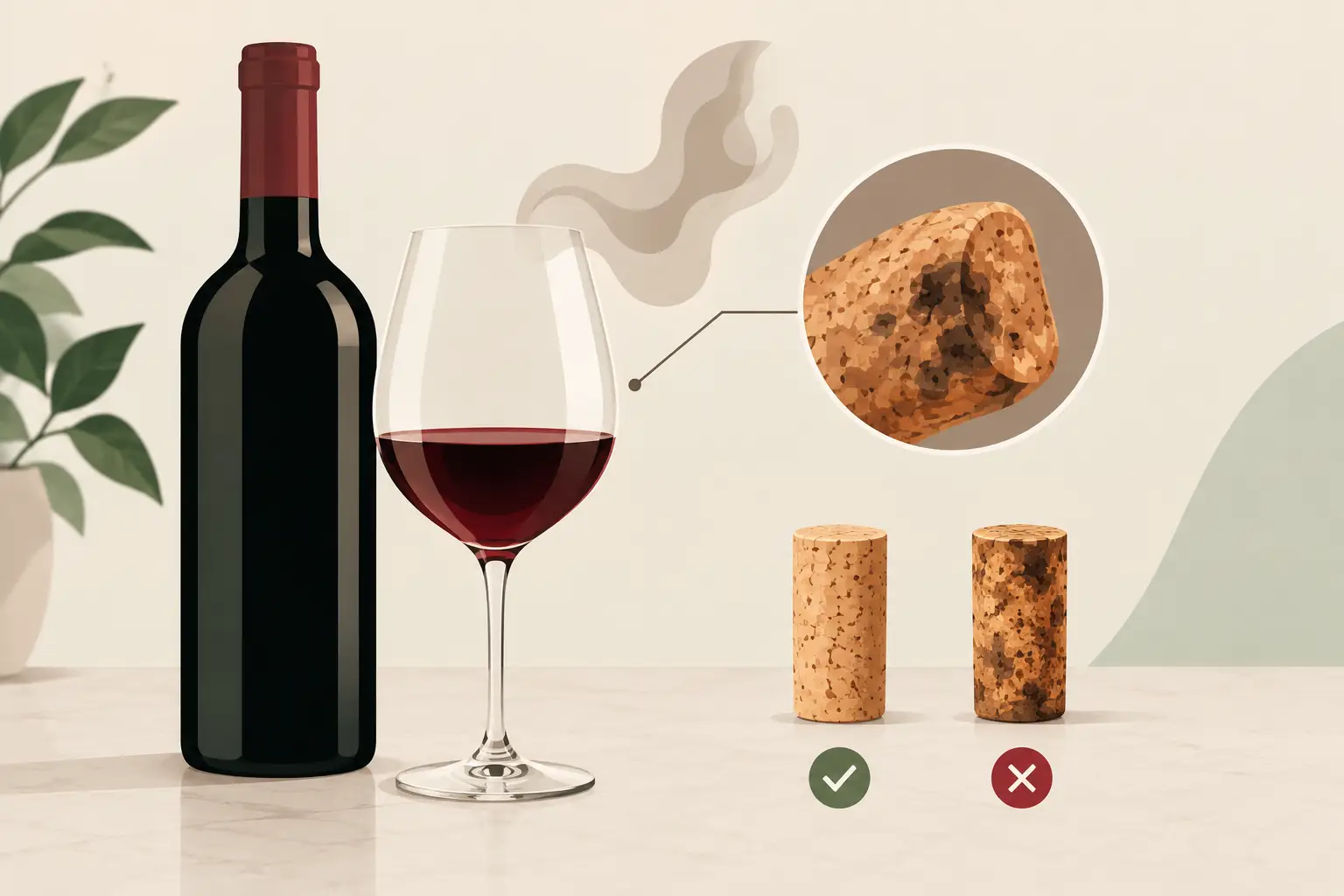
A bottle can come from an admired estate, carry an exceptional vintage, and have been stored impeccably – yet still disappoint the moment it is opened. Cork taint is one of wine’s most frustrating faults precisely because it can affect wines at every price level. Knowing how to identify cork taint lets you assess a bottle calmly, whether you are opening a weeknight Pinot Noir or a treasured bottle of mature Bordeaux.
The reassuring news is that cork taint is not subtle once you know its signature. It is also not a reflection of your palate, your storage, or the producer’s overall quality. It is an unfortunate bottle-specific flaw, and recognizing it is part of drinking wine with confidence.
What Cork Taint Actually Is
Cork taint is most often associated with TCA, short for 2,4,6-trichloroanisole. This compound can develop when naturally occurring fungi interact with certain chlorinated compounds in cork or, more rarely, in a winery environment. TCA may be present in the cork itself, but it can also affect barrels, pallets, cardboard, or other materials used during production and storage.
The practical result is a wine that smells musty and tastes stripped of its fruit. A severely affected bottle is unmistakable. At lower levels, the fault can be more deceptive: the wine may not smell dramatically unpleasant, but it will seem dull, closed, and oddly lifeless for its pedigree.
Natural cork is not inherently suspect. It remains an excellent closure for many fine wines, particularly bottles intended to develop over decades. Leading cork producers have invested heavily in screening and quality-control methods, and the incidence of taint is lower than it once was. Still, it has not disappeared entirely.
How to Identify Cork Taint by Aroma and Taste
The classic aroma is damp cardboard. Think of a soggy shipping box left in a humid storeroom, a wet newspaper, or a musty basement. Some tasters describe mushroomy notes, moldy cloth, or a stale corkboard character. These are not aromas to confuse with the earthy forest-floor complexity that can be attractive in aged Burgundy, Barolo, or mature Rioja.
A corked wine also loses definition. The fruit appears suppressed, the palate seems hollow, and the finish drops away quickly. A wine that should offer blackcurrant, cedar, tobacco, and graphite may instead taste vaguely dry and muted. A fragrant Champagne may seem flat in aroma even when its mousse remains intact. The key is the combination of mustiness and diminished expression.
If you are tasting with others, do not let the first confident opinion settle the matter. Pour a small amount for another person and ask what they notice without leading them. One person may be more sensitive to TCA than another. Sensitivity varies considerably, and an affected bottle can be obvious to one guest while merely lackluster to someone else.
A Simple, Reliable Tasting Check
Begin with the wine in the glass rather than smelling the removed cork. A cork can smell woody, dusty, or faintly damp without the wine being tainted, while a clean-looking cork tells you little about the bottle’s condition.
Swirl gently and take two or three short smells. Then taste the wine and let it sit on the palate for a moment. Ask whether the aromas are fresh and specific, and whether the fruit carries through the finish. If the wine smells of wet cardboard and tastes drained of character, cork taint is the likely explanation.
When possible, compare it with another bottle of the same wine. This is the clearest confirmation, especially for collectors opening a prized vintage. The contrast can be striking: a suspect bottle may seem gray and silent next to a clean example showing perfume, energy, texture, and length.
Cork Taint or Something Else?
Not every disappointing bottle is corked. Fine wine is a living product, and several conditions can resemble or obscure cork taint. Distinguishing them prevents a good bottle from being dismissed too quickly.
Oxidation often suggests bruised apple, nuts, caramel, sherry, or a brownish color in wines that should look youthful. It may result from a compromised seal or extended exposure to oxygen. Unlike cork taint, oxidation does not usually smell like wet cardboard. Certain styles, including aged tawny Port and deliberately oxidative Jura wines, are meant to show these notes, so context matters.
Reduction can produce aromas of struck match, flint, rubber, garlic, or cooked cabbage. It is associated with limited oxygen exposure during winemaking and is particularly common in some young whites. A little reduction can lift with air in the glass or a brief decant. Cork taint will not improve with aeration.
Brettanomyces, often shortened to Brett, is a yeast-related spoilage issue that can smell like barnyard, leather, clove, medicinal adhesive, or savory game. In restrained form, some drinkers find it compatible with traditional red-wine styles. In excessive form, it overwhelms fruit. It is different from TCA, which is more distinctly musty and suppressive.
Heat damage may leave a wine stewed, jammy, pruny, or unusually alcoholic, sometimes accompanied by seepage around the capsule or a cork that has pushed upward. In Singapore’s climate, careful temperature-controlled storage is especially valuable. Heat damage can flatten a bottle, but it does not create the damp-cardboard profile of cork taint.
Finally, a young, tightly wound wine may simply need air. A serious Cabernet, Nebbiolo, or classically made Bordeaux can be reserved immediately after opening, especially in a cool cellar setting. If its fruit is clean and its structure feels coherent, give it time. A decanter may reveal its intended character; it will not cure TCA.
What to Do When You Find a Corked Bottle
At a restaurant, let the sommelier or server know courteously that you believe the wine may be corked. There is no need to apologize for raising the concern or to argue over terminology. Describe what you smell: “I am getting a damp-cardboard note, and the fruit seems muted.” A professional service team should assess the bottle and replace it when the fault is confirmed.
At home, retain the bottle, remaining wine, cork, and proof of purchase. Contact the merchant promptly and explain the issue clearly. A reputable specialist understands that cork taint is an inherent risk of natural-cork closures, not customer error. Photographs can be useful if there is evidence of leakage or a raised cork, though they cannot prove TCA.
For an older collector bottle, the situation can be more nuanced. Mature wines can show fragile fruit, bottle variation, and tertiary aromas that are unfamiliar to newer drinkers. If you are uncertain, avoid pouring it away immediately. Re-cork the bottle, keep it cool, and seek a second opinion from an experienced wine professional. Crystal Wines’ retail team can help customers think through condition questions, particularly where rare vintages and cellar-aged bottles are concerned.
Serving Practices That Make Faults Easier to Spot
Good service does not prevent cork taint, but it makes diagnosis far easier. Serve whites and sparkling wines chilled but not ice-cold, as excessive cold mutes aroma. Give structured reds enough time in the glass to open. Use clean, neutral-smelling stemware, since detergent residue or a musty cabinet can create confusion before the wine is even tasted.
For a special bottle, open it before guests arrive when practical. This gives you a few quiet minutes to check its condition and decide whether it needs decanting. It also protects the rhythm of a dinner from an unwelcome surprise. A backup bottle is wise for any important occasion, especially when serving older wines under natural cork.
Cork taint is disappointing, but it need not diminish the pleasure of opening serious wine. A clean bottle from a great vineyard should offer clarity, personality, and a finish that invites another thoughtful sip. When a wine seems muted and musty instead, trust your senses, ask for a second glass if needed, and give the next bottle its fair chance to shine.


