


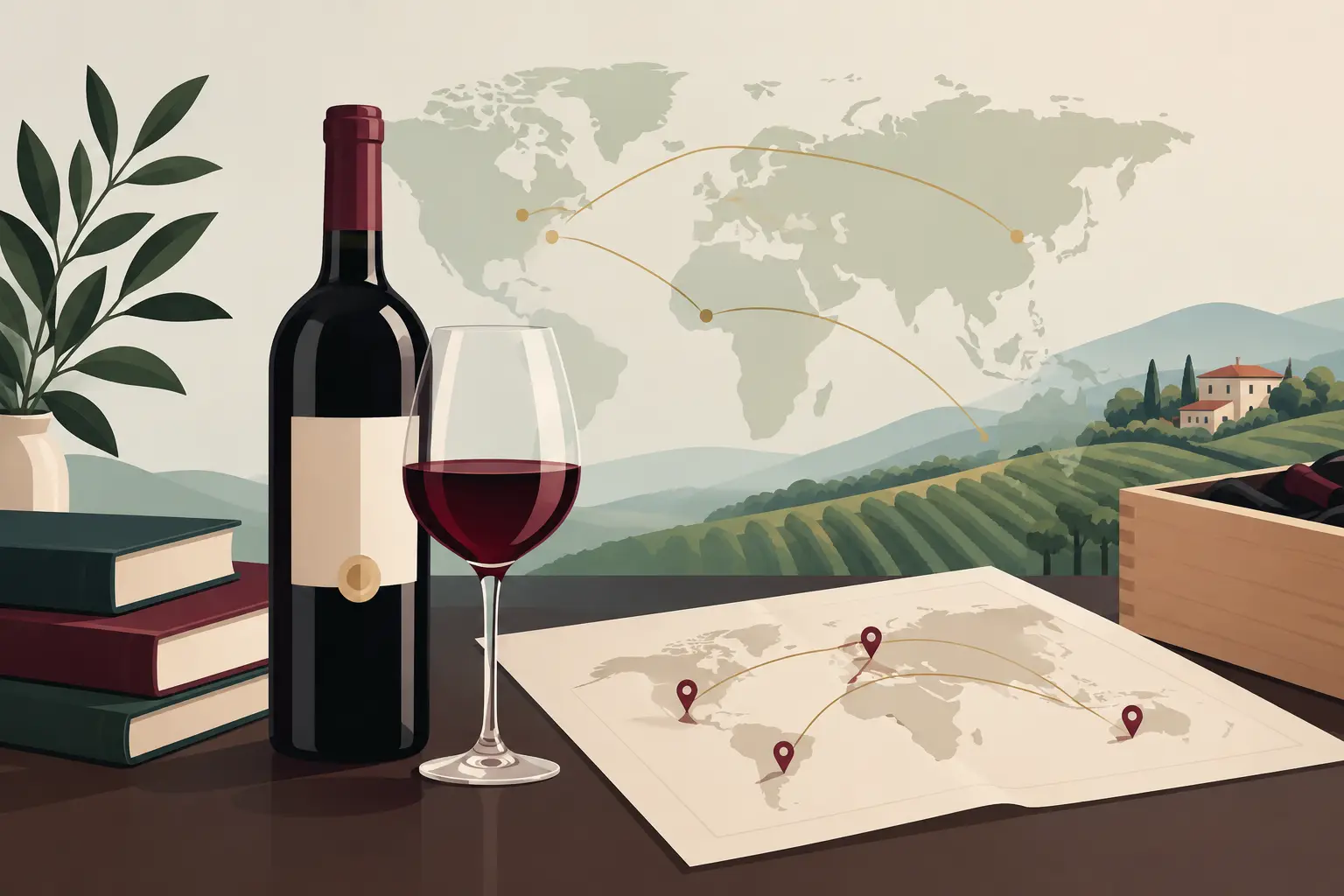
A pristine label, famous château, and strong critic score can make a bottle compelling. Yet for mature Burgundy, classified-growth Bordeaux, rare Champagne, and other collectible wines, one question often matters before all others: where has this bottle been? Wine provenance trends are changing how collectors answer it, raising expectations for documented ownership, professional storage, and a supply chain that can be understood rather than merely assumed.
For buyers building a cellar in Singapore, provenance is not a technical detail reserved for auction specialists. It is part of the wine itself. The same vintage from the same estate can offer very different drinking experiences and resale confidence depending on its journey after release. Heat exposure, poor handling, an unclear transfer between owners, or a missing case record can all introduce doubt that no high critic score can remove.
What Provenance Means Beyond Authenticity
Wine provenance is the documented history of a bottle or case from its source through its present condition. Authenticity is central, of course. A wine must be genuine. But provenance goes further: it considers whether it was acquired through an authorized source, how it was stored, who handled it, whether it remained in its original wooden case, and how clearly that history can be supported.
For recently released wines, the chain may be straightforward. A bottle shipped from an estate to an established importer, then to a specialist merchant and customer, has a relatively short and visible journey. With older bottles, especially those that have passed through private cellars or multiple secondary-market transactions, the trail may be more complex.
That does not automatically make mature wine a poor purchase. Some of the most breathtaking bottles in the world have spent decades in private cellars. The distinction is whether the seller can explain the history credibly and whether the bottle’s condition supports the account. Good provenance is an accumulation of reassuring evidence, not a single stamp of approval.
The Wine Provenance Trends Shaping Fine-Wine Buying
The fine-wine market is moving toward greater specificity. Buyers increasingly expect to know more than a wine’s producer, vintage, and score. They want to understand its route to market and its treatment along the way.
Storage history is becoming a primary value signal
Professional, temperature-controlled storage has long mattered, but it is now more visible in purchase decisions. A bottle held continuously in a reputable bonded warehouse or climate-controlled cellar may command more confidence than an identical bottle described only as “well stored.” That phrasing is not necessarily a warning, but it leaves key questions unanswered.
For wines intended for long cellaring, consistency matters more than perfection in a single moment. A bottle that has rested at stable temperature and humidity, protected from vibration and strong light, is more likely to evolve as the producer intended. This is particularly relevant to older Bordeaux and Burgundy, where condition can vary significantly between bottles from the same vintage.
Original cases carry practical importance
Original wooden cases, sometimes called OWC, remain desirable for more than their presentation. For collectors, intact cases can offer useful evidence of how wines were packed and retained after release. Case markings, bottle sequence, labels, capsules, and the physical condition of the wood all contribute to the overall picture.
An original case is not a substitute for careful inspection. A complete case can still have an uncertain history, while an individual bottle from a documented professional cellar can be an excellent acquisition. Still, for investment-minded buyers and those purchasing cases for long-term cellaring, original packaging often improves confidence and future liquidity.
Digital records are useful, but not a magic answer
Digital inventory systems, electronic invoices, warehouse records, and ownership histories are making it easier to retain a wine’s paper trail. Some market participants are also using blockchain-based certificates and other digital ledgers. These tools can help organize information and reduce opportunities for records to be altered after the fact.
Their limitation is simple: technology can preserve a claim, but it cannot independently prove that the claim was true at the beginning. A digital certificate attached to a bottle is only as useful as the verification process behind it. Collectors should value systems that connect digital records to reputable merchants, producers, storage providers, and physical inspection.
Direct sourcing is gaining a stronger premium
Producers, négociants, authorized importers, and established fine-wine merchants are increasingly important to buyers who want a shorter chain of custody. Direct allocations and carefully managed En Primeur purchases offer an especially clear route for collectors acquiring wines young and planning to cellar them for years.
This does not mean the secondary market is less relevant. It remains essential for mature vintages and rare back releases. The difference is that buyers are more selective about source quality. A compelling price may not compensate for a vague account of where a bottle has been, particularly when the wine is scarce, old, or frequently counterfeited.
Condition reporting is becoming more precise
Experienced buyers now look beyond a broad assessment such as “excellent condition.” Fill levels, label condition, capsule condition, signs of seepage, and bottle color can all be relevant, depending on the wine’s age. For mature bottles, a lower fill may be normal, while for younger wines it may deserve closer attention.
Condition should always be interpreted in context. A lightly marked label may have no effect on how the wine drinks, yet it can affect collector value. Conversely, a handsome label cannot compensate for suspicious ullage or evidence of heat exposure. The best buying decisions consider both the bottle’s appearance and its documented history.
Provenance Is Not Just for Trophy Bottles
It is easy to associate provenance with rare Domaine de la Romanée-Conti, first-growth Bordeaux, or blue-chip Italian estates. In practice, the principle applies across every price tier. A serious Barolo bought for a dinner next month deserves sensible handling. A case of Champagne purchased for anniversaries and celebrations deserves storage that preserves freshness and precision.
The level of investigation should match the value, rarity, and intended purpose of the wine. For an everyday bottle from a current release, buying from a trusted specialist merchant is usually sufficient. For a mature grand cru or a case intended as a long-term asset, deeper due diligence is entirely reasonable.
This is also where merchant expertise matters. A specialist can provide context that a generic marketplace listing cannot: whether the wine came from a private collection or a professional facility, whether it has been recently moved, and whether the bottle condition aligns with its age. At Crystal Wines, carefully curated selections and direct retail guidance help turn those details into a more confident decision.
How Collectors Should Evaluate a Purchase
Before purchasing a significant bottle or case, begin by asking for the story, not simply the score. Who supplied it? Was it held in bonded or temperature-controlled storage? Is there supporting documentation? Has it been re-corked, re-labeled, or reconditioned by the estate? These are normal questions, and a credible seller should be comfortable addressing them.
For higher-value purchases, assess the following points together:
- The source of the wine and the number of transfers since release.
- Storage conditions, including whether they are documented or simply described.
- Bottle condition, particularly fill level, capsule, label, and signs of leakage.
- Case format and packaging, including original wooden case status where relevant.
- The seller’s knowledge, return policy, and willingness to provide clear details.
No single factor should decide the purchase in isolation. A spectacular older bottle with a worn label may be entirely sound if it comes from a distinguished, temperature-controlled cellar. A flawless-looking bottle with a hazy background may be less attractive despite its visual appeal. Provenance assessment is a matter of weighing evidence, not chasing a perfect checklist.
Why Provenance Changes the Drinking Experience
Collectors often discuss provenance in terms of fraud prevention and resale value. Both matter. But provenance also protects the pleasure of opening a special bottle. When a wine has been handled with care, the odds are better that its perfume, texture, and finish will reflect the vintage and the producer’s intent.
That is especially meaningful when the occasion cannot be repeated: a landmark birthday, a business dinner, a family celebration, or the opening of a bottle cellared for decades. Confidence in the bottle allows attention to return where it belongs – on the glass, the table, and the people sharing it.
As wine provenance trends continue toward clearer records, better storage visibility, and more exact condition reporting, collectors have an opportunity to buy with greater discernment. The wisest addition to a cellar is not always the rarest bottle or the loudest score. It is the wine whose journey inspires enough confidence that, when the right evening arrives, you will be happy to pull the cork.


