


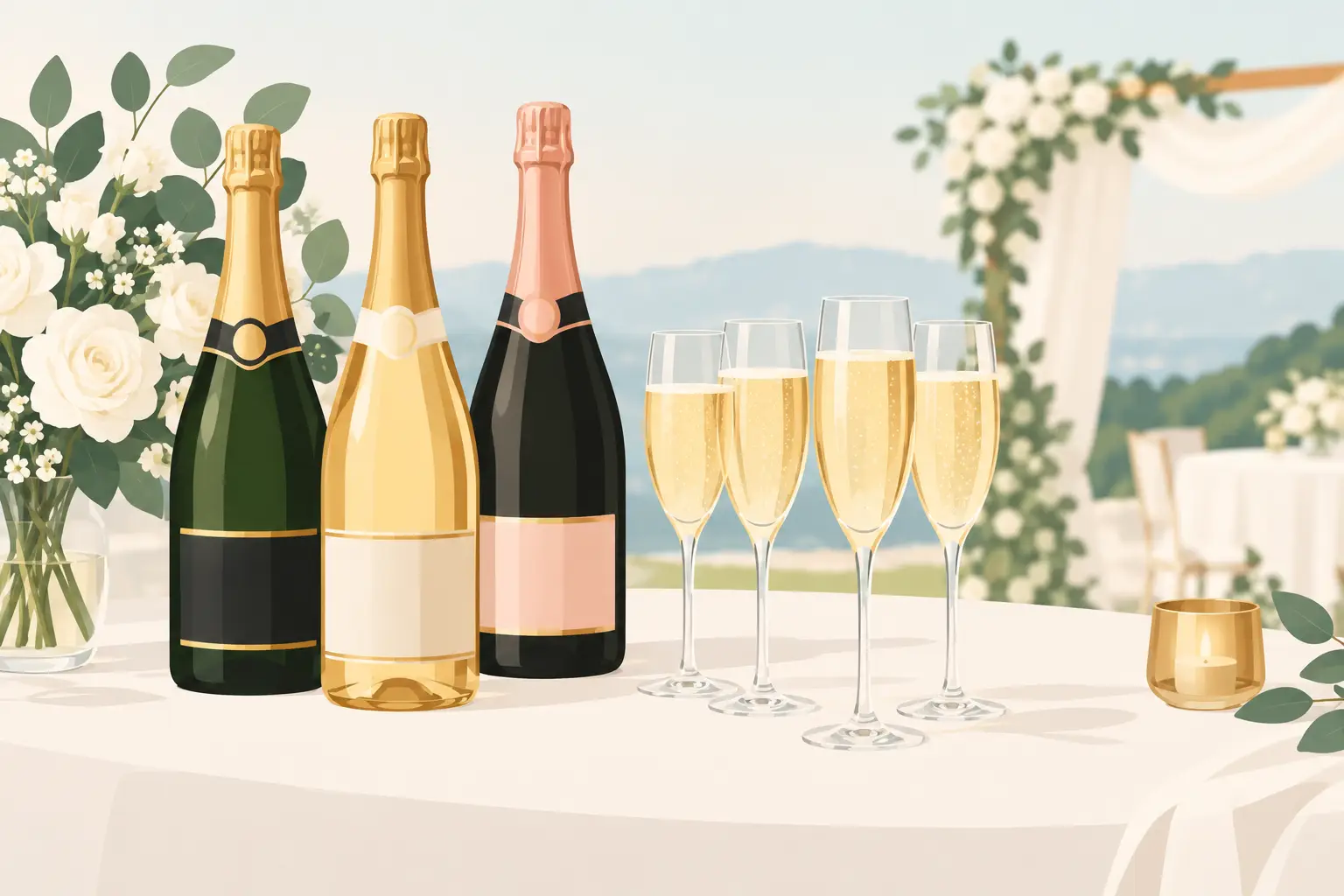
The best Champagne for weddings does more than mark the toast. It sets the first note of the reception, brightens canapés, cuts through rich celebratory dishes, and gives guests a tangible sense that the occasion has begun. Choosing well is not simply a matter of selecting the most famous label or the most expensive bottle. It is about matching style, format, guest count, menu, and the atmosphere you want to create.
For a garden ceremony, a brisk, mineral-driven Brut can feel effortless. For an intimate ballroom dinner, a more complex vintage Champagne or prestige cuvée may be worth the splurge. The most memorable wedding wine programs tend to combine both: a beautifully reliable house Champagne for generous pouring, with one or two special bottles reserved for the couple, close family, or a more formal seated moment.
Best Champagne for Weddings Starts With the Moment
A wedding rarely needs one Champagne for every purpose. The bottle served at a ceremony reception performs differently from the one poured for a midnight toast. Before comparing producers, decide when Champagne will appear and how broadly it will be offered.
For a welcome drink, freshness matters most. Look for a non-vintage Brut with lively acidity, fine mousse, and enough fruit to appeal to guests with different levels of wine experience. Classic blends built around Pinot Noir, Chardonnay, and Pinot Meunier are especially versatile. They are refreshing on their own and flattering with salty, crisp, or lightly fried canapés.
For the toast, the choice can be more personal. A recognizable Grande Marque brings instant celebration and reassuring consistency. A grower Champagne, made by an estate that farms and bottles its own fruit, can offer greater site character and a more distinctive story. Neither is inherently better. The former suits couples who value polished house style and scale; the latter is compelling for those who want vineyard personality and conversation at the table.
At dinner, Champagne can be far more than a ceremonial opener. Blanc de Blancs, made exclusively from Chardonnay, is a superb partner for oysters, sashimi, crab, scallops, and delicate poultry. Rosé Champagne has the depth and red-fruit perfume for duck, roast salmon, or dishes with a gentle spice. Mature vintage Champagne, with its toast, hazelnut, citrus peel, and savory notes, can carry an entire refined course.
Choose the Right Style, Not Just the Right Name
The most useful distinction for wedding planning is not producer versus producer, but style versus setting. A bottle’s sweetness level, grape composition, maturity, and dosage will shape how it performs in the glass.
Non-vintage Brut: the dependable reception pour
Non-vintage Brut is the foundation of many excellent wedding celebrations. Producers blend reserve wines from multiple years to maintain a recognizable house style, resulting in a consistent and approachable Champagne. Expect lemon, orchard fruit, brioche, and lively acidity in the strongest examples.
This is often the best value for a large guest list. It has enough prestige for a proper toast without forcing the entire wine budget into a single moment. Seek a producer with careful sourcing, extended lees aging, and a refined mousse rather than simply choosing the lowest-priced option labeled Champagne.
Blanc de Blancs: bright, elegant, and food-friendly
A good Blanc de Blancs brings a graceful, lifted profile: citrus blossom, green apple, chalk, and, with age, pastry and almond. It is particularly fitting for daytime weddings, warm-weather celebrations, and menus that lean toward seafood or Asian flavors.
Its linear freshness is a virtue, but it may feel too delicate for a crowd expecting a richer, toastier profile. If the reception includes substantial passed bites, choose a Blanc de Blancs with some bottle age or serve it alongside lighter dishes rather than heavily spiced or creamy fare.
Rosé Champagne: a celebratory statement
Rosé Champagne is not merely chosen for its color, though it photographs beautifully against a wedding table. The best examples offer wild strawberry, raspberry, rose petal, and subtle spice, framed by the precision that separates Champagne from simpler sparkling rosé.
It makes sense for a bridal toast, a sunset cocktail hour, or a menu with salmon, duck, charcuterie, or berries. Rosé usually costs more than comparable Brut, so it can be used selectively: perhaps for the head table, wedding party, or a dedicated toast rather than every pour of the evening.
Vintage and prestige cuvée: bottles for a lasting memory
Vintage Champagne is made predominantly from a single declared harvest and released only when a producer considers the year distinctive enough. Prestige cuvées sit at the top of a house’s range and often receive longer aging, more exacting selection, and grander presentation.
These wines are wonderful for an intimate wedding, a private family dinner, or a bottle opened after the ceremony with those closest to you. Their complexity can be breathtakingly long, but they are not automatically the best choice for a large, lively reception. Guests sipping quickly on a crowded dance floor may not experience what makes them special. Put the investment where attention and glassware allow the wine to shine.
How Much Champagne Should You Buy?
One standard 750 ml bottle provides about six flute-sized servings or five more generous pours. For a single toast, plan on one bottle for every six guests, then add a prudent margin for refills, breakage, late additions, and enthusiastic friends. For 100 guests, 18 to 20 bottles is a comfortable starting point for a toast.
If Champagne is the sole cocktail-hour drink, the calculation changes. Plan roughly two glasses per guest for a 90-minute reception, or one bottle for every three guests. A longer Champagne-led aperitif, particularly before a sit-down meal, may require one bottle per two guests.
Magnums deserve serious consideration. A 1.5-liter magnum holds two standard bottles, makes an elegant visual statement, and is practical for a reception with table service. Champagne also tends to evolve more slowly in larger formats, although that advantage is most meaningful for cellaring rather than immediate service. For the couple’s table or a dramatic toast, magnums combine generosity with occasion.
Budget With Intention
A wedding Champagne budget should account for more than bottle price. Taxes, chilling, glassware, venue corkage, delivery timing, and staffing can alter the final figure considerably. Ask the venue whether it can store bottles at the correct temperature and whether it has enough proper stemware for the guest count. A beautiful Champagne loses much of its perfume in a warm, narrow flute.
Rather than compromising across every bottle, divide the budget by role. Choose a polished non-vintage Brut for the wider reception, then allocate more toward a vintage, rosé, or prestige bottle for the head table and photographs. This creates a sense of abundance while preserving room for excellent food and still wines during dinner.
For couples building a cellar as well as planning a wedding, it can be meaningful to set aside a few bottles of the same vintage or cuvée. Open one on the first anniversary and another on a later milestone. Provenance and storage matter here, particularly for collectible Champagne, so buy from a specialist merchant that can provide confidence in condition and sourcing.
Service Can Make or Break the Pour
Champagne should be chilled, not frozen into silence. Serve non-vintage Brut around 46 to 50°F, while richer vintage and prestige bottlings can be slightly warmer, around 50 to 54°F, to show their aromatic detail. Put bottles into an ice bucket filled with ice and water about 25 to 30 minutes before pouring; an ice-only bucket chills unevenly.
Traditional flutes preserve bubbles, but a tulip-shaped Champagne glass offers more aromatic expression and gives serious wines room to open. For a formal meal, the tulip is often the better choice. Avoid wide coupes: charming as they look, they shed carbonation quickly and make measured service difficult.
Open bottles quietly and carefully. The goal is a soft sigh, not a theatrical pop that wastes pressure and wine. A trained server can pour a small first measure, allow the foam to settle, then complete each glass cleanly. At a warm outdoor reception, stagger the chilling and opening so every bottle arrives fresh rather than sitting in the sun.
A Final Pour Worth Remembering
The right Champagne should feel like an extension of the celebration: generous, considered, and effortlessly enjoyable. Choose a bottle with enough distinction to honor the day, but do not let prestige override pleasure. Years later, guests may not recall every course or centerpiece, yet they will remember the lift of that first glass raised together.


