


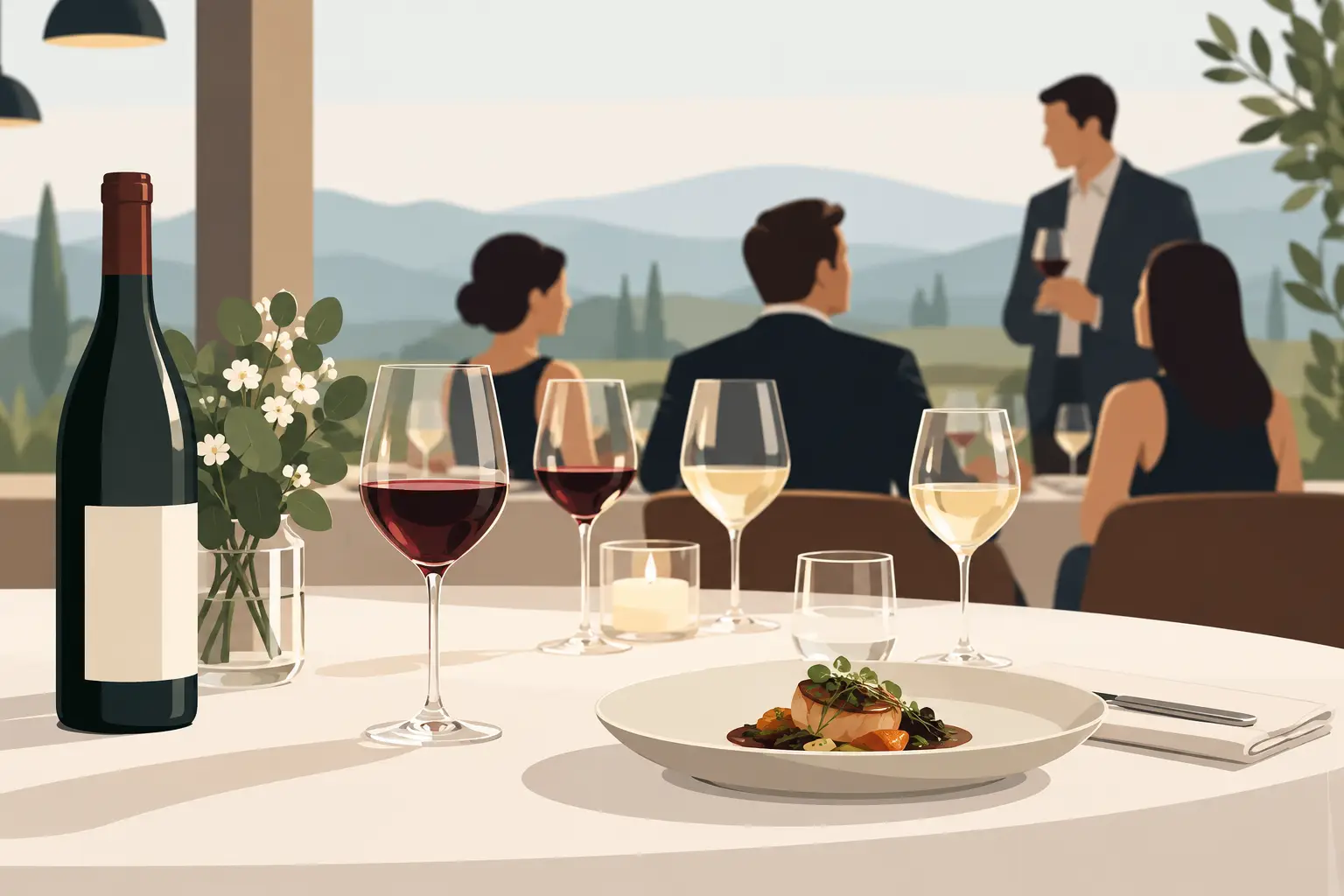
A memorable wine dinner is not defined by the number of prestigious labels poured. It is defined by the moment a guest understands why a particular bottle belongs beside a particular dish – and can picture opening it again at home. This wine dinner event case study examines the decisions behind that outcome: a focused producer story, intelligent menu design, and hospitality that leaves room for genuine conversation.
The setting is a private dining room in Singapore, with 28 guests ranging from experienced collectors to curious professionals building confidence beyond familiar regions. Rather than treating the evening as a parade of expensive bottles, the host built a progression around one question: how does place reveal itself differently across a meal?
This is a composite case study rather than a report on one named dinner. Its value lies in the repeatable principles that make a fine-wine event feel considered, sociable, and commercially meaningful without becoming a sales presentation.
The Brief: Build Confidence, Not Just Excitement
The audience included guests who recognized leading Bordeaux estates and Champagne houses, alongside diners who wanted clearer guidance on vintage, appellation, and food pairing. A broad, unfocused lineup would have pleased few people. The answer was a single-region narrative with enough stylistic contrast to keep the table engaged.
The chosen theme was Piedmont through the lens of Nebbiolo, beginning with an elegant sparkling aperitif before moving from Langhe Nebbiolo to Barbaresco and Barolo. The wines were selected not merely for hierarchy, but for their ability to demonstrate a progression in perfume, structure, and site expression. Guests could taste red-fruited lift, rose petal, tar, savory earth, and the firm, refined tannins that make the region so compelling at table.
That decision involved a trade-off. A dinner built around several famous regions may create instant recognition, particularly for guests seeking status bottles. Yet a tighter theme usually produces stronger recall. When every pour advances one story, guests leave with language they can use when choosing a bottle later.
The evening also had a practical commercial purpose: introduce cellar-worthy wines while showing that the category has approachable entry points. The host therefore included a younger, earlier-drinking wine before the benchmark bottles. This gave guests a realistic starting point, rather than implying that appreciation begins only with grand labels or mature vintages.
Wine Dinner Event Case Study: The Pairing Architecture
The menu was designed with the wines, not after them. That distinction sounds simple, but it determines whether a dinner feels harmonious or disjointed. The chef and wine team agreed on the sequence early, then adjusted seasoning, texture, and sauce intensity after tasting the proposed bottles.
The aperitif was poured with delicate canapés featuring briny seafood and citrus. Bright acidity and fine mousse refreshed the palate without competing with the opening bites. The first red accompanied a lightly smoked duck course with mushrooms and a restrained jus. Its youthful fruit and floral character met the dish without being overwhelmed by smoke or sweetness.
For Barbaresco, the kitchen served a course built around earthy porcini and silky pasta. The wine’s savory undertones and polished tannins found an easy partner in the dish’s umami depth. Barolo followed with slow-cooked beef cheek, but the sauce remained savory rather than glossy or sweet. Powerful Nebbiolo can absorb richness, though sugar-heavy reductions can make its tannins seem harder and its aromatics less precise.
The final wine was not necessarily the most expensive bottle of the night. It was the most contemplative: a mature Barolo from a respected vintage, served with a modest cheese course rather than dessert. By then, guests had already learned the essential vocabulary of the region. The older wine became a rewarding reference point – proof of what patience can bring to a properly stored bottle.
This sequence illustrates a useful rule for event planning: match intensity before matching flavor. A delicate wine can share aromatic notes with a rich dish and still disappear beside it. Start with weight, acidity, tannin, and sweetness; then refine the pairing through flavor and texture.
Why the service order mattered
The wines were presented in ascending structural weight, but not in a rigid march toward bigger and bolder. Temperature and glassware were managed carefully. Younger Nebbiolo was served slightly cool to preserve its perfume and keep the tannins fresh, while the mature bottle had time in the glass to reveal its more complex notes.
Pours were restrained. Guests had enough wine to revisit each pairing, but not so much that the later flights became indistinct. At a dinner of this length, moderation is an act of hospitality. It protects the palate, encourages comparison, and keeps the conversation articulate.
The Storytelling That Held the Room
A wine dinner can lose a room in under five minutes if every introduction turns into a technical lecture. The host avoided that trap by giving each wine one memorable anchor before offering detail for those who wanted it.
For the Langhe Nebbiolo, the anchor was accessibility: a clear introduction to the grape’s perfume and tension. For Barbaresco, it was finesse and a gentler expression of Nebbiolo’s structure. For Barolo, it was the relationship between powerful tannin, vineyard exposure, and ageability. The mature bottle brought the story full circle, revealing how those structural elements soften into dried flowers, leather, truffle, and a breathtakingly long finish.
Only then did the host expand on producer philosophy, vineyard parcels, élevage, and vintage conditions. This order matters. Guests first need a reason to care; technical detail becomes more meaningful once they have tasted its effect.
The most effective moment came after the Barbaresco course, when diners were invited to compare the unfinished glass with the new Barolo. No quiz, no forced tasting note, and no implied right answer. A simple prompt – which wine feels more immediate, and which feels more built for the cellar? – created lively discussion across the table.
That exchange is where an event becomes educational rather than performative. Experienced collectors could articulate nuance, while newer enthusiasts could participate without feeling tested. Crystal Wines has long understood the value of this kind of guided discovery: expertise should make a serious bottle more approachable, not more intimidating.
What Turned Interest Into Future Purchases
The dinner did not end with an aggressive offer. Instead, guests received a concise take-home reference listing each wine, vintage, approximate drinking window, and a few food-pairing cues. The guide also noted alternatives at different price points, including bottles suitable for near-term enjoyment and bottles worth cellaring.
This was especially useful because not every guest wanted to buy the flagship Barolo. Some responded most strongly to the earlier-drinking Langhe Nebbiolo; others wanted to explore a comparable vintage or format for a future dinner. A thoughtful event recognizes that enthusiasm has different budgets and time horizons.
Follow-up should be timely and specific. Within a few days, a host can share availability, relevant mixed-case options, and any wines poured that showed particularly well after opening. The tone should remain consultative. Scarcity may be real with limited allocations and pristine cases, but urgency should never replace good advice.
Success is therefore measured by more than bottles sold that evening. Useful indicators include attendance quality, repeat event interest, subsequent store visits, requests for cellar guidance, and whether guests can recall the wines and the reason each pairing worked. A guest who returns months later seeking a Barbaresco for mushroom risotto is evidence that the event created confidence, not just a pleasant night out.
Lessons for the Next Fine-Wine Dinner
A successful format depends on the goal. If the purpose is to introduce a newly released collection, a vertical tasting may be more appropriate than a food-led regional journey. If the room is filled with seasoned collectors, provenance, bottle condition, critical perspective, and comparative vintages deserve more time. For a mixed audience, however, a progression built around one grape, estate, or appellation is often the clearest choice.
There are a few principles worth protecting in every format. Keep the guest list intimate enough for questions. Choose dishes that respect the wines rather than chase novelty. Give every pour a reason to be there. And leave enough unstructured time for people to compare glasses, trade impressions, and enjoy the table.
The finest outcome is not a room full of guests repeating the host’s tasting notes. It is a room full of guests who have found their own reason to open the next bottle with greater curiosity.


