


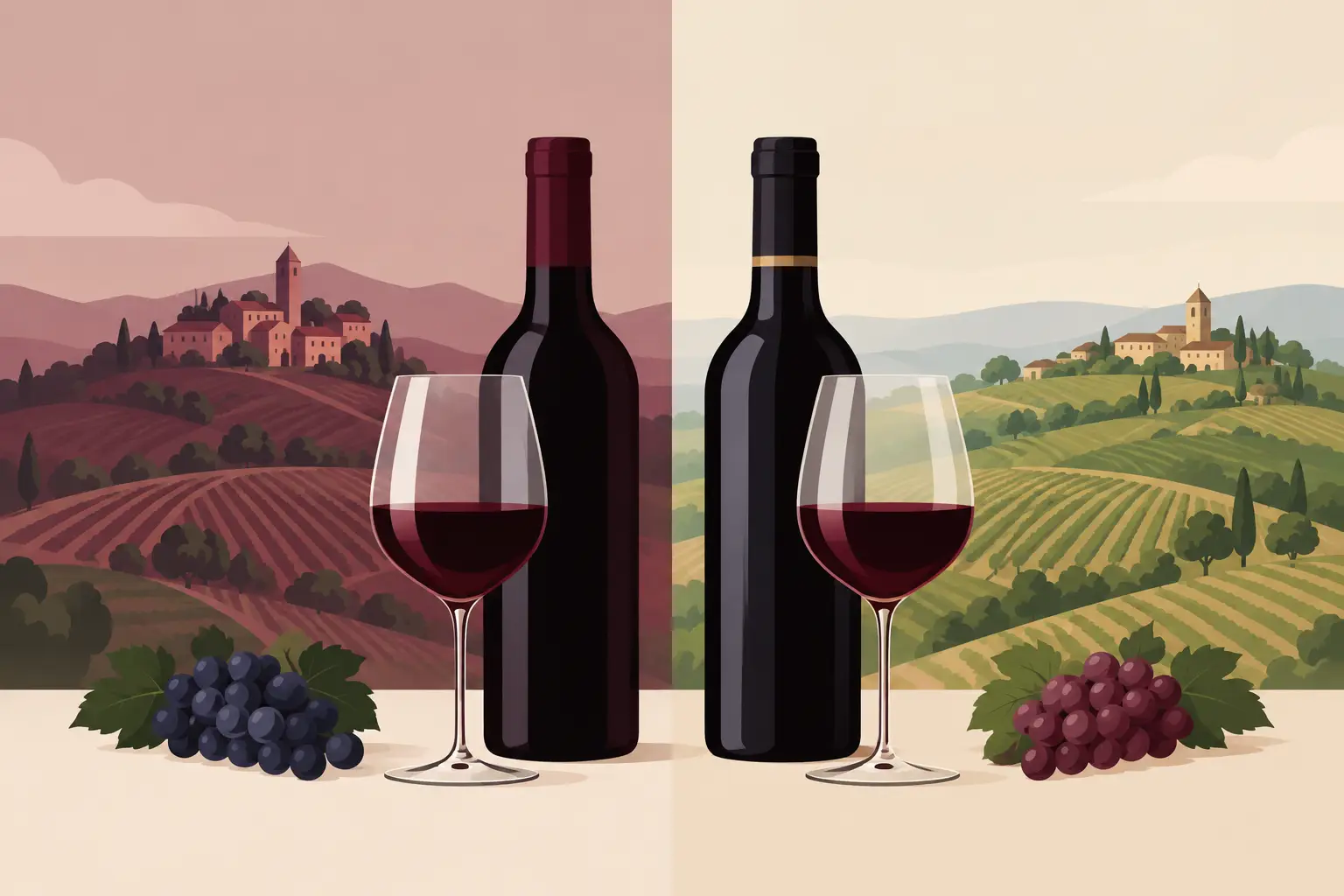
A bottle of Barolo and a bottle of Brunello di Montalcino may both represent Italy at its most regal, yet the Barolo versus Brunello differences are immediately apparent once they reach the glass. One is all lifted rose, tar, truffle, and stern Nebbiolo tannin; the other combines Sangiovese’s savory cherry fruit with Tuscan warmth, herbal complexity, and broad, polished structure. For a collector choosing wines for a cellar, or a host planning a serious Italian dinner, knowing where those differences come from makes buying far more rewarding.
Barolo versus Brunello differences: the essential distinction
Barolo is made exclusively from Nebbiolo in Piedmont, in northwest Italy’s Langhe hills. Brunello di Montalcino is made exclusively from Sangiovese – locally called Brunello – around the hill town of Montalcino in southern Tuscany. Both are DOCG wines, both command international attention, and both can mature beautifully for decades. Their shared prestige, however, should not obscure their contrasting personalities.
Nebbiolo is naturally pale in color yet formidable in tannin and acidity. In a young Barolo, its perfume can be sensationally expressive: dried rose petal, red cherry, orange peel, licorice, tobacco, and earthy woodland notes. The palate is often vertical and tensile, with a firm, chalky grip that rewards patience.
Sangiovese usually gives Brunello a deeper ruby tone in youth, though it also lightens with age. Its signature lies in ripe sour cherry, plum skin, violet, dried herbs, leather, cedar, and a distinctly savory earthiness. Brunello can be powerful, but its structure tends to feel broader and more enveloping than Barolo’s. Where Barolo often leads with fragrance and precision, Brunello commonly offers warmth, amplitude, and a generous mid-palate.
Two landscapes, two expressions of Italy
Barolo’s vineyards sit among steep, folded slopes around villages including La Morra, Barolo, Castiglione Falletto, Serralunga d’Alba, and Monforte d’Alba. Soils are a crucial part of the conversation. The more calcareous marl soils associated with La Morra and Barolo village often produce wines of aromatic finesse, supple fruit, and earlier approachability. Sandstone-rich sites toward Serralunga and Monforte frequently deliver darker fruit, deeper tannin, and formidable longevity.
This is a useful guide rather than a fixed rule. Producer style, vineyard exposure, vine age, and vintage can outweigh village generalizations. Still, a collector deciding between a graceful La Morra Barolo and a structured Serralunga bottling is often deciding between two very different cellar trajectories.
Montalcino is warmer and farther south, with vineyards spread across a larger, more varied area. Elevation, cooling winds, and soils ranging from galestro and limestone to clay and sand create considerable variation. Northern and higher-elevation sites can preserve striking freshness and perfume, while warmer southern zones may produce more muscular, sun-kissed wines. Brunello’s best estates balance Montalcino’s ripeness with bright acidity, ensuring the wine remains composed rather than heavy.
Aging rules matter, but they do not tell the whole story
Both appellations impose lengthy maturation before release. Barolo must age for at least 38 months from November 1 of the harvest year, including at least 18 months in wood. Barolo Riserva requires at least 62 months of aging.
Brunello di Montalcino requires a minimum of five years before release, including two years in oak and four months in bottle. Riserva must age for six years. On paper, Brunello therefore arrives later, but release timing alone does not determine readiness.
A traditionally made Barolo from a structured vintage can need 10 to 15 years to relax fully, and exceptional bottles may develop for far longer. Brunello is often more open upon release, particularly in ripe vintages, yet top examples are no less cellar-worthy. Ten to 20 years is a realistic horizon for leading estates, with the greatest Riservas capable of extending well beyond it.
Oak choices also shape the experience. Large neutral casks generally preserve transparency and savory detail, while smaller French barrels can add polish, sweet spice, and a more immediately plush texture. Neither approach is inherently superior. The question is whether the élevage supports the vineyard character rather than concealing it.
How Barolo and Brunello taste at the table
Barolo is a remarkable match for dishes with depth and earthiness. Think porcini risotto, truffle pasta, braised beef cheek, roast duck, or aged Parmigiano-Reggiano. Its high acidity cuts through richness, while its tannin benefits from protein and slow-cooked textures. A youthful, tightly wound Barolo is rarely the ideal choice for a delicate fish course or lightly dressed salad.
Brunello has equal affinity with substantial food but takes a slightly different route. Bistecca alla Fiorentina, rosemary-rubbed lamb, wild boar ragù, mushroom-stuffed poultry, and roasted pork all bring out its savory cherry character. At a Singapore dinner table, Brunello is particularly persuasive with herb-roasted meats and Chinese-style roast duck, provided the dish is not sweet. Barolo can be superb alongside braised or grilled meats with mushroom, truffle, or tea-smoked notes.
Serving temperature matters. Aim for roughly 60 to 64°F, rather than room temperature in a warm climate. Decant a young Barolo for two to four hours if it is notably firm; an older bottle should be handled more gently, with sediment in mind. Young Brunello often benefits from one to two hours of air, although mature examples may need little more than a careful pour.
Choosing by vintage and drinking window
Vintage should be part of every serious purchase. Cooler years can emphasize aromatic lift, acidity, and classical structure, especially in Barolo. Warmer vintages may bring richer fruit and softer early textures, although the finest producers retain balance through site selection and restrained extraction.
In Brunello, warm conditions can yield sumptuous, generous wines, while fresher vintages tend to show more tension and red-fruited definition. Montalcino’s varied exposures make producer selection especially important. A skilled estate with well-sited vineyards can make compelling wine in a challenging year, while a celebrated vintage does not guarantee that every bottling will suit your palate.
For near-term enjoyment, consider a well-regarded producer’s entry Barolo from a more approachable village, or a Brunello from a vintage known for openness. For long-term cellaring, single-vineyard Barolo from Serralunga or Monforte, and leading Brunello Riservas or site-specific bottlings, are natural candidates. Professional critic scores are useful reference points, particularly when comparing producers and vintages, but they should support rather than replace your own preference for perfume, power, traditional savor, or modern polish.
Which should you buy?
Choose Barolo when you want haunting aromatics, bright acidity, firm tannic architecture, and the evolving complexity that comes from time in bottle. It is often the more cerebral pour, especially for drinkers drawn to Burgundy-like perfume with far more grip.
Choose Brunello when you want Sangiovese at its most complete: ripe yet savory fruit, Mediterranean herbs, polished power, and a generous presence at the table. It can be the easier choice for a celebratory roast or steak dinner, though serious Brunello deserves the same attention to provenance, vintage, and storage as any blue-chip Italian collectible.
The most satisfying cellar need not take sides. Keep a few bottles of each across different vintages and maturity levels, then open them with the right dish and the right company. A knowledgeable Crystal Wines team can help match that choice to whether the occasion calls for Barolo’s fragrant authority or Brunello’s warm, savory grandeur.


