


A mature Bordeaux can look perfectly calm in the bottle, yet conceal a fine layer of sediment that turns the final glass gritty. A young Barolo may be brilliantly clear but tightly coiled, its rose, tar, and red-cherry perfume waiting for air. That distinction is the heart of the question: when should wine be decanted? Not every bottle needs it, and decanting at the wrong moment can be as disappointing as skipping it altogether.
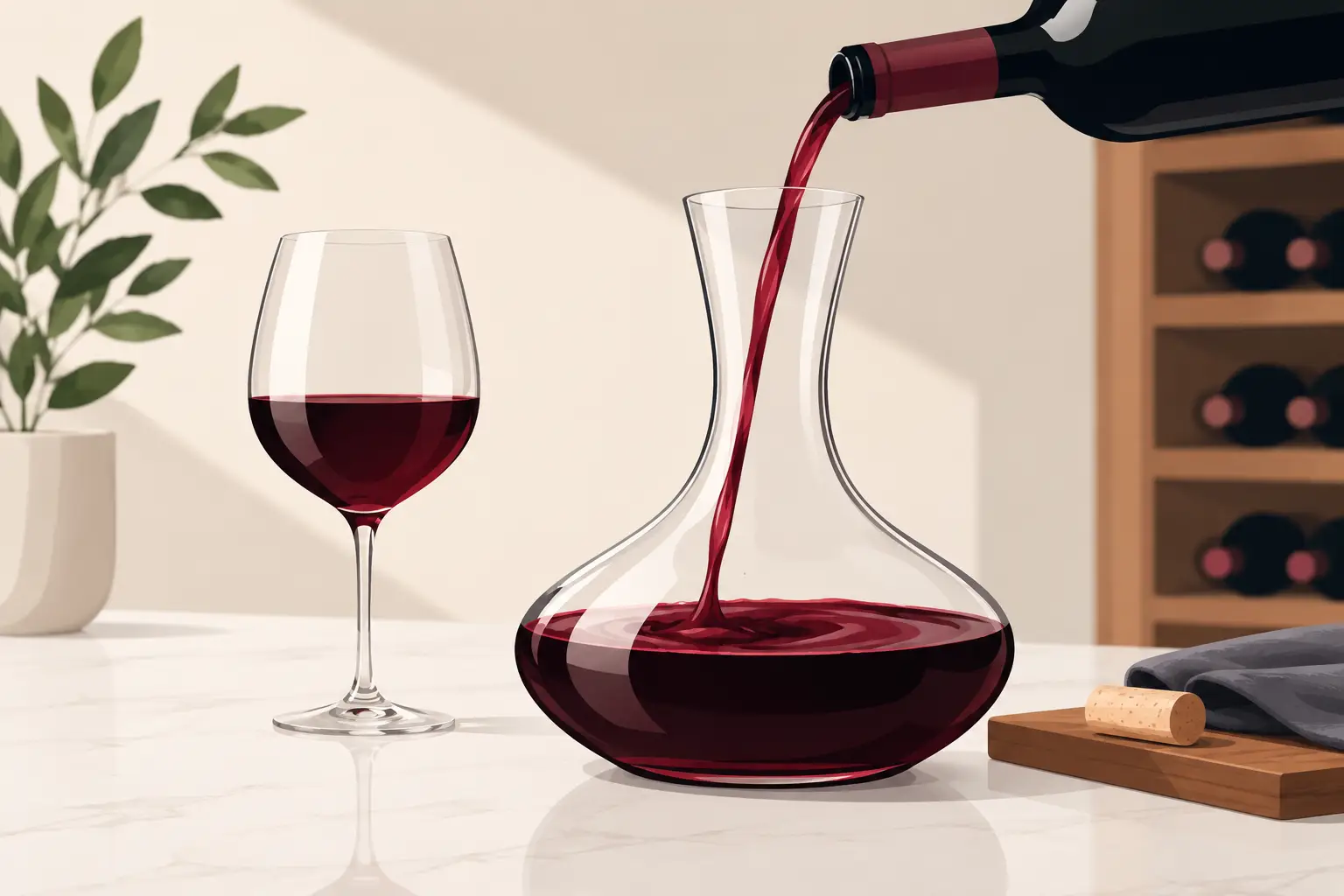
Decanting serves two different purposes. First, it separates clear wine from sediment. Second, it introduces oxygen, allowing certain wines to open aromatically and soften in texture. The bottle, its age, its grape variety, and the occasion all matter. Treat the decanter not as a ritual requirement, but as a considered tool for presenting a wine at its best.
When Should Wine Be Decanted?
Decant a wine when it has visible or likely sediment, when it is young and structurally firm, or when the first taste suggests the aromas are closed and the tannins feel severe. These are useful signals, not absolute rules.
Older, traditionally made reds are the classic candidates for sediment decanting. Mature Bordeaux, Barolo, Brunello di Montalcino, Rioja Gran Reserva, and vintage Port can all throw deposit as pigments and tannins gradually bind together over time. Sediment is natural and harmless, but it is unpleasant in the mouth. In these cases, the goal is a gentle transfer rather than prolonged aeration.
Young, concentrated reds may benefit for a different reason. A recently released Cabernet Sauvignon, Syrah, Nebbiolo, or top-level Tuscan red can initially feel compact: dark fruit may sit behind oak spice, the palate may be firm with tannin, and the finish may seem more austere than the wine’s reputation suggests. Exposure to air can broaden the fruit, clarify the perfume, and make the structure feel more integrated.
The key phrase is “may benefit.” A wine with great density and pedigree is not automatically improved by hours in a decanter. Some wines evolve beautifully in the glass, while others reveal their most delicate aromatics only briefly before fading. Taste before deciding.
Decanting Young Reds for Air
For a young red, pour a small taste immediately after opening. If it is expressive, balanced, and generous, serve it from the bottle. If it seems muted, overtly oaky, reductive, or aggressively tannic, decanting is often worthwhile.
A broad-based decanter gives a young wine more surface area and therefore more contact with oxygen. As a general starting point, allow 30 to 60 minutes for an approachable young red, and one to two hours for a more serious Cabernet-based blend, Barolo, Brunello, or Northern Rhône Syrah. Particularly youthful, powerful wines can need longer, but check them periodically rather than relying on a fixed timetable.
A 2020 or 2021 classified-growth Bordeaux, for example, may begin with cassis, cedar, graphite, and new-oak notes held in a firm frame. After an hour, its fruit can become more vivid and its texture more refined. Yet a mature 1990s Bordeaux could lose nuance with the same treatment. The vintage on the label matters as much as the appellation.
Young white wines usually need less air, though there are exceptions. A top white Burgundy, serious Chardonnay, premium Chenin Blanc, or age-worthy white Rhône can gain dimension from 15 to 30 minutes in a smaller decanter or a large glass. This is especially true when the wine has just been removed from a cold refrigerator and seems aromatically restrained.
Decanting Older Wines for Sediment
With mature wine, decanting is a slower, more delicate exercise. Stand the bottle upright for at least 12 to 24 hours before serving so sediment can settle at the base. For very old bottles that have traveled recently, a longer rest is sensible.
Open the bottle carefully and taste a small sample. If the wine is fragile, already fully expressive, or showing tertiary notes of leather, dried flowers, forest floor, tobacco, and truffle, decant only immediately before pouring. The objective is to leave sediment behind, not to give the wine a lengthy oxygen bath.
Pour steadily into a clean decanter, ideally with a light source behind the neck of the bottle. Stop as soon as you see sediment approaching the shoulder. A candle is traditional, but a phone flashlight works just as well. There is no prize for extracting every last ounce if the final pour compromises clarity.
As a broad guide, wines between 10 and 20 years old often need 15 to 30 minutes after decanting, depending on their condition. Bottles beyond 25 years may need only a few minutes, while some can be best served directly from the bottle with careful pouring. Mature Burgundy deserves particular caution: its spectacular perfume can be fleeting, and aggressive aeration may dull the very details you opened it to enjoy.
Wines That Usually Do Not Need Decanting
Most light-bodied, fresh, and aromatic wines are better served without formal decanting. Beaujolais, Pinot Grigio, Sauvignon Blanc, Moscato, Provençal rosé, and everyday sparkling wines generally gain little from it. Their appeal lies in freshness, precision, and immediate perfume.
Champagne is another case where restraint pays. A small number of mature prestige cuvées or vinous grower Champagnes can show beautifully in a decanter, particularly alongside a serious meal. But for most bottles, decanting can diminish the mousse and disrupt the tension that makes Champagne so compelling. Pour into a generous wine glass instead, and let the wine develop naturally.
Delicate old whites also require judgment. A mature Sauternes, German Riesling, or white Burgundy may have sediment, but it can be exquisitely vulnerable to oxygen. If clarification is needed, decant immediately before serving, preferably into a narrow vessel, and keep the wine cool.
The Bottle Is Only One Part of the Decision
Serving temperature changes how a wine responds to air. A red served too warm can seem alcoholic and loose after decanting, while a red served too cold may remain stubbornly closed. For most structured reds, a cool room-temperature range of roughly 60 to 65°F is a useful target. Whites with texture and complexity are often more expressive closer to 50 to 55°F than refrigerator-cold.
Food matters, too. A muscular young Cabernet that seems stern on its own may become beautifully composed next to grilled ribeye, roasted lamb, or aged hard cheese. Aged Barolo may appear ethereal beside porcini, truffle, or braised duck even if it initially seems understated. Decanting should support the meal and the moment, not force a wine into a different personality.
Glassware can achieve more than many hosts expect. If you do not own a decanter, pour the wine into large-bowled glasses 20 to 30 minutes before dinner. This is often enough for a young, moderately structured red. Conversely, if you are opening a rare old bottle, serving modest pours and returning to it over the course of the meal can reveal a more graceful evolution than a long decant.
A Practical Decanting Timeline
Use timing as a starting point, then let the wine lead. Fresh, youthful reds with modest tannin may need 20 to 30 minutes. Structured young reds often show well after one to two hours. Very powerful, newly released collectible reds can benefit from two or more hours, tasted along the way. Mature reds with sediment may need a careful, immediate decant, followed by 10 to 30 minutes at most.
Avoid the temptation to use an aerator as a universal shortcut. These devices can be helpful for inexpensive, youthful wines that need an instant lift, but rapid aeration can feel coarse with nuanced bottles. A fine wine deserves observation: smell it, taste it, and notice whether the finish lengthens, the fruit brightens, or the tannins become more polished.
At Crystal Wines, the most rewarding bottle is not necessarily the oldest, highest-scoring, or most expensive one. It is the bottle served at the right temperature, in the right glass, with enough air to reveal its character and not so much that it loses its voice. Open early when the wine is young and reserved; pour gently and late when it is old and fragile. Then let each glass tell you what it needs.


